Abuja — Minister of Works, Senator David Umahi, has said that President Bola Tinubu’s four flagship road infrastructure projects are designed to connect all six geopolitical zones of Nigeria, boost economic growth, enhance food security, and strengthen regional integration across the country.
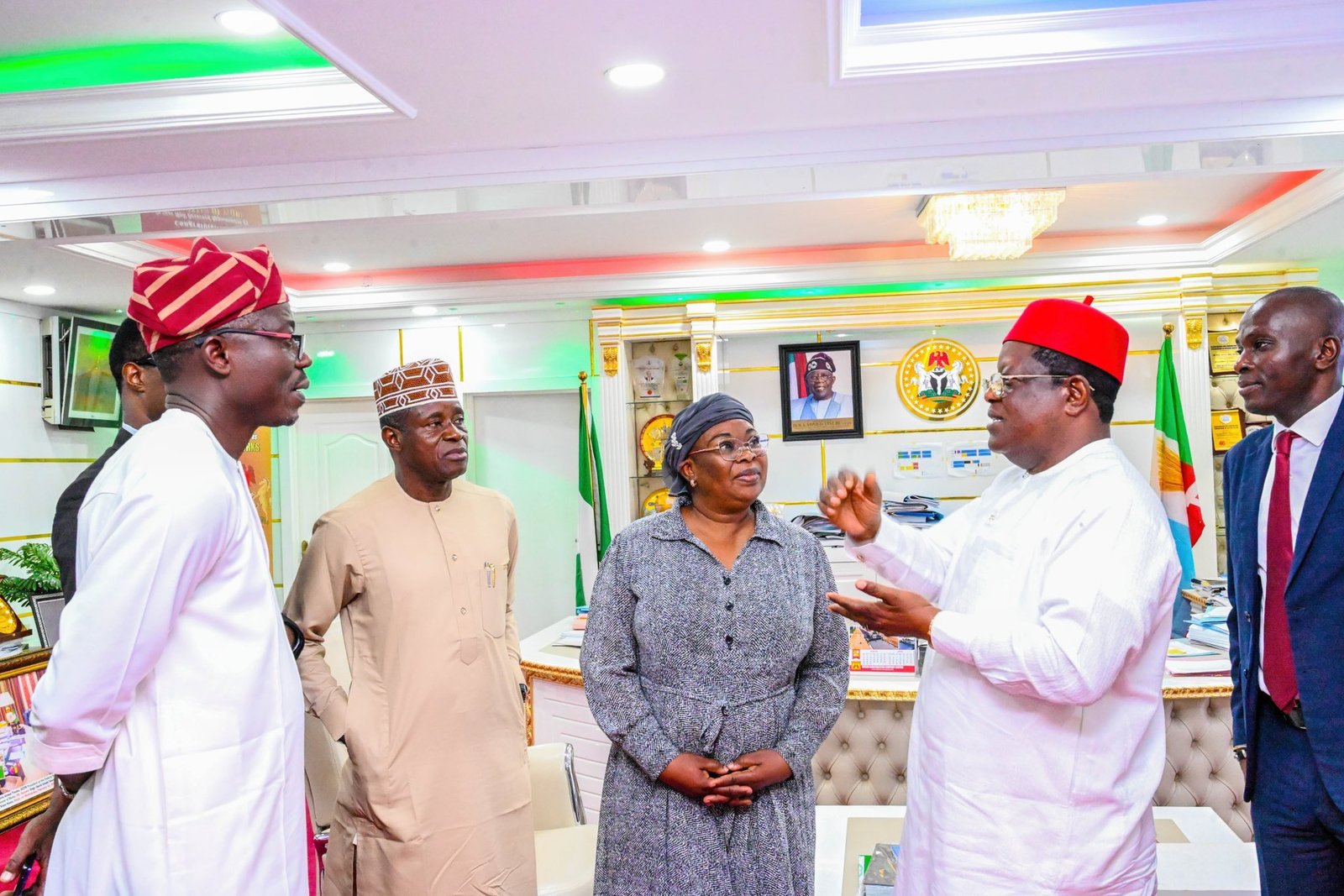
Umahi made the remarks on Monday while receiving a delegation from the ECOWAS Bank for Investment and Development (EBID), led by the Head of the Basic Infrastructure Division, Maimouna Sidibe, at the Ministry of Works headquarters in Abuja.
The visit forms part of EBID’s appraisal process ahead of the proposed approval of financing for Section One of the Trans-Sahara Super Highway, one of the Federal Government’s key infrastructure initiatives.
According to the minister, the four legacy road projects championed by President Tinubu are strategically interconnected to form a nationwide transportation network aimed at improving mobility, trade, and investment opportunities.
He explained that the 750-kilometre Lagos-Calabar Coastal Highway links directly with the Trans-Sahara Super Highway through Ndibe Beach in Cross River State, creating a seamless transport corridor across multiple regions.
Umahi disclosed that Section One of the Trans-Sahara Super Highway stretches approximately 123.64 kilometres from Ndibe Beach to the Benue State border, while contracts for additional sections traversing Benue, Kogi, and Nasarawa states have already been awarded.
Describing the route as a historic trade and agricultural corridor, the minister noted that it has long served as a critical channel for the movement of agricultural produce and economic activities.
He said the project would connect major agricultural hubs in states such as Ebonyi, Benue, and Cross River, while significantly reducing travel time between Calabar and Abuja.
According to Umahi, the highway is expected to cut the journey between the two cities to about four hours, enhancing trade and improving access to markets.
Beyond transportation benefits, the minister said the government plans to leverage existing dams along the corridor for irrigation and renewable energy projects, creating opportunities for industrial development, investment, and employment generation.
He added that the corridor would support tolling operations, industrial clusters, power projects, and other economic activities capable of generating substantial returns and jobs.
Umahi further explained that the Trans-Sahara Super Highway would connect with another of the President’s legacy projects through the Abuja-Akwanga Road corridor, extending through Jos, Bauchi, Gombe, Biu, and Maiduguri.
He revealed that the recently inaugurated Gombe-Biu section, covering about 125 kilometres, is being developed as a six-lane highway, while procurement processes are ongoing for the Bauchi-Gombe segment.
The minister also outlined plans to link the Lagos-Calabar Coastal Highway with the Sokoto-Badagry Super Highway through a new route beginning at Victoria Island in Lagos and passing through a tunnel and key island corridors before connecting to Badagry.
He said the integrated network would provide access across all geopolitical zones, describing the initiative as a transformative infrastructure programme with nationwide impact.
“When viewed as a whole, the projects form a loop that connects every geopolitical zone in the country,” Umahi said, adding that travelers would be able to access all six zones within a short period through the completed network.
The minister commended construction firm Infioues, the contractor handling Section One of the Trans-Sahara Super Highway, noting that work on the project has surpassed 20 per cent completion.
He stressed the need to accelerate the approval and disbursement of the proposed EBID funding to sustain project momentum, particularly as construction advances toward the next phase requiring increased financial commitments.
The proposed financing is expected to provide additional support for the delivery of the highway project, which the Federal Government views as a major component of its infrastructure-led economic development agenda.