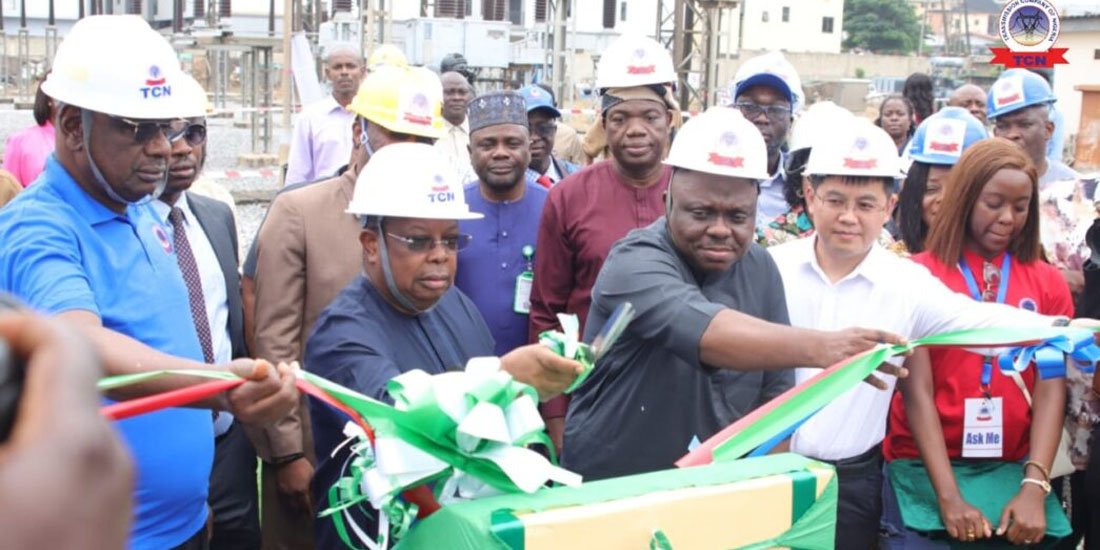
The federal government has commissioned upgraded transmission infrastructure at Alausa and Lekki in Lagos, adding a combined 272 megawatts of bulk power capacity to two corridors central to the state’s economy.
At Alausa, an old 30MVA transformer was swapped out for a new 100MVA unit, lifting the station’s total capacity from 135MVA to 205MVA and boosting the power available to Ikeja Electricity Distribution Company by 80 megawatts. In Lekki, the Transmission Company of Nigeria installed two additional 60MVA transformers along with nine new 33kV feeders, doubling the substation’s capacity from 120MVA to 240MVA, roughly a 192 megawatt increase.
Minister of Power Joseph Tegbe described both projects as targeted investments meant to clear transmission bottlenecks that have long left available generation stranded. He called Alausa more than an engineering milestone, noting its role as the administrative heart of Lagos State, home to a dense mix of government offices, businesses, hospitals, schools and markets that all depend on reliable power. The extra 80 megawatts, he said, will ripple through the local economy well beyond what the number alone suggests.
On Lekki, Tegbe said the corridor represents the kind of Nigeria the government wants to build: more industrial, more commercially active and more attractive to investors, and said the new capacity would let businesses, industries and communities grow without power infrastructure becoming a bottleneck.
Transmission Company of Nigeria chief executive Sule Abdulaziz said the Alausa upgrade would deliver more stable power to at least 70,000 residents once fully energised, and that both projects would strengthen the volume of bulk power the company can move to distribution companies nationwide. He described the work as proof of the company’s commitment to building and sustaining a transmission network capable of carrying the country’s growing power needs, and credited the federal government, the power ministry, the World Bank, the Lagos State government and various contractors and engineers for their support.