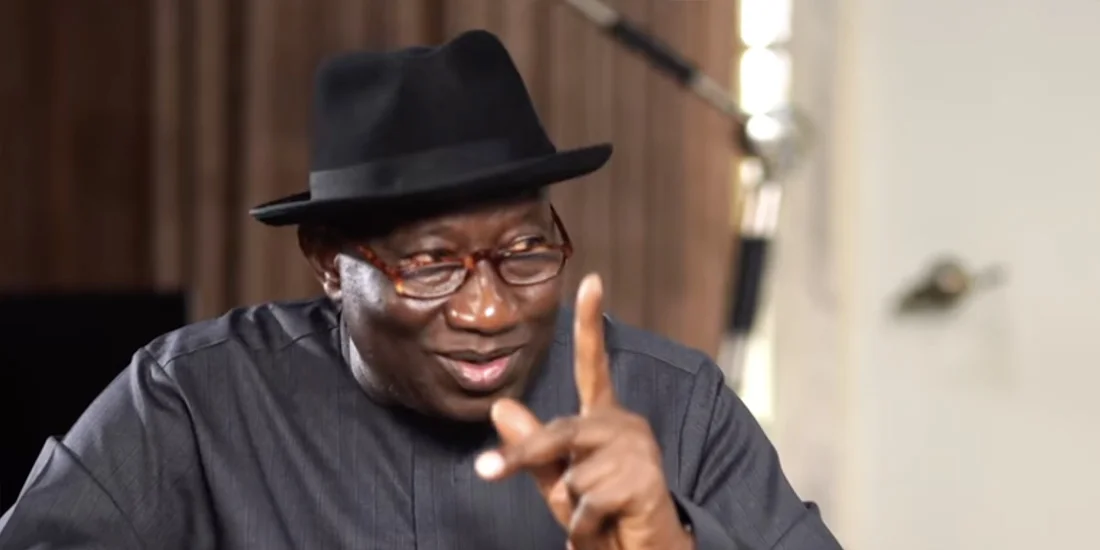
Former President Goodluck Jonathan has raised the alarm over serving governors, senior officials and party leaders descending on states holding off cycle elections with large entourages and heavy security details, warning the practice could destabilise Nigeria’s democracy if it becomes normalised.
In a statement on the recent Osun State governorship poll, Jonathan said the pattern seen there, and in earlier elections in Ekiti and Ondo, deserves urgent national attention. He argued that when powerful political figures converge on a state en masse on election day, the effect can be a climate of apprehension, intimidation and undue pressure, even if unintended. Such conduct, he said, should not be allowed to become the norm in a democratic society.
He recalled facing a similar situation as president during the 2013 Anambra and 2014 Ekiti elections, when he ordered party leaders and senior officials to leave the states after being briefed on their presence, and warned that if left unchecked now, the trend could threaten the country’s fragile democratic gains.
While acknowledging that parties have every right to campaign and mobilise supporters through legitimate structures, Jonathan said that right can be abused when it turns into an overwhelming show of force by governors and senior officials from across the country, an approach he said rarely happens in other democracies. He questioned whether Nigeria wants elections to become contests of raw political power rather than genuine competition for the mandate of the people, warning that if rival parties start matching each other governor for governor and entourage for entourage, the result would be deeper tension rather than a stronger democracy, turning elections into battles for survival instead of peaceful contests.
He urged stakeholders to treat the matter as a national conversation rather than a partisan dispute tied to one election, and reminded former and current public office holders that the influence attached to their positions carries a duty to strengthen democratic institutions rather than unsettle opponents or citizens.
Jonathan called on the National Peace Committee to convene an urgent meeting bringing together political parties, the electoral commission, security agencies, the National Assembly, the Nigerian Bar Association, the Governors’ Forum, civil society groups and the media, saying the committee’s credibility makes it well placed to set boundaries for political conduct before today’s unusual practices become tomorrow’s accepted norm.