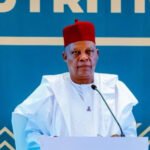
The ADC candidate links declining farm exports to insecurity and production costs while outlining a targeted petroleum subsidy proposal.
Former Vice President Atiku Abubakar has criticised the federal government’s handling of agriculture and proposed a production subsidy for petroleum products refined within Nigeria as part of his economic agenda.
In a statement issued through his Director of Strategic Communication, Phrank Shaibu, Atiku said Nigeria’s agricultural trade position had shifted from a surplus of N740.27 billion in the first half of 2025 to a deficit of N56.13 billion in the corresponding period of 2026. He described the N796.40 billion reversal as evidence of worsening conditions for farmers and processors.
Atiku also claimed that agricultural exports fell by 33.3 per cent and argued that insecurity, transport expenses and high processing costs were weakening the sector. The figures and causal interpretation were presented by his campaign and were not independently assessed in the supplied statement.
He asked the Tinubu administration to explain how it was protecting farming communities, reducing the cost of moving produce and supporting local manufacturing.
On energy policy, Atiku said a government led by him would introduce a capped and budgeted subsidy for qualifying petroleum products produced by Nigerian refineries, including modular facilities. Imported refined products, he said, would not qualify.
He proposed independent audits and mechanisms to determine whether the support reduced costs for consumers and businesses. His argument was that local refining could influence not only petrol prices but also aviation fuel, cooking gas, industrial feedstocks and employment.
Atiku criticised the federal government’s compressed natural gas programme, claiming that vehicle conversion costs and shortages of equipment had prevented many Nigerians from benefiting. He also questioned the reach of buses introduced as relief measures.
The former vice president said his approach would combine local refining support with stronger assistance for agriculture and processing industries. The statement did not provide a full fiscal estimate for the proposed subsidy or a detailed funding plan.
His remarks add to the policy debate over whether direct support to domestic production can ease household costs without recreating the financial burdens associated with broad fuel subsidies.