The vice president says legislation and local-government accountability are needed to sustain action against child malnutrition.
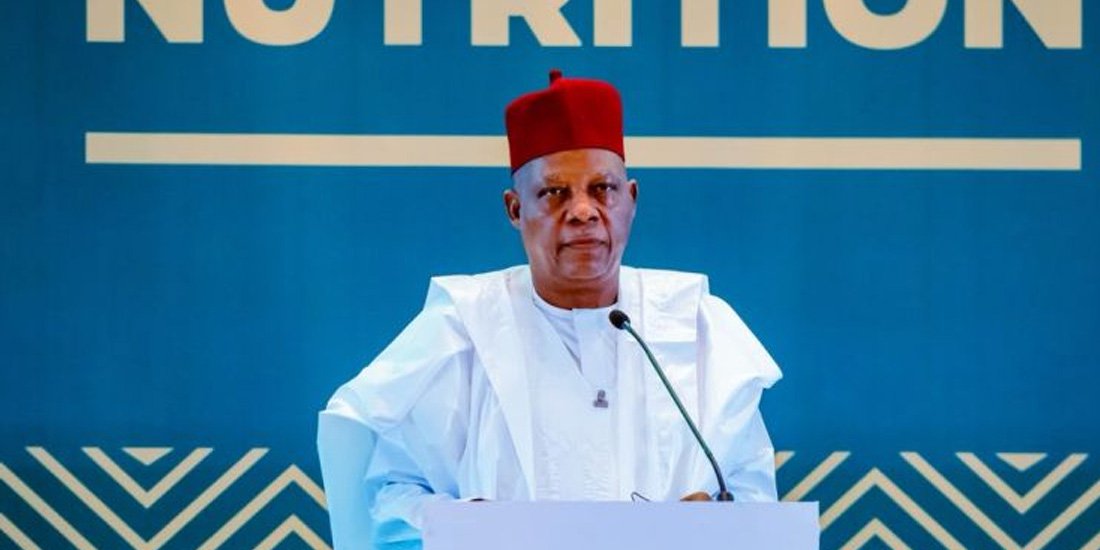
Vice President Kashim Shettima has called for accelerated passage of a National Food and Nutrition Bill to secure long-term funding and accountability for Nigeria’s response to malnutrition.
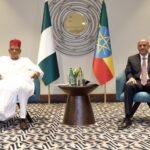
Speaking at the Nigeria-Ethiopia Nutrition Leadership Exchange Forum in Addis Ababa, Shettima said the proposed legislation would support the federal government’s Nutrition 774 Initiative by assigning responsibilities across federal, state and local authorities.
He said Nigeria’s National Policy on Food and Nutrition 2026–2035 aimed to reduce the proportion of children affected by stunting to 32 per cent by 2029, 28 per cent by 2032 and 25 per cent by 2035.
According to the vice president, nutrition committees had been established in 32 state Houses of Assembly and more than 450 local governments. He argued that these structures created an opportunity to embed financing and delivery obligations beyond individual administrations.
Shettima described local councils as the foundation of planning and accountability, with coordinated programmes covering healthcare, agriculture, water and sanitation, education and social protection.
He said a $26 million Nigerian commitment to the Child Nutrition Fund had unlocked a combined $52 million in funding, while 21 states had contributed $6.3 million since 2023 for nutrition supplies. He also referred to plans for a Presidential Nutrition Investment Fund and additional domestic resource mobilisation.
The vice president cited an estimated stunting rate of 40 per cent among Nigerian children under five and an annual economic cost of $56 billion from undernutrition. Those estimates were presented in his address.
He said the government was engaging food producers, small businesses and regulators to improve nutritious food supply and compliance with fortification standards for staple products.
Ethiopia’s Deputy Prime Minister Temesgen Tiruneh said sustained political leadership, financing and monitoring were essential. Health Minister Mekdes Daba described Ethiopia’s Seqota Declaration as a multisectoral effort to reduce child stunting and stressed the importance of nutrition during the first 1,000 days of life.
Both sides said they intended to continue exchanging experience on financing, implementation and community-level nutrition programmes.