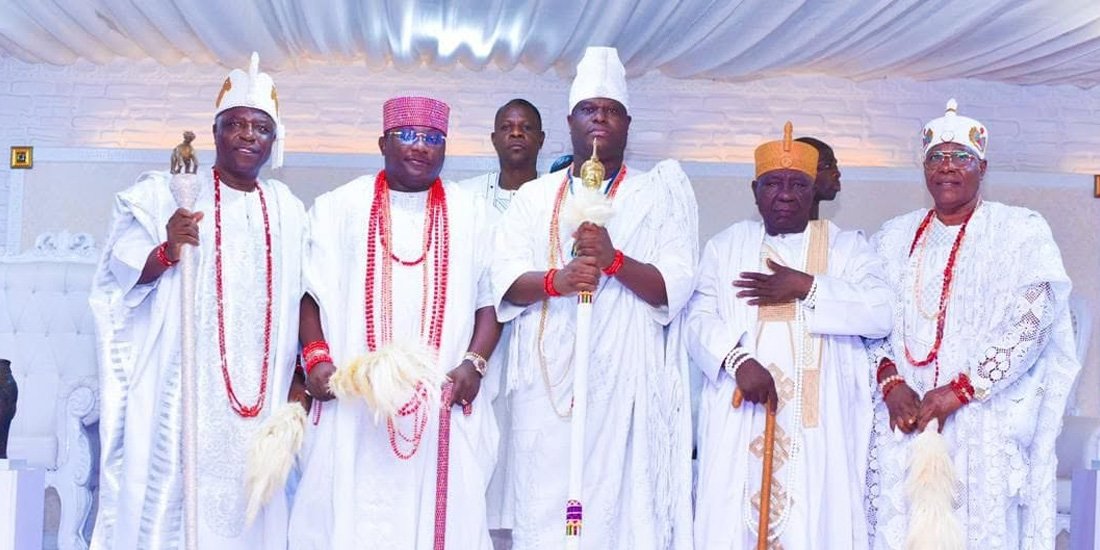
Traditional rulers across Yorubaland are considering the use of ancestral deities and other indigenous spiritual measures as part of efforts to tackle terrorism, banditry, kidnapping and other violent crimes in the South-West.
The move comes amid growing insecurity in the region, where communities continue to face rising cases of abductions, attacks and other criminal activities.
Several monarchs who spoke with journalists on Thursday and Friday said the proposed spiritual intervention would complement conventional security measures already being deployed by government agencies and local security outfits.
The discussions followed a recent call by the Ooni of Ife, Oba Adeyeye Ogunwusi, who urged traditional rulers across Yorubaland to revive ancestral mechanisms in response to worsening insecurity. Speaking at the grand finale of the 2026 Ifa Festival, the monarch, who also serves as Co-Chairman of the National Council of Traditional Rulers of Nigeria, called for greater collaboration between traditional institutions and government authorities to restore peace and order.
The South-West has witnessed a surge in kidnappings and violent crimes in recent months. More than 40 teachers and pupils from three schools in the Yawota and Esinle communities of Oriire Local Government Area in Oyo State are reportedly still being held captive by abductors.
Traditional Rulers Back Indigenous Security Measures
The Olowu of Owu-Kuta in Osun State, Oba Adekunle Oyelude, said traditional rulers were seriously considering the deployment of ancient deities to confront bandits and kidnappers operating in the region.
According to him, many Yoruba monarchs believe in the effectiveness of traditional spiritual institutions in protecting communities.
“We are exploring all available options to support ongoing security efforts. Many traditional rulers have confidence in the potency of Yoruba deities and ancestral powers regardless of their personal religious affiliations,” he said.
Oba Oyelude revealed that some communities had already begun implementing indigenous measures, while others were proceeding cautiously because of possible social and economic implications.
He stressed that traditional interventions would complement, rather than replace, the work of security agencies.
Similarly, the Chairman of the Ondo State Council of Obas and the Olowo of Owo Kingdom, Oba Ajibade Ogunoye, said traditional institutions had historically served as guardians of both the physical and spiritual well-being of their communities.
He noted that combining traditional mechanisms with modern security approaches could strengthen efforts to curb crime and reiterated his support for the establishment of state police.
“If state police is implemented and supported by traditional measures, our communities will be significantly safer,” he said.
The Deji of Akure, Oba Aladetoyinbo Aladelusi, disclosed that consultations were ongoing in his kingdom regarding the possible use of traditional mechanisms to defend communities against criminal elements.
“We are reviewing these suggestions carefully and ensuring that any action taken remains within the ambit of the law,” he said, adding that local vigilante groups were also involved in ongoing security discussions.
In Ogun State, the Onimeko of Imekoland, Oba Benjamen Olanite, said residents had increasingly urged traditional rulers to deploy indigenous methods to address the worsening security situation.
He, however, cautioned that any traditional intervention must respect legal and human rights standards.
The Olu of Imasayi, Oba Lukmon Kuoye, called on the National Assembly to grant traditional rulers clearer constitutional roles in security matters. He argued that traditional institutions possess indigenous mechanisms that could help protect communities and border areas if properly recognised and regulated.
Traditionalists Express Readiness
Traditional worshippers have also expressed support for the proposed initiative, describing indigenous spiritual systems as an underutilised tool in community protection.
The leader of Ijo Orunmila Ifa Koseunti, Ifaniyi Akinside, said the renewed interest in traditional practices reflected the need to revive cultural systems that once played a major role in safeguarding communities.
According to him, various Yoruba deities have specific functions related to protection and the defence of communities against external threats.
Another Ifa priest, Ifashina Atanda, urged South-West governors to consider supporting indigenous security initiatives, arguing that consultations with traditional spiritual institutions could provide early warnings about potential threats.
Veteran Nollywood actor and traditionalist, Pa Peter Fatomilola, also advocated the inclusion of indigenous approaches alongside conventional security strategies, saying Yoruba cultural heritage contains valuable tools that could contribute to community safety.
Gani Adams Calls for Combined Approach
The Aare Ona Kakanfo of Yorubaland and leader of the Oodua Peoples Congress, Gani Adams, called for a combination of spiritual and physical responses to insecurity across the South-West.
Adams said traditional rulers, traditional worshippers, Muslims, Christians and security agencies all have important roles to play in securing the region.
He stressed that tackling insecurity requires a collective effort and urged all religious groups to intensify prayers and consultations aimed at protecting communities from criminal activities.
“The security challenge facing the South-West demands a united response. Traditional institutions, religious leaders and security stakeholders must all contribute to ensuring the safety of our people,” he said.