Development organisation ActionAid Nigeria has called for an urgent forensic audit of the country’s revenue management system, following revelations that more than N34 trillion was deducted from federal government earnings before being distributed to the three tiers of government.
The organisation described the scale of the deductions, which it said accounted for over 40 percent of federal revenue in recent years, as a systemic failure in public financial management with serious consequences for development financing and fiscal stability.
ActionAid said findings confirmed by the World Bank revealed that a significant portion of government income was being absorbed through pre-distribution charges, including cost-of-collection frameworks and agency remittances, with very little transparency around how those funds were structured or deployed.
The group warned the trend was worsening Nigeria’s reliance on borrowing, citing IMF projections that the country’s debt-to-GDP ratio could climb to 33.1 percent by 2027. “The widening gap between gross revenue and distributable income is constraining development financing and increasing dependence on debt,” ActionAid said.
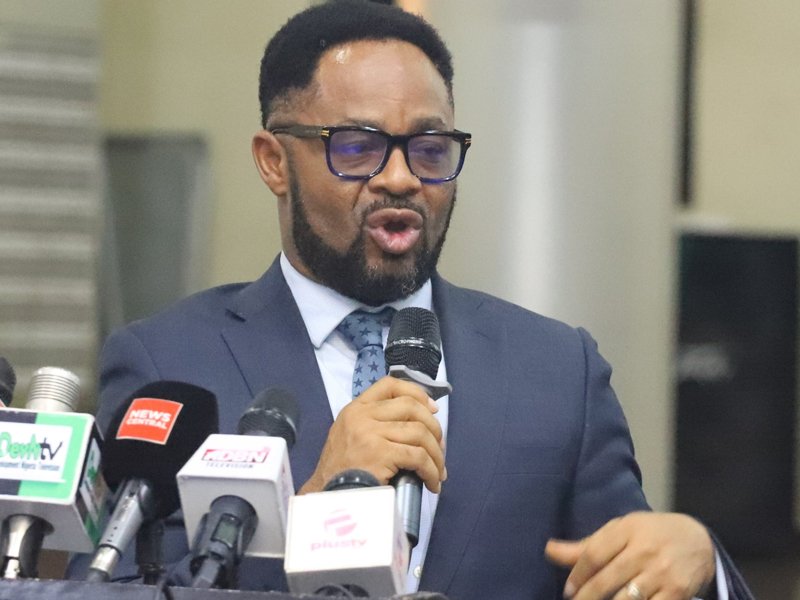
Country Director Andrew Mamedu said the consequences were already being felt by millions of citizens. “For citizens grappling with rising inflation, declining purchasing power, and economic hardship, the continued reduction in available public resources means fewer investments in essential services,” he said.
ActionAid called on the federal government to conduct a comprehensive review of all revenue deduction frameworks, publish detailed breakdowns of all deductions, strengthen independent oversight of revenue-generating agencies, and work with the National Assembly to hold those responsible to account. It also urged state governments, civil society organisations, and the media to increase pressure for greater transparency.
“This is not just a fiscal issue; it is a matter of justice,” Mamedu said. “Every naira that fails to reach essential services denies Nigerians access to healthcare, education, and dignity.”
House Approves N249 Billion Debt Relief Package to Rescue Three Electricity Distribution Companies
The House of Representatives has approved a financial relief framework and a 10-year debt restructuring plan for the Kano, Jos, and Ikeja Electricity Distribution Companies, in a bid to stabilise a sector weighed down by decades of accumulated liabilities.
The resolution followed the adoption of a technical subcommittee report examining the growing indebtedness of eleven distribution companies as escalated by the Nigeria Bulk Electricity Trading Company.
The approved framework covers accrued interest on debt from 2015 to September 2025 amounting to approximately N128.6 billion, as well as historical debts totalling N120.1 billion, bringing the combined outstanding liability for the three companies to just under N249 billion.
The Public Accounts Committee Chairman, Hon. Bamidele Salam, warned that without urgent financial restructuring and sustained regulatory intervention, the long-term viability of Nigeria’s electricity distribution sector would remain in jeopardy. He urged all distribution companies to meet their current market obligations going forward to prevent further accumulation of liabilities.
The broader audit revealed that the cumulative indebtedness of all eleven distribution companies rose from N1 trillion at the end of 2024 to N1.3 trillion by September 2025, driven by continued interest accruals. The Abuja Electricity Distribution Company carried the largest single liability at approximately N275 billion, while the Kaduna distribution company owed close to N304 billion.
The Nigerian Electricity Regulatory Commission issued a directive in January 2026 instructing the Nigeria Bulk Electricity Trading Company not to charge interest on outstanding invoices between 2015 and 2020, while mandating that interest be charged on obligations from 2021 onwards.
The committee also recommended that liabilities incurred by the Kano distribution company during periods of government receivership, totalling approximately N13.4 billion, be transferred to the Nigerian Electricity Liability Management Company in line with precedents already established within the sector.