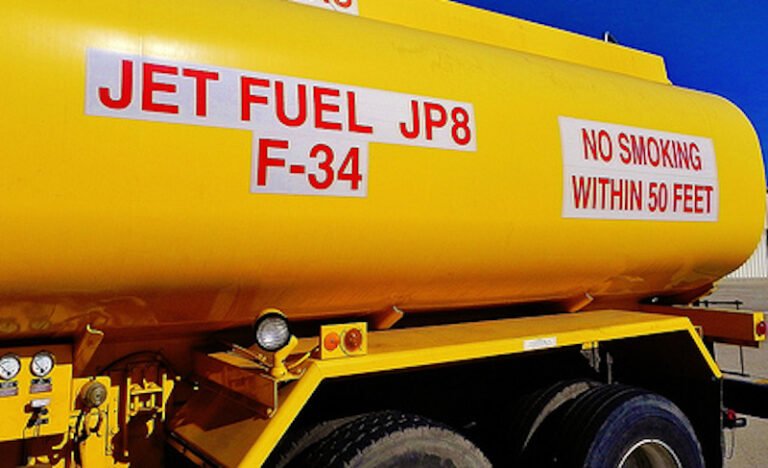
Europe is receiving record volumes of jet fuel from Nigeria and the United States as the continent scrambles to replace supplies disrupted by the ongoing conflict involving Iran, which has effectively closed tanker traffic through the Strait of Hormuz.
Data from commodities intelligence firms Kpler and LSEG shows that Nigerian jet fuel exports to Europe reached approximately 66,000 barrels per day in April, the highest figure ever recorded, with analysts pointing to the Dangote Refinery as the engine behind Nigeria’s emergence as a critical swing supplier of aviation fuel since the facility launched in 2024.
Europe had historically relied on Gulf sources for close to 75 percent of its jet fuel imports, or roughly 375,000 barrels per day. With that supply route disrupted, the continent is now drawing heavily on alternative suppliers. U.S. jet fuel exports to Europe are also on track to hit a record high of between 149,000 and 200,000 barrels per day in April, according to available shipping data.
International Energy Agency Executive Director Fatih Birol issued a blunt warning this week, telling the Associated Press that if Middle East oil supplies are not restored in the coming weeks, flight cancellations would begin soon. “I can tell you soon we will hear the news that some of the flights from city A to city B might be cancelled as a result of lack of jet fuel,” Birol said.
The IEA’s latest monthly report estimated that Europe had approximately six weeks of jet fuel remaining and warned that if the continent could not secure more than half the volumes it has lost from the Gulf, stockpiles could fall to a critical 23-day level by June, at which point physical shortages would begin to bite.
At the Amsterdam, Rotterdam, and Antwerp storage hub, jet fuel inventories fell to their lowest level since March 2023 last week. European airlines have already begun responding. KLM, part of the Air France-KLM group, announced it would cut 160 flights over the coming month, citing unsustainable kerosene costs on certain intra-European routes. The airline noted that there was no fuel shortage, but that the economics of specific routes had become untenable.
The broader impact of the crisis on Nigeria is mixed. While the country’s refinery is exporting at record levels, with total product exports reaching 416,000 barrels per day so far this month, domestic aviation has come under severe strain. Nigerian airlines announced they would suspend all flight operations from April 20 unless jet fuel prices were reduced, citing a nearly 270 percent increase since February.
Birol said the longer the conflict drags on, the more severe the global consequences. “It’s a dire strait, and it is going to have major implications for the global economy. The longer it goes, the worse it will be for economic growth and inflation around the world,” he said.