The United States has reinvigorated a key agricultural financing mechanism designed to expand trade ties with Nigeria, revitalising the Export Credit Guarantee Programme administered by the US Department of Agriculture as part of a deliberate strategic shift from aid-based engagement toward commercially driven bilateral trade partnerships.
The programme provides government-backed credit guarantees that reduce the financial risks faced by banks and importers, making it significantly easier for Nigerian businesses to source essential agricultural inputs from the United States on terms that were previously inaccessible due to financing constraints and risk perceptions.
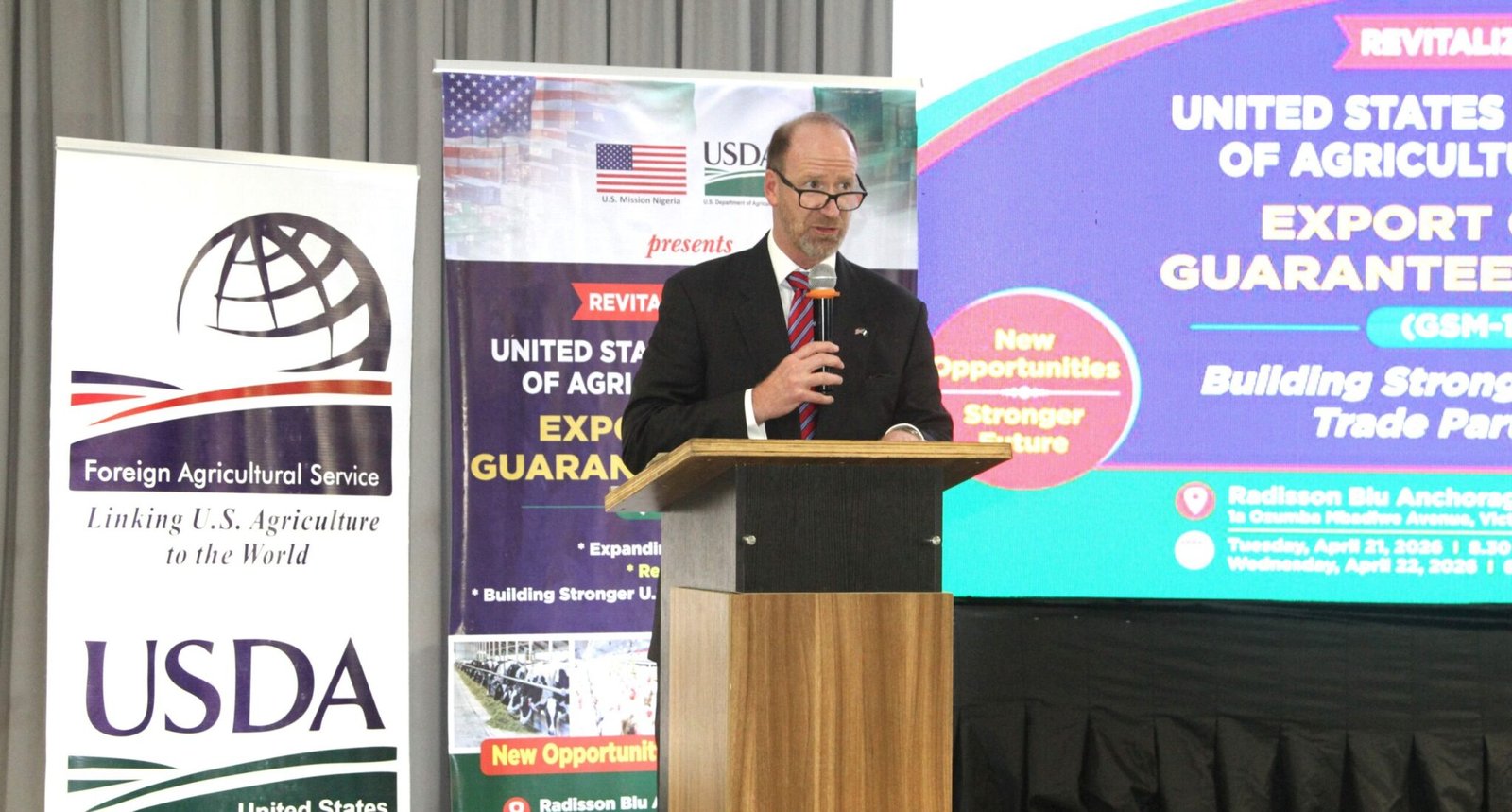
Speaking in Lagos, US Consul General Rick Swart emphasised the administration’s ambition to transition the bilateral relationship from aid to trade, positioning Nigeria as a critical commercial partner in Africa and highlighting substantial opportunities for entrepreneurs and investors on both sides of the relationship.
Bilateral trade figures underscore the strengthening commercial relationship. Total bilateral trade between the United States and Nigeria reached nearly $15 billion in 2025, representing a 14 percent increase from the previous year. Agricultural trade drove a particularly dramatic expansion, rising sharply to $764 million, an 84 percent jump that reflected both expanding demand and stronger market linkages between both economies.
To boost awareness and participation in the programme, the Foreign Agricultural Service of the US Consulate General convened a two-day forum in Lagos that brought together a broad range of stakeholders including the US International Development Finance Corporation, the Nigerian-American Chamber of Commerce, US exporters, Nigerian banks, and agricultural importers.
Discussions focused on how the credit guarantee scheme could unlock financing flows, improve food security across Nigeria, and create jobs throughout the agricultural value chain. Business-to-business meetings were held during the forum with the explicit aim of converting identified commercial opportunities into tangible trade agreements.
A key development that enabled the renewed momentum was a change in late 2025 in which Nigerian banks regained eligibility to participate in the programme. Since then, selected financial institutions have received credit limits, reopening access to US-backed trade financing and helping accelerate agricultural commerce between the two countries at a pace not seen in recent years.