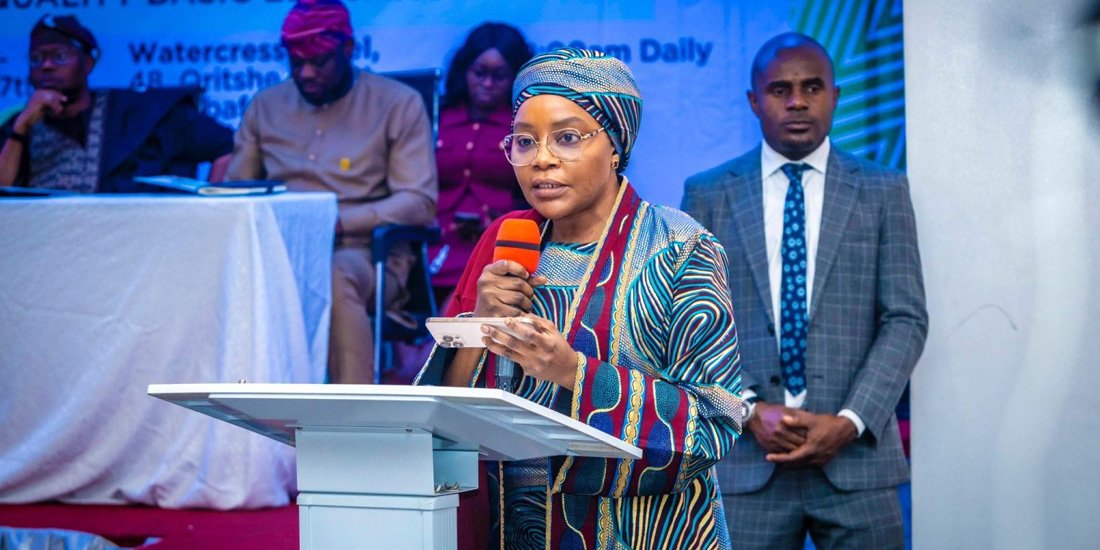
More than N100 billion in matching grants that had sat unused for years is now flowing into Nigerian classrooms, according to Universal Basic Education Commission Executive Secretary Aisha Garba, who told education correspondents at a media luncheon in Abuja that the commission has mobilised the funds and is already showing results under its 2025 to 2031 Strategic Blueprint.
Garba said the commission, working with State Universal Basic Education Boards, has built more than 4,600 new classrooms, renovated over 6,100 existing ones, installed 2,780 toilets and 678 boreholes, and supplied over 334,000 pieces of school furniture nationwide, alongside supporting the establishment of more than 2,300 Early Childhood Care Development and Education Centres to strengthen foundational learning for young children. Guided by the strategic blueprint and aligned with the federal government’s Renewed Hope Agenda, she said, the commission is moving beyond reform rhetoric into measurable results that are improving schools, empowering teachers and expanding opportunity for millions of Nigerian children.
Beyond infrastructure, Garba said UBEC has invested over N20.4 billion in teacher professional development, while its Effective Schools Programme and stronger School Based Management Committees are being used to improve accountability and school leadership. On the technology front, she said the commission is expanding Digital Literacy Centres, strengthening Smart Schools and promoting artificial intelligence, coding and robotics education, having already distributed over 7.8 million instructional materials nationwide to improve literacy and numeracy. She said UBEC is also widening access through Open Schooling, Integrated Qur’anic and Tsangaya Education, girl child education and inclusive education programmes, all backed by institutional reforms meant to strengthen transparency, project monitoring and data driven decision making.
Garba called on journalists to keep partnering with the commission through regular briefings, project visits and balanced reporting to build public confidence and stakeholder participation, arguing that education is a shared responsibility: government can provide leadership and resources, but lasting transformation requires the collective commitment of communities, teachers, parents, development partners and the media.