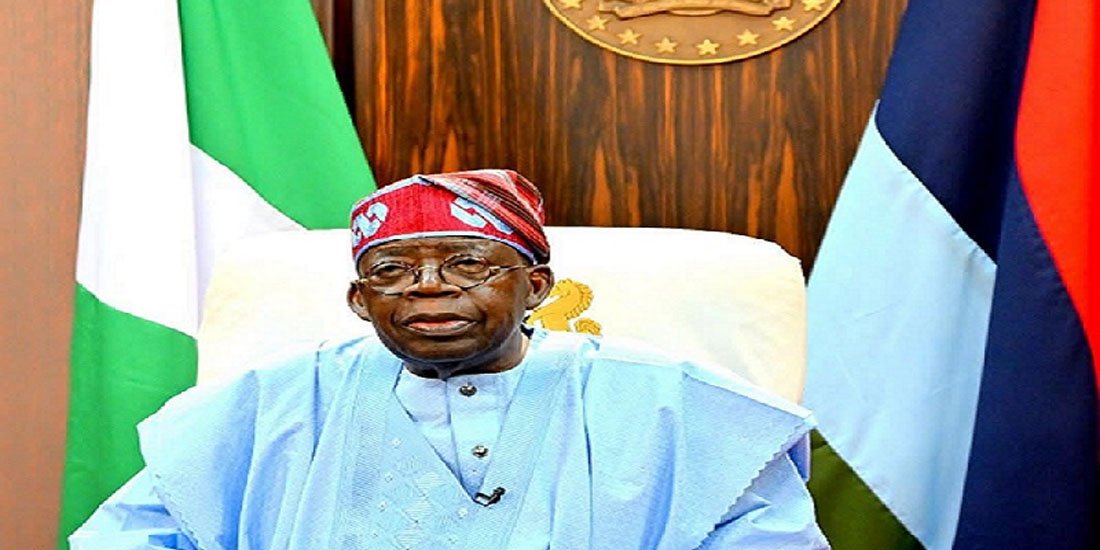
ABUJA — President Bola Tinubu has acknowledged the severe economic pressure confronting millions of Nigerians but insists that problems accumulated over several decades cannot be eliminated within four years.
In an Independence Day address marking Nigeria’s 66th anniversary, Tinubu defended the economic reforms introduced since he assumed office in May 2023 and rejected calls for a return to petrol subsidy.
The President said Nigeria inherited structural problems so deep that temporary interventions could no longer provide a sustainable solution.
“We cannot erase in four years what accumulated over generations. But we can change its course,” Tinubu said.
His address, titled “From Reform to Prosperity,” came at a time when many Nigerians continue to battle high food prices, expensive transportation, increased electricity costs and declining purchasing power.
Tinubu acknowledged those difficulties but argued that the hardship confronting households was the consequence of longstanding economic weaknesses rather than simply the reforms introduced by his administration.
The President strongly rejected demands for the restoration of petrol subsidy, describing advocates of such a reversal as influential but regressive voices.
Using the analogy of a cancer patient, Tinubu said Nigeria had reached a point where difficult treatment was necessary.
According to him, previous governments repeatedly treated the symptoms of the country’s economic problems without addressing their underlying causes.
His administration, he said, decided to confront those problems directly.
The consequences have been substantial.
Petrol sold for about N195 per litre when Tinubu assumed office in May 2023. Prices subsequently climbed to around N1,500 in parts of the country.
The naira also suffered a steep depreciation following changes to the foreign exchange system, increasing the cost of imported goods, medicines, machinery and other products.
Electricity became considerably more expensive for Band A customers following the tariff adjustment introduced in 2024.
Transportation and food prices have also risen sharply.
Tinubu nevertheless insisted that Nigerians should distinguish between the country’s underlying economic problems and the painful measures introduced to address them.
“Our reforms did not create the weaknesses in our economy. They confronted them,” he said.
The President said the economy was beginning to show signs of improvement.
He cited economic growth above four per cent, declining oil theft, improved foreign reserves, greater foreign exchange stability and a reduction in inflation from its peak.
Tinubu also pointed to more than $6 billion in non oil exports recorded in 2025 as evidence that Nigerian businesses were becoming increasingly productive.
He declared that the country had reached a turning point.
According to him, the government’s priority would now move increasingly towards translating improvements in the wider economy into better living conditions.
“Our priority is to bring down the cost of living,” Tinubu said.
Agriculture will form a major part of that effort.
The President said the government would expand irrigation, dry season farming, agricultural mechanisation and access to seeds and fertiliser.
Improved storage and transportation are also expected to reduce the amount of food lost between farms and markets.
Tinubu said investments in roads, railways and ports would help reduce logistics costs for farmers and manufacturers.
The administration also intends to make employment and industrial production major priorities.
Nigeria’s large youth population, Tinubu said, could become an enormous economic advantage if sufficient opportunities were created.
He pledged greater attention to gas development, manufacturing, digital connectivity and skills acquisition.
“I want to see more Nigerians making things,” the President said.
“I want to see Nigerian businesses selling Nigerian goods to the whole world.”
Tinubu acknowledged that economic indicators would mean little to families unable to afford food, school fees, transportation or medical treatment.
He said the government would therefore continue interventions targeted at vulnerable households.
The President identified the Nigerian Education Loan Fund, Consumer Credit Corporation and National Social Register among programmes intended to provide support while the economy recovers.
But he insisted that social intervention could not become the country’s permanent answer to poverty.
“Our objective is not to manage poverty more efficiently. We will defeat it,” he said.
Whether Nigerians accept the President’s declaration that the country has entered an age of prosperity may ultimately depend on something more immediate than economic statistics.
For millions of households, the real test will be whether food becomes cheaper, transportation becomes affordable, incomes improve and jobs become easier to find.