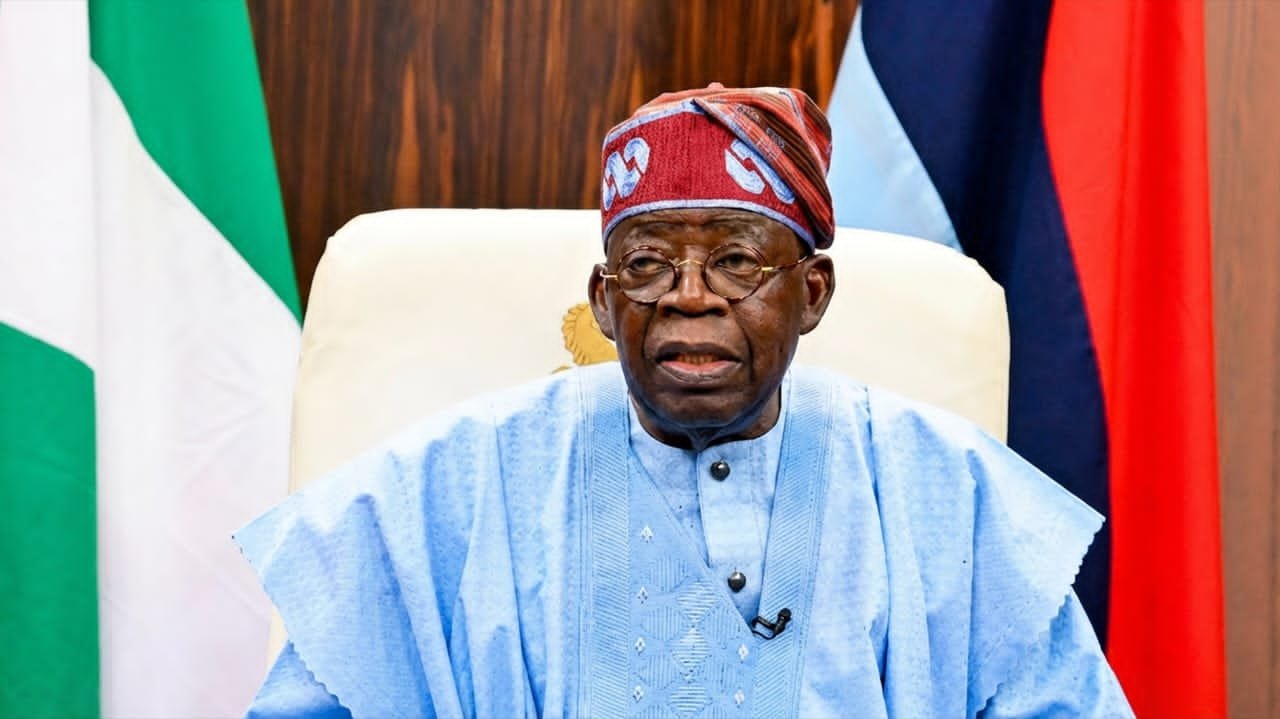
President Bola Tinubu has formally requested Senate approval for a $516.33 million foreign loan to finance key sections of the proposed Sokoto to Badagry Superhighway, a flagship infrastructure project stretching 1,000 kilometres across seven states that his administration believes will transform Nigeria’s transport landscape, deepen regional integration, and unlock significant economic opportunities for millions of citizens.
In a communication read on the floor of the Senate, Tinubu sought a resolution of the National Assembly, in accordance with Sections 16 and 21 of the Debt Management Office Establishment Act of 2011, to secure a syndicated loan facility for Sections 1, 1A and 1B of the project. The president specifically requested approval for the $516,333,007 financing package from Deutsche Bank, with its inclusion in the federal government’s existing borrowing plan already endorsed by the legislature.
He told lawmakers that the superhighway, stretching from Illela in Sokoto State to Badagry in Lagos State and passing through Kebbi, Niger, Kwara, Oyo, and Ogun states, would unlock significant economic opportunities across geopolitical zones and strengthen the country’s transportation and logistics infrastructure.
The financing arrangement would be backed by a partial risk guarantee from the Islamic Corporation for the Insurance of Investment and Export Credit, which the president described as a structured and sustainable funding model aligned with the government’s fiscal responsibility framework. The federal government would provide counterpart funding of N265.54 billion to cover land acquisition, compensation, and related infrastructure costs.
The loan carries a tenure of nine years, including a grace period of up to three years, at an interest rate tied to the Secured Overnight Financing Rate plus 5.3 percent. Tinubu noted that the Federal Executive Council had already approved the financing structure and terms, and urged the Senate to grant expeditious consideration to the request in the overriding public interest. Following the presentation, the Senate referred the request to its Committee on Local and Foreign Debts with a mandate to report back within one week.
Senator Adamu Aliero, representing Kebbi Central, threw his weight behind the proposal, describing the project as long overdue and noting that successive administrations had failed to bring it to fruition despite it having been on the drawing board for over 50 years. He revealed that parts of the highway were already under construction using reinforced concrete pavement and solar-powered lighting, demonstrating a commitment to modern, durable standards.
“When completed, the road will reduce travel time between Sokoto and Lagos from about 13 hours to roughly six hours. That is a massive boost for commerce, logistics and regional integration,” Aliero said, urging his colleagues to support the proposal when the committee report was presented.
Senate President Godswill Akpabio described the superhighway as a transformative investment that went beyond a road project to represent an economic corridor capable of saving lives, creating jobs, and enhancing productivity across the country. He defended the decision to seek external financing, stressing that borrowing for critical infrastructure was justified when such investments had the capacity to generate long-term economic returns and improve the nation’s ability to repay.