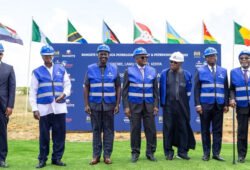
The Managing Director of the Federal Airports Authority of Nigeria, Mrs. Olubunmi Kuku, has projected significant export growth opportunities for Nigeria following a rise in bilateral trade with the United Kingdom to £8.1 billion, representing an 11.4 percent year-on-year increase, while positioning Nigerian airports as critical gateways for capturing a larger share of global air freight trade.
Speaking at a forum hosted by the Nigerian-British Chamber of Commerce, Kuku, represented by the Director of Cargo Development and Services, Lekan Thomas, described the trade figures as encouraging evidence of deepening economic ties between both countries and pointed to policy support and aviation reforms as key drivers of the growing bilateral relationship.
She noted that UK imports from Nigeria stood at £2.4 billion and that even a modest one to five percent increase in Nigerian exports could generate an additional $25 to $125 million in revenue, underlining the enormous upside available to exporters willing to scale their operations through aviation channels.
Kuku also highlighted the United Kingdom’s decision to grant duty-free or reduced tariffs on over 3,000 Nigerian products as a major opportunity for exporters, particularly in agriculture, manufacturing, and emerging sectors. She emphasised strong government backing for aviation reforms, citing recent engagements led by President Bola Tinubu and Minister of Aviation Festus Keyamo, which had helped restore investor confidence and strengthen bilateral cooperation.
FAAN, she noted, was already advancing infrastructure upgrades, digital cargo systems, and incentives to attract more cargo airlines, with the authority working systematically to position Nigeria to capture a larger share of the global air freight market.
Separately, a high-level United Kingdom trade mission on education and skills concluded a week-long visit to Nigeria, laying a foundation for expanded collaboration in education and workforce development between both countries. The mission, organised by the UK Department for Business and Trade and running from April 19 to 23 in Abuja and Lagos, brought together leading UK private schools, skills providers, and education institutions with Nigerian policymakers, investors, and school operators.
The engagement formed part of the UK’s broader International Education Strategy, which identified Nigeria as one of five priority markets for global education partnerships. At the heart of discussions was the expansion of in-country delivery of British education, including the establishment of internationally recognised UK schools in Nigeria and the development of industry-aligned skills programmes, particularly in Technical and Vocational Education and Training.
In Abuja, the delegation held high-level talks with Nigeria’s Minister of Education, Tunji Alausa, securing strong political backing for deeper institutional cooperation. British Deputy High Commissioner Jonny Baxter described education as a key pillar of bilateral engagement, noting strong appetite on both sides to deepen collaboration and pointing to the potential for connecting UK institutions with Nigerian partners to build sustainable in-country education systems while positioning Nigeria as a regional hub for high-quality learning.
The delegation included representatives from Harrow International School, The King’s School Canterbury, Whitgift School, Bedford School, and Pearson, among other prominent UK institutions. The mission concluded with a pipeline of follow-up activities, including one-on-one engagements, memoranda of understanding discussions, and agreed next steps aimed at translating dialogue into tangible and commercially viable partnerships.