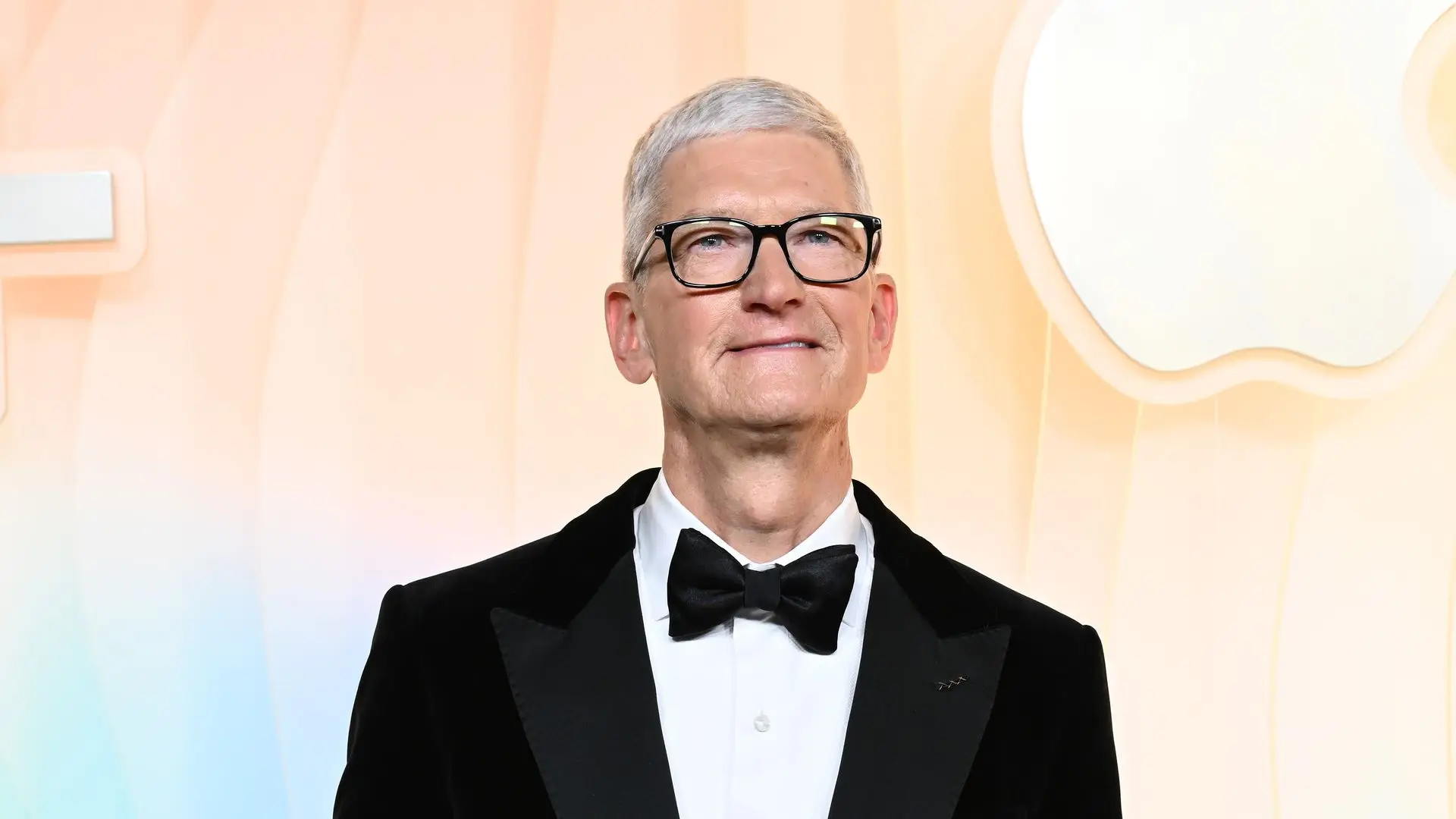
Apple has announced one of the most consequential leadership transitions in corporate history, confirming that Tim Cook will step down as Chief Executive Officer after nearly 15 transformative years at the helm, handing the reins of a company valued at $4 trillion to John Ternus, the hardware engineering chief who has spent more than two decades helping to design the physical products that turned Apple into the world’s most valuable technology company, while Cook transitions to the role of Executive Chairman to continue engaging with governments and policymakers globally.
Cook, 65, who took over from Apple co-founder Steve Jobs in 2011 following Jobs’s death, described his time as CEO as the greatest privilege of his life and confirmed in the company’s official announcement that he would remain actively involved with Apple in his new capacity. His departure marks the end of an era defined by extraordinary financial expansion, global market penetration, and the transformation of Apple from a premium technology brand into a genuinely universal consumer company with over 2.5 billion active devices in use across more than 200 countries and territories.
Under Cook’s stewardship, Apple achieved a remarkable compound growth trajectory, increasing its market capitalisation by more than 1,000 percent from approximately $350 billion when he assumed the chief executive role to over $4 trillion at the time of his departure announcement. Annual revenue nearly quadrupled over the same period, rising from $108 billion in the 2011 financial year to more than $416 billion in 2025, while yearly profits grew to exceed $100 billion, making Apple one of the most profitable companies in the history of capitalism.
His tenure produced transformative new product categories that reshaped consumer technology globally, including the Apple Watch, which created the modern smartwatch market, and AirPods, which became the world’s best-selling wireless headphones and generated billions in annual revenue. He also oversaw the development and launch of major services platforms including Apple Music, Apple TV+, iCloud, and Apple Pay, collectively building a recurring revenue base that significantly reduced Apple’s dependence on hardware upgrade cycles and provided the company with a more stable and predictable financial profile.
Apple also reported its best-ever quarter for iPhone sales earlier this year, driven by renewed and stronger than expected consumer demand in China, while the company’s workforce grew by more than 100,000 people during Cook’s leadership.
Ternus, 50, who joined Apple in 2001 and worked his way through hardware engineering to lead the division responsible for the physical design and manufacturing of Apple’s entire product lineup, was widely regarded within the technology industry as the natural and well-prepared successor to Cook. Cook described him in the announcement as possessing the mind of an engineer and the soul of an innovator, a characterisation that spoke to Ternus’s dual capacity for rigorous technical problem-solving and the kind of imaginative product vision that Apple’s reputation depended upon.
In his own statement, Ternus acknowledged both the weight and the opportunity of the role he was assuming. “I am humbled to step into this role, and I promise to lead with the values and vision that have come to define this special place for half a century,” he said, evoking a sense of historical continuity while signalling his personal commitment to the culture and mission that Jobs had established and Cook had sustained.
Ternus inherits a company that, despite its extraordinary financial performance and brand strength, faces a set of genuinely consequential strategic questions about the direction and pace of its engagement with artificial intelligence. Apple has been notably less prominent than rivals including Microsoft, Google, and Amazon in the current wave of generative AI development, having chosen in some cases to integrate third-party AI capabilities into existing products rather than developing proprietary large language models at the same scale as its competitors. Whether this approach will prove strategically wise or leave Apple disadvantaged in the next major technology cycle remained one of the most debated questions in the global technology industry at the time of the announcement.
The company also faces unresolved questions about the commercial trajectory of its newer product categories, including the Vision Pro spatial computing headset, which had not achieved the consumer adoption levels that early expectations suggested, despite representing a significant research and development investment. The transition was unanimously approved by Apple’s Board of Directors and described as the carefully planned outcome of a thoughtful, long-term succession process that had been underway for at least a year before the public announcement.