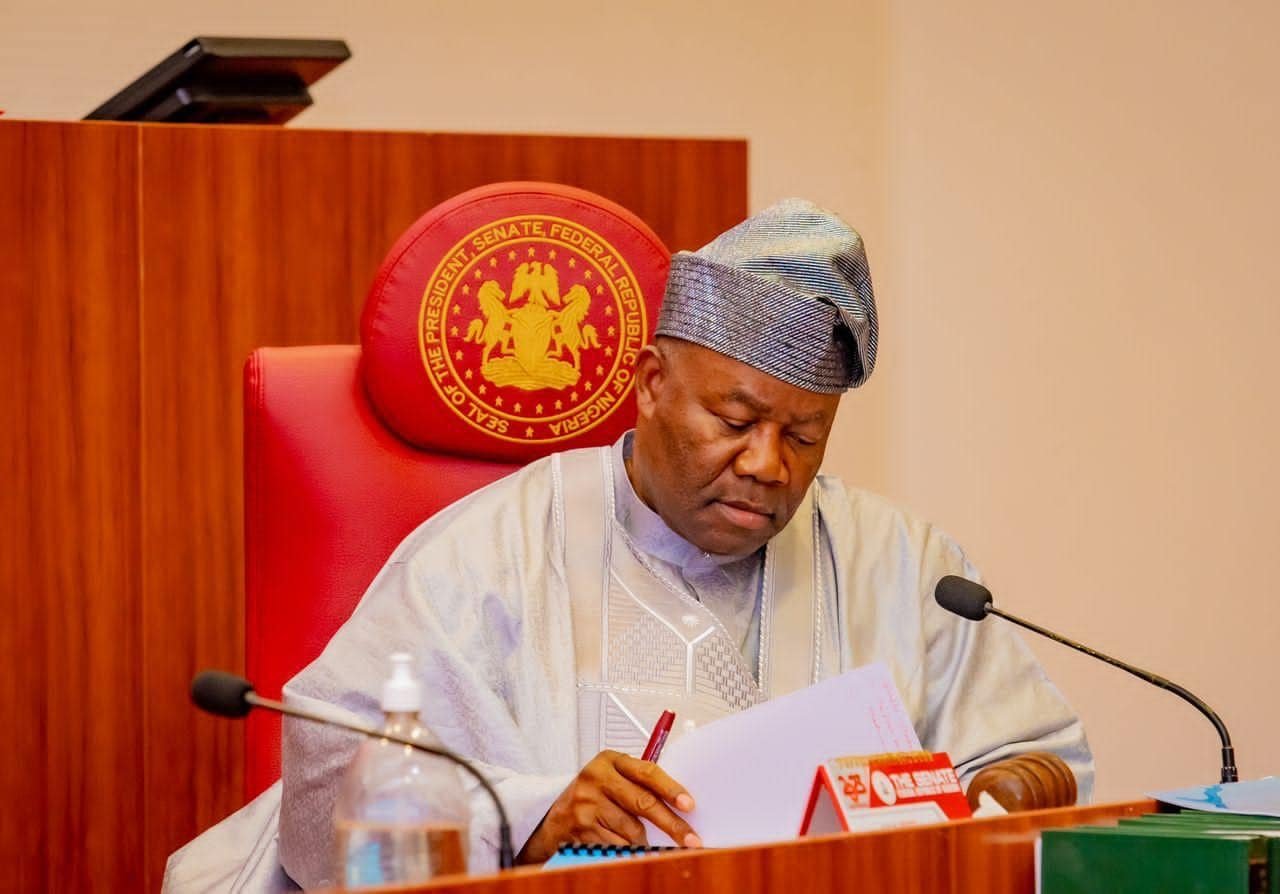
The Senate has shelved a proposal to create an Internal Tender Board for the National Assembly after lawmakers, led by Senate President Godswill Akpabio, concluded the legislature must first open up its own budget to greater scrutiny before pursuing procurement reform, a debate that exposed how little senators themselves know about how their institution’s finances are prepared and spent.
The motion, sponsored by Senator Sunday Steve Karimi, sought to establish an Internal Tender Board overseeing procurement within approved budget lines, grounded in Section 81(3) of the 1999 Constitution, which guarantees the National Assembly’s financial independence through a first line charge on the Consolidated Revenue Fund, and Section 51, which allows each chamber to regulate its own internal administration. The Senate notes that Section 81(3) of the Constitution guarantees the independence of the National Assembly and provides for its funding through the first line charge on the Consolidated Revenue Fund, Karimi said, arguing the board would reinforce parliamentary autonomy and strengthen procurement transparency, in furtherance of the constitutional principle of separation of powers and parliamentary autonomy, it is necessary to strengthen the institutional capacity of the National Assembly to manage its financial and procurement processes efficiently, transparently and in a manner consistent with its status as an independent arm of government.
The proposal ran into immediate resistance. Senator Adamu Aliero argued the Senate was solving the wrong problem entirely, insisting procurement is not the fundamental issue. We are putting the cart before the horse, he said, two of the problems that we have in the National Assembly regarding the management of finances and the budget do not solely lie in the process of procurement, the problem has been that the National Assembly has not set up a Budget and Research Office, lamenting that senators are routinely left in the dark about their own institution’s spending. What is happening today is that we don’t even know and we don’t even see the budget of the National Assembly being presented here so that we can interrogate and understand the lines of expenditure, he said, urging Karimi to withdraw the motion until broader financial accountability issues are resolved first, let us get the house right first before we talk about the issues that the Distinguished Senator Karimi is raising.
Akpabio, joining the debate, faulted both the timing and process behind the motion, saying a proposal this sensitive should have been discussed with Senate leadership and National Assembly management before reaching the floor. Senator Karimi, you should have discussed this even with me in the presence of the Clerk to the National Assembly and the principal officers of management so that I get clearance on what you are coming up with, he said, questioning why lawmakers would debate creating an Internal Tender Board in public while still lacking basic information about their own institution’s finances. Talking about Internal Tender Board and all that, should this be in the public glare before we clean up our house, he asked, we should start with ourselves and we should get the two chambers to know exactly what is going on, we should also debate and understand the budget, we should know how much is coming, what is going to where, this motion is premature. Karimi sought clarification on whether the Clerk to the National Assembly had discussed the proposal with Akpabio beforehand, a claim Akpabio flatly denied. No, no, this is not correct, he said, if it was discussed with me, I will not be opposed, I am not opposed to the motion but I am opposed to the content of the prayers. Karimi then withdrew the motion, which Akpabio formally declared withdrawn, with Senate leadership indicating lawmakers would first be fully briefed on the National Assembly’s budget and spending before any fresh procurement reform proposal returns to the floor.