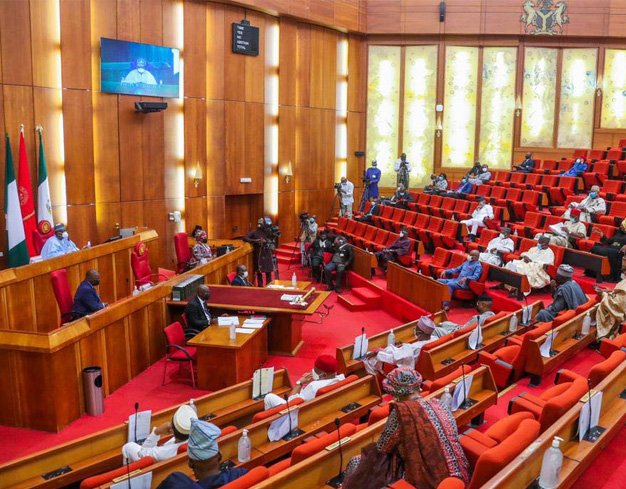
The Nigerian Senate has adopted sweeping amendments to its Standing Orders that would effectively disqualify politicians entering the upper chamber for the first time in 2027 from contesting the Senate Presidency or Deputy Senate Presidency, in a move widely interpreted as a calculated effort to prevent Imo State Governor Hope Uzodinma and other prominent newcomers from mounting leadership bids the moment they are sworn in.
The contentious amendments, adopted after a closed-door session, stipulate that only senators who served in the current 10th Senate and secured re-election into the 11th Senate would be eligible to contest presiding offices when the next Assembly is inaugurated in June 2027.
Deputy Senate Leader Oyelola Ashiru, presenting the amendments, anchored them on Section 60 of the 1999 Constitution, which empowers the legislature to regulate its own procedures. The most contested provision mandated that any senator seeking to contest a presiding office must have served at least two terms totaling eight years, with one term immediately preceding the election. “A Senator shall not be eligible to contest as a Presiding Officer unless he has been elected and served as a Senator for at least two terms of eight years, one term of which shall immediately precede such election,” Ashiru stated.
The timing of the amendments carried unmistakable political significance. Reports indicated that Uzodinma, a former senator, had already obtained APC nomination forms and was finalizing plans to resign as governor to contest a Senate seat in 2027. Should he succeed in returning to the Senate, the new rules would nonetheless disqualify him from seeking the presidency of the chamber, as he would not qualify as a member of the immediately preceding 10th Senate.
Sources within the National Assembly said the amendments were partly driven by ranking lawmakers’ determination to preserve institutional continuity and prevent what one senator described as opportunistic leadership contests by political newcomers using the Senate primarily as a platform for presidential ambition.
Critics described the amendments as a pre-emptive strike by the current leadership bloc to shape succession in the next Assembly and ensure that only insiders with accumulated tenure could contest the highest positions, regardless of fresh electoral mandates or popular support.