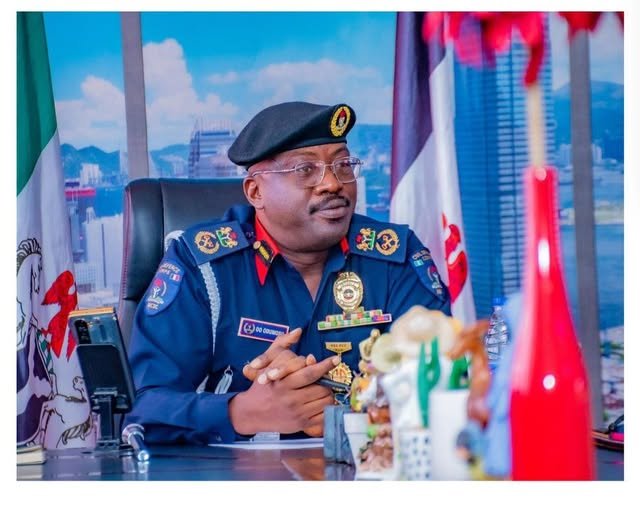
Nigeria’s security agencies are weakening the country’s response to insecurity by competing with each other for institutional relevance rather than cooperating toward shared operational objectives, the FCT Commandant of the Nigeria Security and Civil Defence Corps warned at the launch of a new book examining the structural dysfunction at the heart of the country’s security architecture.
NSCDC FCT Commandant Dr. Olusola Odumosu, author of Nigeria’s Security Dilemma: Rivalries and Implications, Vol. 1, said no single security organization possessed the full capacity, intelligence reach, or operational expertise to address the complexity of threats confronting Nigeria, and that a fragmented approach had created operational gaps that criminal networks actively exploited. He described institutional rivalry, competition for relevance, and the absence of coordinated action as the defining impediments to a national security architecture capable of delivering results.
Senate Interior Committee Chairman Senator Adams Oshiomhole said national security had to rise above institutional ego and partisan affiliation, calling for mandatory intelligence sharing among all security agencies and closer operational integration between the DSS, police, and military. Drawing on his experience as Edo State Governor, he said intelligence-led operations backed by military firepower had produced significant arrests but expressed frustration that some successful operations were undermined when suspects were subsequently released despite the investment made in apprehending them.
The Defence Minister’s representative Rear Admiral Olusanya Bankole said efforts were already underway to improve inter-agency collaboration, describing the stability of Nigeria as more important than the institutional ego of any security organization. Inspector-General of Police Olatunji Disu was represented at the event, underscoring the seniority of officials drawn to what was framed as a conversation the country needed to have publicly.