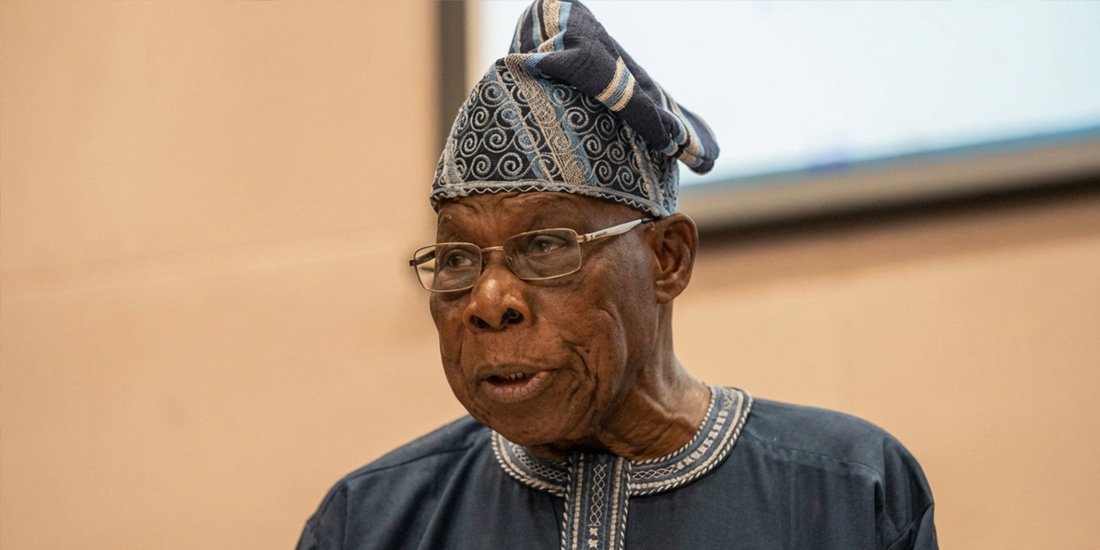
Former President Olusegun Obasanjo has warned that many of the underlying issues that triggered Nigeria’s civil war remain unresolved, cautioning that the country cannot afford to experience another conflict of such magnitude.
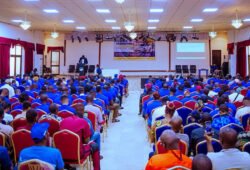
Obasanjo made the remarks on Wednesday in Abeokuta during the presentation of a historical work titled Asaba Massacre by the Isama Aje of Asaba, Chief Chuck Nduka-Eze, at the Olusegun Obasanjo Presidential Library.
The publication, which includes written and audio-visual materials, documents events surrounding the Nigerian Civil War using eyewitness accounts, recorded interviews, archival records and other historical sources.
Speaking at the event, Obasanjo acknowledged his role during the civil war but maintained that he could not provide details about the alleged Asaba massacre because the military operations in the area were under the command of Murtala Muhammed at the time.
He said he had often been asked questions about the military operations in Asaba but had consistently explained that he was not in a position to speak authoritatively on the matter.
The former president, however, commended the author for documenting the events, describing the work as an important contribution to preserving Nigeria’s history and helping future generations understand the country’s past.
“We preserve the past, capture the present and inspire the future,” Obasanjo said, adding that confronting painful chapters of history is essential to preventing similar tragedies.
Reflecting on the lessons of the civil war, he stressed that many of the factors that led to the conflict—including divisions and mistrust among Nigerians—still persist today.
Obasanjo recalled a conversation with former Head of State Yakubu Gowon, who, according to him, had warned that Nigeria might not survive another civil war.
“We have fought one civil war too many already,” he said. “To talk about a second civil war, God forbid. We must learn from history, condemn what happened, and do everything humanly possible to ensure it never happens again.”
He urged Nigerians to embrace reconciliation and national unity, insisting that the country must commit itself to the principle of “never again.”
Obasanjo also recounted an incident during the war in which he intervened to stop a soldier from assaulting a woman in Asaba, saying such actions underscored the importance of accountability during armed conflict.
Earlier, Chief Nduka-Eze said Asaba Massacre was based on extensive research and carefully verified evidence, including eyewitness testimonies, interviews, archival documents and established historical scholarship.
According to him, multiple independent accounts indicate that after federal troops entered Asaba, civilians were assembled and instructed to publicly affirm their loyalty to Nigeria by declaring “One Nigeria.”
He said the evidence suggested that men were subsequently separated from women and children before large numbers of unarmed male civilians were killed.
While noting that the exact number of casualties remains uncertain, Nduka-Eze said available evidence points to the deaths of more than 1,000 civilians, describing the events as a devastating tragedy that left lasting scars on the Asaba community.
Like Obasanjo, the author warned that the ethnic distrust and divisions that contributed to the civil war have not completely disappeared, stressing the need for greater national unity, dialogue and reconciliation to prevent a recurrence of such a conflict.