The Federal Government has described China’s decision to extend zero tariff treatment across all tariff lines for qualifying African countries as a major opportunity to accelerate industrialisation and value added exports.
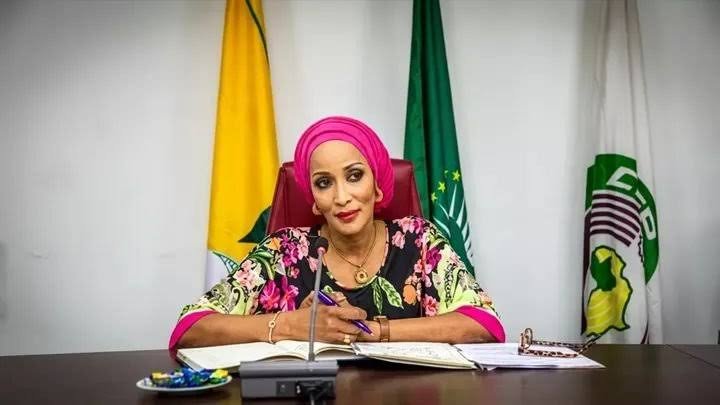
Foreign Affairs Minister Bianca Odumegwu Ojukwu said Nigeria wanted to convert the policy from a diplomatic concession into actual production, shipments, jobs and foreign exchange earnings.
She spoke in a message to an international seminar examining the impact of the Chinese initiative on African economic transformation.
The minister said expanded access to the Chinese market could help shift Africa’s relationship with China away from dependence on aid and loans toward trade and production.
For Nigeria, she identified agro processing, textiles, leather, pharmaceuticals, solid minerals and manufacturing as sectors with significant potential.
Odumegwu Ojukwu said duty free access to a market of about 1.4 billion people could also attract Chinese and other foreign investors into factories, industrial parks and processing facilities in Nigeria.
She warned, however, that preferential tariffs would be meaningless if the country lacked sufficient products to export.
The government therefore plans to support productive capacity in cocoa processing, sesame, garments, leather goods, renewable energy components and other industries.
The Nigerian Investment Promotion Commission and other agencies are expected to work with investors interested in producing locally for export to China.
The minister said potential benefits included more foreign exchange, stronger small businesses, technology transfer, employment, infrastructure investment and higher government revenue.
She also identified unreliable electricity, expensive finance, weak logistics, inadequate infrastructure and difficulty meeting international standards as major constraints.
The Foreign Affairs Ministry plans to support stronger cooperation between Nigerian regulators and their Chinese counterparts.
Agencies including the National Agency for Food and Drug Administration and Control and the Standards Organisation of Nigeria are expected to play important roles in helping exporters meet Chinese requirements.
Odumegwu Ojukwu also supported improved shipping links and trade finance arrangements using naira and renminbi where practical.
She urged Nigerian businesses to treat the policy as a commercial opportunity that required investment and preparation rather than simply another government announcement.