The International Monetary Fund has nudged Nigeria’s growth projection for 2026 down to 4.1 percent, a modest cut from its earlier estimate of 4.4 percent, while raising the 2027 outlook to 4.3 percent, a signal that near-term turbulence may give way to a steadier recovery.
The revision, published in the IMF’s latest World Economic Outlook, reflects a tug of war between competing economic forces. On one side, rising fuel and fertilizer prices tied to ongoing geopolitical tensions, alongside elevated shipping costs, are expected to drag on non-oil activity. On the other, stronger crude oil prices are providing a partial buffer, softening what could have been a sharper downgrade.
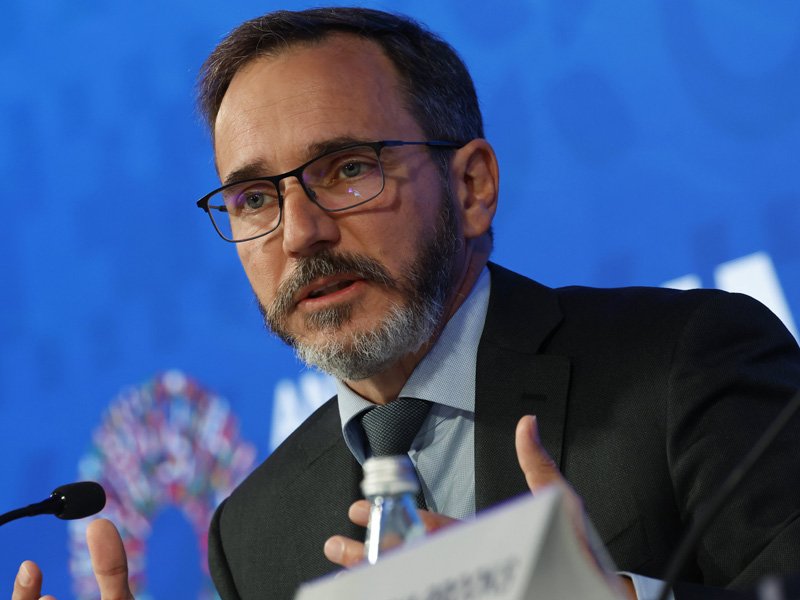
Deniz Igan, Division Chief in the IMF’s Research Department, explained that the adjustment represents a balance rather than a collapse in confidence. She noted that while war-related input costs and logistics pressures are weighing on the economy, higher oil revenues are partially offsetting those effects, with a more meaningful recovery expected to take shape in 2027.
The Fund urged Nigerian authorities to maintain tight monetary policy, warning that navigating a volatile external environment would require close attention to exchange rate movements and inflation expectations. Staying data-dependent, the IMF stressed, is essential to achieving the Central Bank’s inflation targets.
IMF Chief Economist Pierre-Olivier Gourinchas placed Nigeria’s situation within a broader regional picture, noting that several Sub-Saharan African economies are simultaneously dealing with weaker growth and rising inflation, a combination driven largely by global energy market disruptions. He acknowledged that the impact varies between energy exporters and importers, with different pressures shaping each country’s trajectory.
On a more positive note, the IMF praised the Central Bank of Nigeria for completing its banking sector recapitalisation programme, describing stronger capital buffers as an effective shield against external shocks. IMF Financial Counsellor Tobias Adrian reinforced that view, stating that a well-capitalised banking system is central to global financial stability, and that the value of adequate capital becomes clearest precisely during periods of stress.
On capital flows, IMF Assistant Director Jason Wu flagged a growing tilt toward debt financing over foreign direct investment and equity across emerging markets. He noted that countries with stronger fiscal positions tend to enjoy better access to international capital markets and lower borrowing costs, a reminder that fiscal discipline carries long-term rewards beyond immediate budget management.