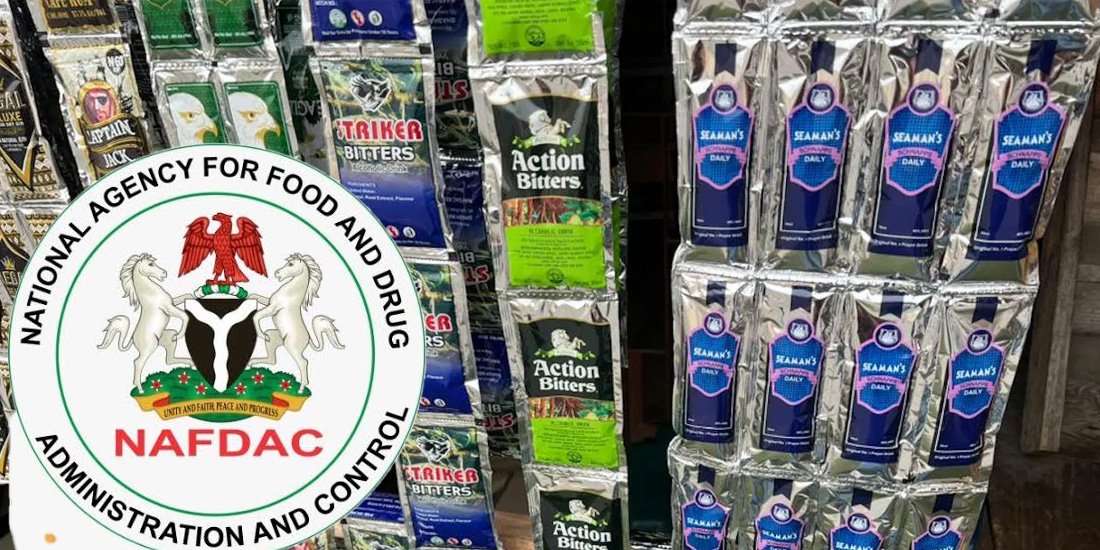
The National Agency for Food and Drug Administration and Control has intensified nationwide enforcement of the ban on alcoholic beverages packaged in sachets and very small plastic and glass bottles.
The agency said manufacturers, distributors and retailers that failed to comply could face sanctions.
NAFDAC said the enforcement was intended to remove prohibited products from the market and reduce easy access to high alcohol drinks among children and young people.
Affected manufacturers have signed an enforcement undertaking requiring them to recall prohibited products from warehouses, distributors and other parts of the supply chain.
Recalled products are to be verified and destroyed under NAFDAC supervision, with manufacturers covering the cost.
Factories that produced the prohibited pack sizes will not be allowed to reopen until the relevant production lines have been dismantled, permanently disabled or reconfigured.
The policy followed years of consultation.
NAFDAC said regulators first raised concerns in 2018 about the affordability and portability of high alcohol products in sachets and small containers.
A five year moratorium gave manufacturers until January 31, 2024 to transition to larger packaging.
Enforcement began in February 2024 but was delayed after industry resistance and National Assembly intervention.
The final deadline was extended to December 31, 2025.
The full ban took effect on January 1, 2026.
It covers alcoholic beverages in sachets and plastic or glass containers below 200 millilitres.
NAFDAC cited research suggesting that sachets and small plastic bottles were among the most common forms in which underage consumers obtained alcohol.
The agency began first tier enforcement against manufacturers in January and later expanded to markets, motor parks, retail outlets, bars and distribution centers.
Some factories were closed and company staff arrested over alleged violations.
NAFDAC said businesses seeking reopening would have to complete recalls, pay applicable regulatory charges, destroy prohibited products under supervision and pass inspection.
Further violations could lead to continued closure, regulatory watch listing, suspension or revocation of product registrations and prosecution.
Director General Mojisola Adeyeye said the agency was not campaigning against alcohol itself but against packaging formats that made high alcohol products especially accessible to young people.
NAFDAC urged members of the public to report continued manufacture or sale of prohibited products.