Former Central Bank Deputy Governor Kingsley Moghalu has warned that the world is entering an era of unprecedented uncertainty driven by geopolitical rivalry, technological disruption and economic nationalism, urging governments and business leaders to fundamentally rethink their strategies.
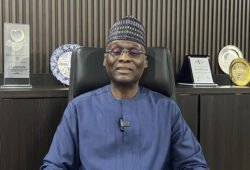
Speaking at a webinar hosted by the Stratus Global Alliance, Moghalu said the world has become more interconnected through trade and technology than ever before, yet simultaneously more divided, identifying four major forces reshaping the global landscape, geopolitical shifts, technological disruption, economic recalibration and demographic and climate change. He said the world has returned to multipolar politics driven by competition between the United States and China, significantly heightening geopolitical risk for countries and businesses, and argued that President Donald Trump’s America First doctrine has accelerated the decline of multilateralism and transformed global trade through tariffs.
On technology, Moghalu described artificial intelligence as both an opportunity and a disruptive force reshaping labor markets, saying many current job losses stem from AI performing functions people once did, and advised organizations to prepare strategically rather than panic. He warned that geopolitical events have become direct drivers of inflation, citing how conflicts in the Middle East and Eastern Europe now affect prices globally, and highlighted demographic trends as an underappreciated factor in future growth, projecting that by 2050 Africa will account for a billion working age people and nearly 40 percent of the global workforce, a potential asset only if properly skilled.
Moghalu argued that many assumptions underpinning globalization have proven unrealistic, with sovereignty and national interest returning as dominant forces in international affairs, and questioned the notion of a truly universal rules based international order, saying power has always shaped how international law gets applied. He recommended that business leaders treat geopolitical risk as a core governance issue rather than an external factor.