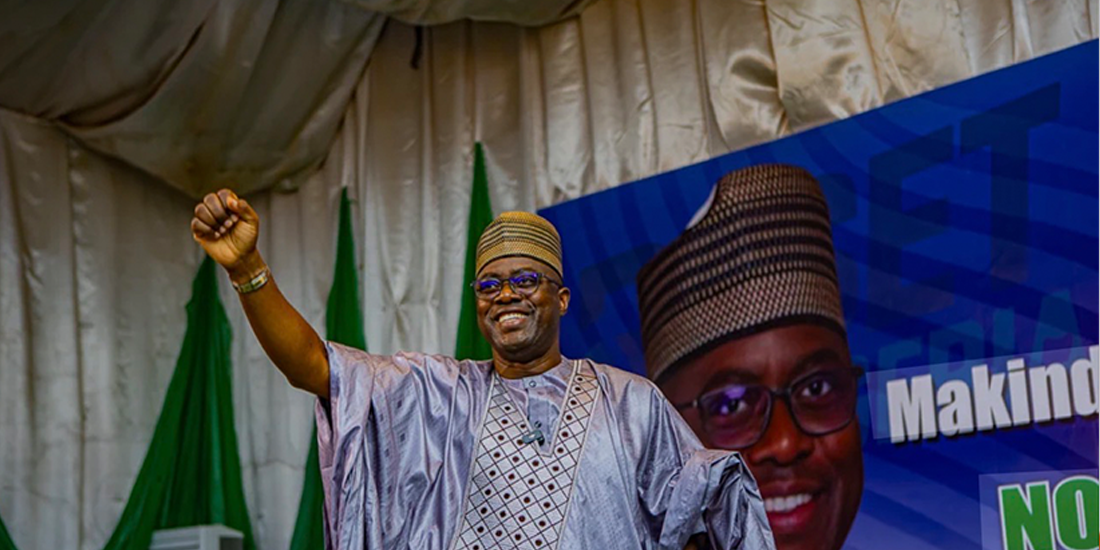
Oyo State Governor and presidential candidate Seyi Makinde has expanded his Reset Nigeria campaign beyond the South West, taking his political message to Katsina and Nasarawa as his campaign intensifies criticism of President Bola Tinubu’s handling of the economy and national security.
Makinde and his running mate, Lawal Musa Daura, have begun a series of town hall engagements designed to gather citizens’ views across Nigeria’s six geopolitical zones and incorporate their concerns into the campaign manifesto.
The campaign says the meetings are being structured around direct discussions with communities rather than conventional political rallies.
Makinde’s campaign organization also criticized Tinubu’s Independence Day address, describing it as lacking specific commitments capable of addressing economic hardship and insecurity.
Director of Strategic Communications for the campaign, Richard Ihediwa, said Nigerians expected measurable commitments and timelines from the President on major economic and security challenges.
The campaign disputed Tinubu’s assessment that the country was moving beyond difficult reforms towards greater prosperity.
It argued that the removal of petrol subsidy and changes to the foreign exchange system had increased pressure on household finances and businesses.
The campaign pointed to the rising costs of transportation, food, healthcare and other essentials as evidence of the difficulties facing Nigerians.
It also raised questions about the government’s approach to infrastructure, agriculture, industrial development, local manufacturing and public borrowing.
On security, Makinde’s campaign argued that many communities continued to experience killings, kidnapping and other forms of violent crime despite government interventions.
The Reset Nigeria town hall campaign is expected to place those economic and security concerns at the centre of Makinde’s presidential message.
During the Katsina engagement, Makinde and Daura focused heavily on poverty and insecurity.
The campaign argued that the two problems were increasingly interconnected, particularly in communities where insecurity had prevented farmers from accessing their land, disrupted markets and destroyed livelihoods.
Makinde said his campaign had listened to residents and understood the seriousness of their concerns.
He told participants that increasing poverty and insecurity were among the reasons his campaign believed Nigeria required a reset.
Makinde also used the visit to address controversy surrounding the reconstruction and upgrade of the Samuel Ladoke Akintola Airport in Ibadan.
He rejected a claim by Federal Capital Territory Minister Nyesom Wike that the Federal Government provided N50 billion for the project.
Makinde maintained that the Oyo State Government was financing the airport upgrade.
As the 2027 presidential race gathers momentum, the expansion of the Reset Nigeria campaign into northern states indicates Makinde’s attempt to transform his political base in Oyo State into a broader national campaign centered on economic conditions, security and government accountability.