L
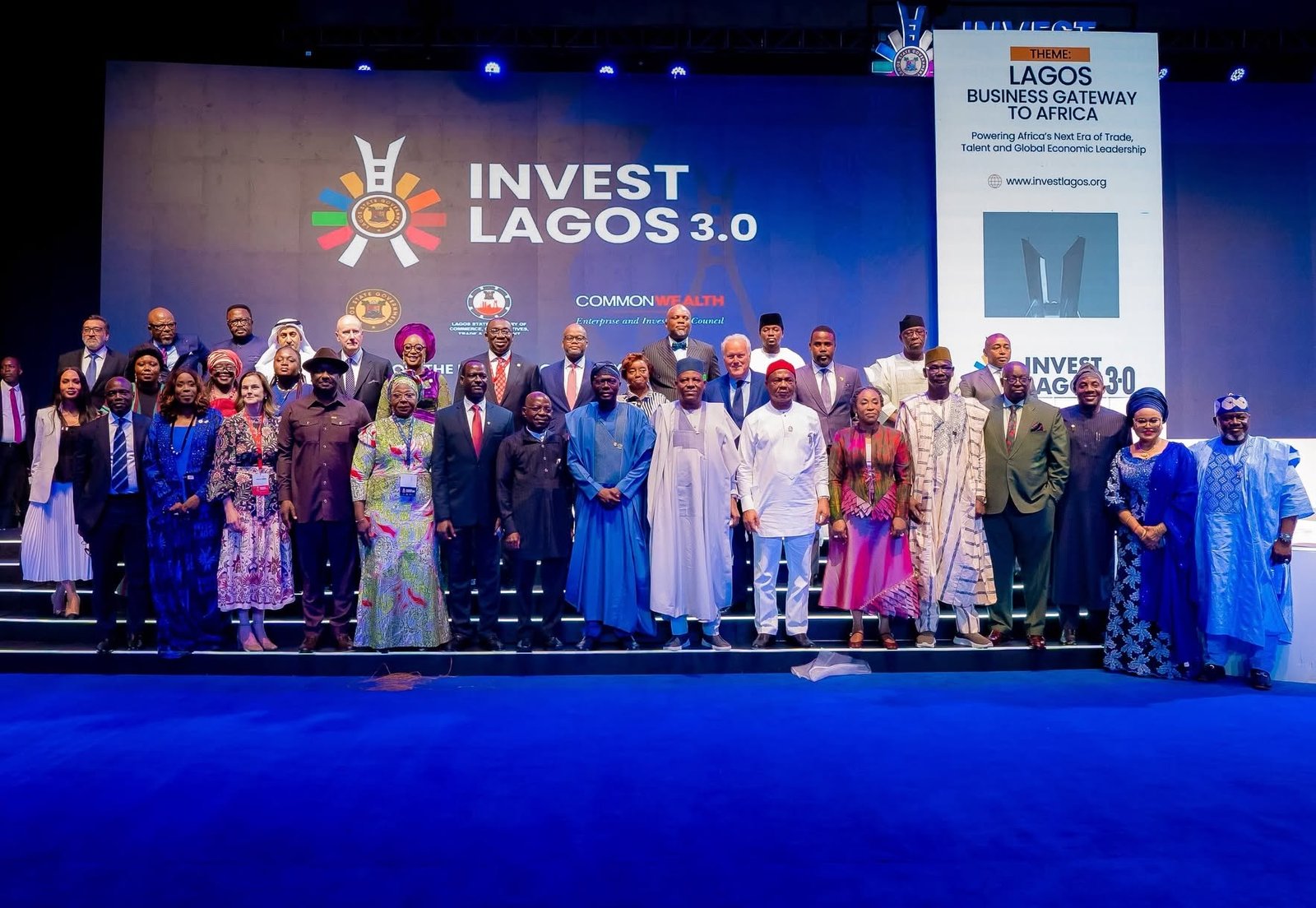
The Lagos State Government used the closing session of the Invest Lagos 3.0 Summit to make its most explicit statement yet about the city’s continental ambitions, presenting a portfolio of infrastructure investments, policy commitments, and emerging investment opportunities that officials said demonstrated Lagos had moved from aspiration to demonstrable capability as Africa’s premier business destination.
Governor Babajide Sanwo-Olu, addressing delegates at the summit’s closing ceremony at Eko Hotels and Suites on Victoria Island, said the question of whether Lagos deserved to be called Africa’s business gateway had been answered not in the deliberations of the summit but in the investment commitments secured, the partnerships formalized, and the confidence expressed by global capital over the preceding two days. The measure of the summit’s success, he said, would be revealed not in the quality of the conversations held but in the projects built, the jobs created, and the businesses established as a consequence.
He outlined an infrastructure narrative designed to demonstrate that Lagos was investing at the scale its ambitions required. The Lagos Rail Mass Transit network, the Lekki Deep Sea Port, the ongoing expansion of road infrastructure, and sustained investments in energy systems were presented as interconnected foundations of an economy that was reorganizing itself around logistics, finance, and digital connectivity rather than the informal commerce and fragmented infrastructure that had defined earlier generations of Lagos’s economic life.
The planned Lagos International Financial Centre emerged as perhaps the most strategically significant announcement, a proposal to establish Lagos as a formal global hub for finance and cross-border investment that would sit alongside London, Singapore, and Dubai as a recognized platform for transactions involving African markets. Sanwo-Olu said the center would leverage Lagos’s position within the African Continental Free Trade Area, which had created a continental market of more than 1.4 billion people that any serious global business with African ambitions could not afford to access from outside the continent.
Deputy Governor Obafemi Hamzat said the consistent message that Lagos delivered to investors was one of policy continuity and institutional predictability. He said businesses making long-term infrastructure commitments needed confidence that the regulatory and policy environment underpinning their investments would be respected across successive administrations, and that Lagos had worked deliberately to build that kind of institutional credibility over years. No single government, he said, could fund all the infrastructure a city of Lagos’s size and growth rate required, making private capital not a supplement to public investment but an essential component of any credible development strategy.
Tourism Commissioner Toke Benson-Awoyinka opened the creative economy and hospitality sectors as a new investment frontier, describing entertainment, cultural tourism, film production, and live events as industries where Lagos enjoyed genuine global-scale advantages that were still substantially undercapitalized. She said the sectors had already demonstrated their capacity to generate employment, attract visitors, and project Nigerian culture internationally, and that structured investment in infrastructure, skills, and regulatory support could multiply that impact substantially.