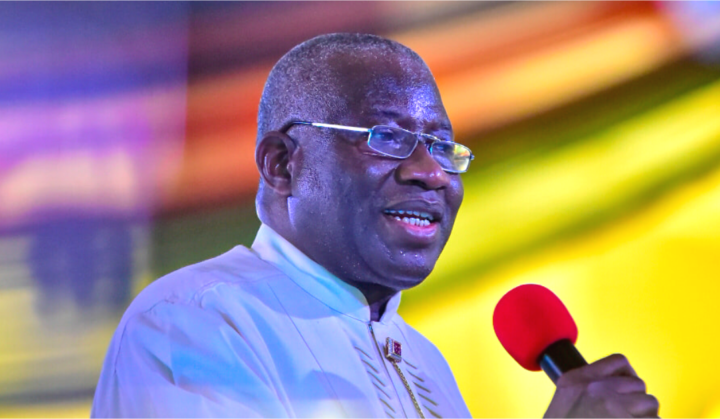
Former President Goodluck Jonathan has delivered a pointed, detailed, and at times sharply personal rebuttal to former Vice President Atiku Abubakar’s public characterisation of his presidential tenure as shaped and limited by inexperience, defending his record across domestic governance, economic management, and foreign policy while questioning both the factual accuracy and the motivations behind criticism from a man he had worked alongside and trusted at the highest levels of Nigerian government.
Atiku, now a prominent chieftain of the African Democratic Congress and an increasingly vocal critic of the current political order, had described Jonathan’s tenure in dismissive terms during a television interview, suggesting that his inexperience had been a defining constraint on his ability to effectively manage the country’s affairs during particularly challenging periods, including the Boko Haram insurgency and the economic pressures of his administration’s final years.
Jonathan responded at the 2025 awards ceremony of the Association of Retired Career Ambassadors of Nigeria in Abuja, a setting that gave his rebuttal particular resonance given the audience of seasoned diplomatic professionals who had served under his administration and witnessed firsthand the decisions and outcomes that Atiku was now characterising as the products of inexperience.
He was candid about the inevitability of error for any leader at any level, but firmly rejected the suggestion that his age or experience profile had been the determining factors in the challenges his administration faced.
“If I made mistakes, yes, nobody who becomes a governor or a president will say they did not make mistakes. Even when you elevate yourself to the level of a god, all human beings must make mistakes,” he said, before turning to the factual question of what exactly constituted inexperience in a man who had navigated Nigeria’s complex political terrain to reach the very pinnacle of its public life.
He challenged both the arithmetic and the logic of the inexperience claim with visible directness, noting that he had assumed the presidency in 2010 at the age of 53 after a career that had taken him through deputy governorship, acting governorship, full governorship, the vice presidency, and the role of acting president before he formally became president.
“I became president at 53. I left at 58, and they say I was too young. Must it have been 100 years before I ran the affairs of the state?” he said.
On foreign policy specifically, he pointed to Nigeria’s successful election to the United Nations Security Council under his watch as a concrete demonstration of the strategic sophistication and diplomatic skill that his administration had brought to bear on the international stage, arguing that navigating that competitive selection process had required leadership qualities entirely inconsistent with the portrait of naivety his critic was painting.
Beyond the personal exchange, Jonathan expressed serious concern about the persistent political instability afflicting West Africa, warning that governance crises across the region were creating significant obstacles to economic progress and complicating ECOWAS’s ability to advance regional integration without compromising the sovereignty of member states.
Delta State political analyst Sunny Onuesoke entered the exchange with considerable force, providing a factual catalogue of Jonathan’s leadership progression that he said made the inexperience characterisation not merely unfair but empirically unsustainable. He pointed out that before assuming the presidency, Jonathan had served successively as deputy governor, acting governor, governor, vice president, and acting president, a sequence of increasingly senior executive responsibilities that he argued no other Nigerian political figure had replicated in the country’s entire post-independence history.
“Anyone calling him inexperienced is unfair to him as a person. Let that person check their experience very well if they have Dr. Goodluck Jonathan’s record of achievements politically,” Onuesoke said, suggesting that the criticism reflected political motivation rather than honest assessment.