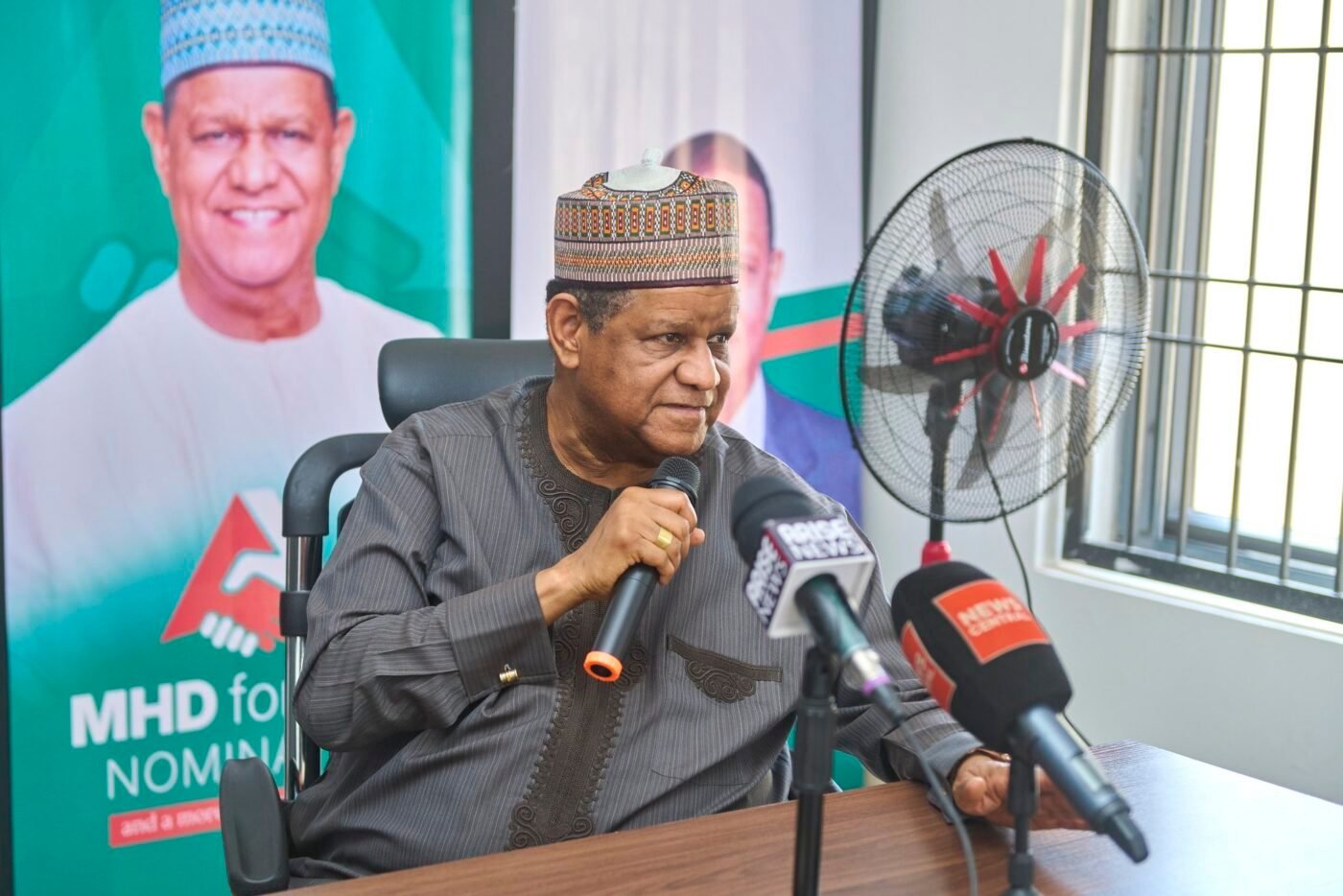
Mohammed Hayatu-Deen has declared that he will not step down for any aspirant ahead of the presidential primary of the African Democratic Congress (ADC), insisting that his ambition is driven by a vision for economic transformation, national development, and inclusive leadership.
Speaking during a media chat with political editors in Abuja, Hayatu-Deen said he remained committed to offering Nigerians what he described as a credible alternative for the country’s future.
“I will not step down for anybody. However, whoever emerges as our flag-bearer through a transparent and credible process will have my full support,” he stated.
The ADC presidential hopeful also weighed in on the issue of zoning in political parties, arguing that competence and leadership capacity should take precedence over regional considerations.
According to him, Nigeria needs leaders with the vision, expertise, and commitment required to reposition the country globally and improve the welfare of citizens.
“What we need are the best and brightest individuals who understand what it takes to govern a country effectively — people who are passionate about national development and committed to placing the country on the global map. Those are the considerations that should matter most,” he said.
Hayatu-Deen questioned the practical relevance of zoning to governance and socio-economic development, asking how regional power-sharing arrangements translate into better healthcare, education, and employment opportunities for Nigerians.
“How does zoning provide quality healthcare, education, employment opportunities, and ultimately improve the lives of citizens?” he asked.
He further described the zoning debate as an elite-driven agenda that often fuels division along ethnic and regional lines for political and financial interests.
“We should have moved beyond sentiments rooted in regionalism and tribalism. The responsibility of leadership is to improve the living conditions of the people and lift millions out of poverty,” he added.
Hayatu-Deen’s comments come amid ongoing political realignments and consultations ahead of the next election cycle, with parties intensifying discussions over zoning, coalition-building, and candidate selection processes.