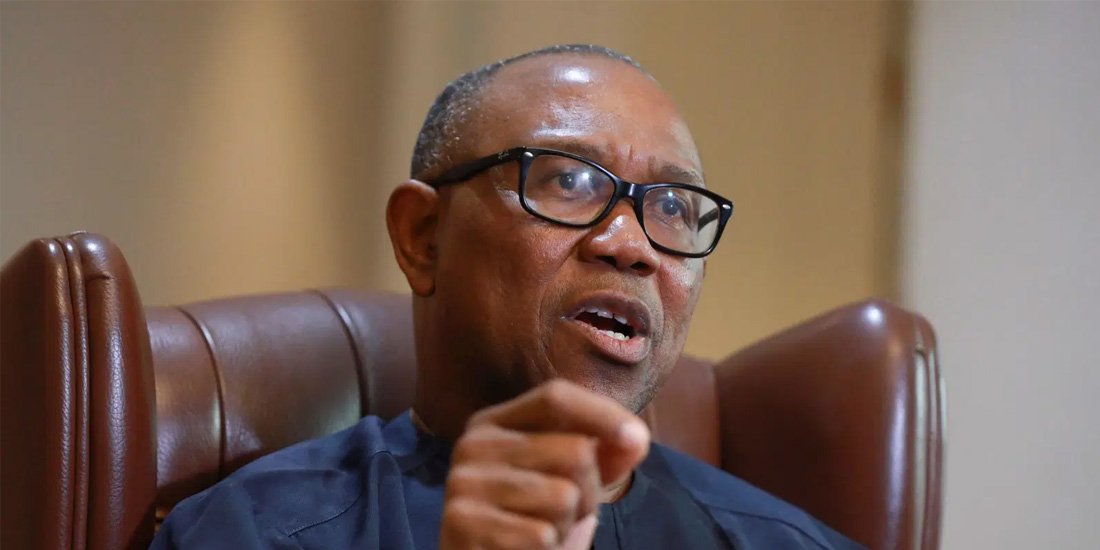
Former Labour Party presidential candidate, Peter Obi, has said Nigeria’s socio-economic challenges can be effectively addressed through deliberate policies, investment in human capital, and inclusive governance, insisting that good governance is “not rocket science.”
Obi made the remarks during an interview on the Nevon HQ Podcast hosted by broadcaster Rufai Oseni, where he outlined his vision for tackling poverty, unemployment, and economic stagnation if given the opportunity to lead the country.
According to the former Anambra State governor, national transformation must begin with fostering unity and creating a sense of belonging among all citizens.
“I will start transformation by uniting this country and making it a nation everyone can be proud of. These things are not rocket science. Countries across the world have done this. What they did is simple. I will deliver good governance to the people,” Obi said.
He stressed that his administration would prioritise social inclusion and poverty reduction through strategic investments in critical sectors, particularly education.
“I will ensure social inclusion and reduce the level of poverty. To do this, we will invest in critical areas of development such as education,” he stated.
Obi argued that many countries have achieved significant progress by implementing the right policies and focusing on key sectors that drive development.
He also highlighted the importance of equipping young Nigerians with practical skills, noting that technical and vocational education would form a major pillar of his development agenda.
“We must ensure that people go through technical training,” he said.
Drawing lessons from Indonesia’s economic model, Obi emphasised the crucial role of small businesses in national development. He noted that micro, small, and medium enterprises (MSMEs) contribute significantly to economic growth and deserve stronger government support.
“In Indonesia, for instance, there are ministries dedicated to micro, small and medium businesses. Ninety per cent of individuals come from this level,” he said.
The former presidential candidate further disclosed that his political party would soon unveil its manifesto, which would contain detailed policy proposals for national development.
“You will see our manifesto; the party will soon release it,” he added.
Speaking on the contentious issue of fuel subsidy removal, Obi maintained that while he supports ending the subsidy regime, the process should have been better planned and executed.
“I would have removed subsidy, but in an organised manner. I would not have announced it on inauguration day. I would have sat down with experts before making the decision,” he said.
Obi also questioned the impact of the Federal Government’s economic reforms on ordinary Nigerians, arguing that policy decisions should ultimately improve the welfare of citizens.
“Now that he (President Tinubu) has removed subsidy and deregulated the naira, what is the impact on average Nigerians?” he asked.
He maintained that Nigeria’s economic and social challenges require practical solutions rather than complex theories, reiterating that good governance, investment in education, skills development, and support for small businesses remain essential to achieving sustainable national development.