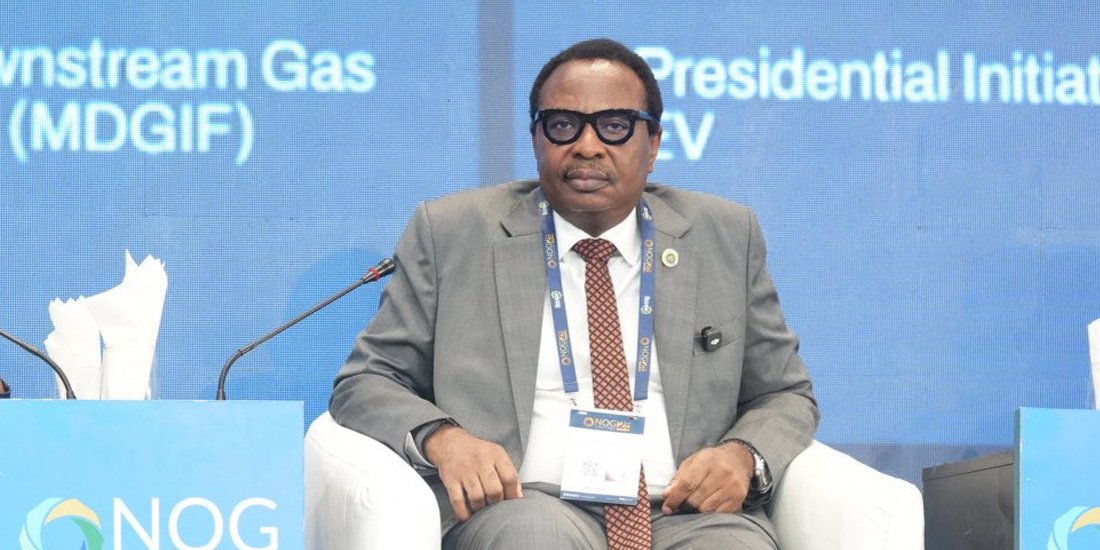
More than 100 strategic downstream gas infrastructure projects across Nigeria now carry investment from the Midstream and Downstream Gas Infrastructure Fund, according to Executive Director Oluwole Adama, who says several are on track to be commissioned before the end of the year.
Speaking on a panel titled Boosting the Domestic Gas Market, Driving Economic Growth and Development, at the 25th Nigeria Oil and Gas Energy Week in Abuja, Adama said the fund’s portfolio includes eight gas processing facilities, 15 CNG and LCNG mother stations, 86 CNG and LCNG daughter stations and four LPG depots at various stages of completion. Although MDGIF remains a relatively young institution, he said, its focus has been demonstrating that catalytic public investment can unlock much broader private sector participation, with the fund’s objective extending beyond simply financing individual projects toward unlocking entirely new markets for natural gas across the country.
Asked whether economic growth and economic development pull in different directions within Nigeria’s domestic gas market, Adama argued the two are complementary rather than competing, with the real challenge being ensuring growth stays inclusive and sustainable enough to produce tangible improvements in people’s lives. Investment in gas infrastructure drives industrial competitiveness, provides cleaner and more affordable energy for households and transport, strengthens power generation and creates jobs, he said, arguing that the true measure of success is not how much gas Nigeria produces but how much prosperity that gas creates for Nigerians.
On why financial close for domestic gas projects often takes so long, Adama pushed back against the common assumption that financing itself is the biggest obstacle, arguing bankability is actually the harder hurdle: projects only reach financial close once they’ve become genuinely bankable, and that requires addressing several risks upfront. Delays typically occur much earlier, he said, during project preparation, commercial structuring and risk allocation, driven by inadequate preparation, uncertainty over gas demand, infrastructure gaps and poor risk allocation, rather than at the financing stage itself. He maintained that capital remains available for properly structured projects, since investors are not avoiding gas, they are avoiding uncertainty, and identified regulatory certainty, strong project sponsors, bankable commercial arrangements, attractive returns, sound environmental and social governance and policy consistency as the six factors investors weigh before committing funds.
Adama said MDGIF evaluates every project against three pillars, commercial viability, strategic national impact and developmental benefit, prioritising investments that expand domestic gas use, support gas to power projects, promote industrialisation, reduce gas flaring, accelerate CNG and LNG transportation and draw in additional private capital, arguing that strategic impact and commercial discipline complement rather than compete with each other. The fund’s overriding priority, he said, is de risking bankable domestic gas infrastructure to unlock large scale private investment, since every strategic gas infrastructure investment creates a multiplier effect across the economy by lowering energy costs, supporting industry, creating jobs and strengthening Nigeria’s broader economic resilience.