
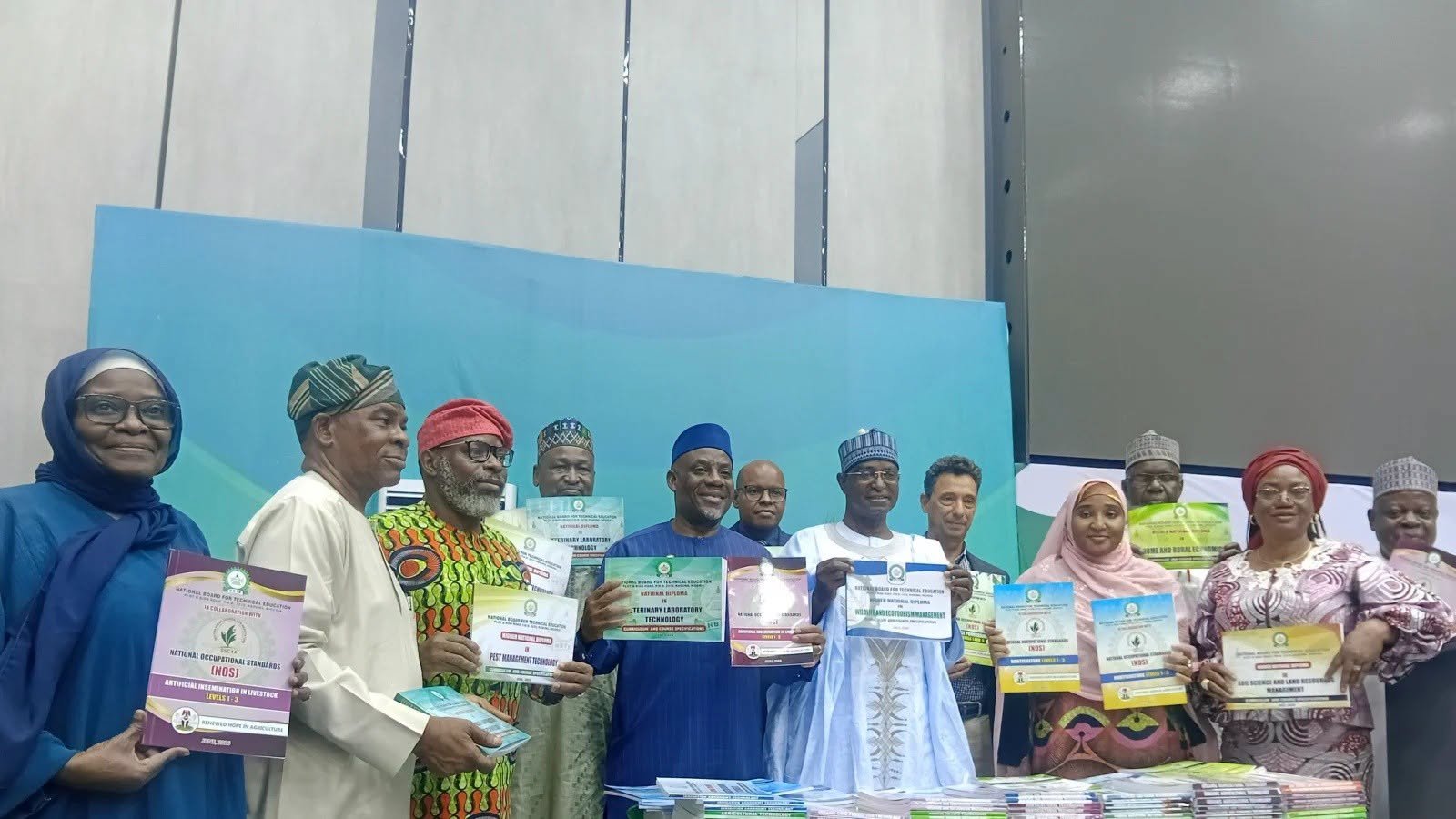
The Federal Government has introduced a new agricultural education model that allocates 80 per cent of training to practical learning and 20 per cent to classroom instruction in a bid to produce industry-ready graduates and strengthen food security.
Minister of Education, Dr. Tunji Alausa, unveiled 39 agricultural curricula and 31 National Occupational Standards (NOS) at the UBEC Digital Resource Centre in Abuja.
The reform, developed jointly by the Ministries of Education, Agriculture and Food Security, and Livestock Development, is aimed at bridging the gap between academic instruction and industry requirements.
The curricula include both revised and newly developed programmes for National Diploma (ND), Higher National Diploma (HND) and Nigeria Certificate in Education (NCE) levels, covering areas such as precision agriculture, climate-smart agriculture, agribusiness and artificial insemination.
A key component of the initiative is hands-on training through teaching farms, greenhouses, processing facilities and agricultural technology hubs.
Minister of Livestock Development, Alhaji Idi Mukhtar Maiha, said the reform would help Nigeria maximize opportunities in the global livestock market by producing graduates with practical expertise.