The Federal Government has approved a major reform of agricultural education in Nigeria’s tertiary institutions, introducing a new training model that places greater emphasis on practical learning and skills acquisition.
Under the revised policy, agricultural programmes will now consist of 80 per cent practical training and 20 per cent theoretical instruction, marking a significant shift from the previous structure of 70 per cent theory and 30 per cent practicals.
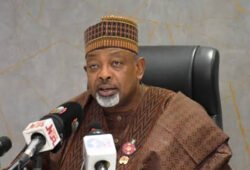
Minister of Education, Dr. Tunji Alausa, announced the development on Thursday in Abuja while receiving the report of the National Implementation Committee on the Review and Development of Agricultural Curricula for Tertiary Institutions.
Alausa said the reform is designed to equip students with hands-on experience and industry-relevant skills needed to succeed in the agricultural sector and contribute meaningfully to national development.
According to the minister, the new curriculum reflects the government’s commitment to producing graduates who are not only knowledgeable but also capable of applying their skills in real-world situations.
“The goal is to ensure that young Nigerians acquire skills that can be applied beyond the classroom,” Alausa said.
He noted that increasing practical exposure would help bridge the gap between academic learning and workplace demands while strengthening capacity across the agricultural value chain.
The minister expressed optimism that the policy would help create a better-trained workforce, improve agricultural productivity, enhance food security and generate employment opportunities for young Nigerians.
Alausa also called for a comprehensive rollout of the revised curricula, stressing the need to sensitise academics, teachers, industry operators and other stakeholders on the objectives and benefits of the reform.
He emphasised the importance of teacher training, institutional readiness and adequate support systems to ensure effective implementation across tertiary institutions.
Earlier, the Minister of State for Education, Professor Suwaiba Sa’id Ahmad, commended the implementation committee for its efforts in reviewing and developing the new curricula.
She acknowledged the contributions of the National Board for Technical Education (NBTE), the Skills Council, industry stakeholders and academics, describing their collaboration as instrumental to the success of the review process.
Ahmad expressed confidence that the new curricula would have a positive impact on the agricultural sector and help address skills gaps within the industry.
Presenting the committee’s report, the Executive Secretary of the National Board for Technical Education, Professor Idris Muhammad Bugaje, disclosed that the exercise produced 36 new and revised National Diploma (ND) and Higher National Diploma (HND) curricula, three Nigeria Certificate in Education (NCE) curricula, and 31 National Occupational Standards.
Bugaje explained that 27 of the occupational standards were newly developed, while four existing standards were reviewed and updated to align with current industry requirements.
He added that all the documents had been considered and approved by the relevant regulatory bodies and would be formally presented to the public in due course.
In his closing remarks, Alausa assured stakeholders that the ministry would work closely with NBTE, educational institutions and industry partners to ensure the successful implementation of the reforms.
“Our focus remains on equipping young Nigerians with practical skills and transforming Nigeria’s agricultural potential into real opportunities,” the minister stated.
The reform is expected to strengthen agricultural education, improve workforce readiness and support the Federal Government’s broader goals of food security, economic diversification and youth employment.