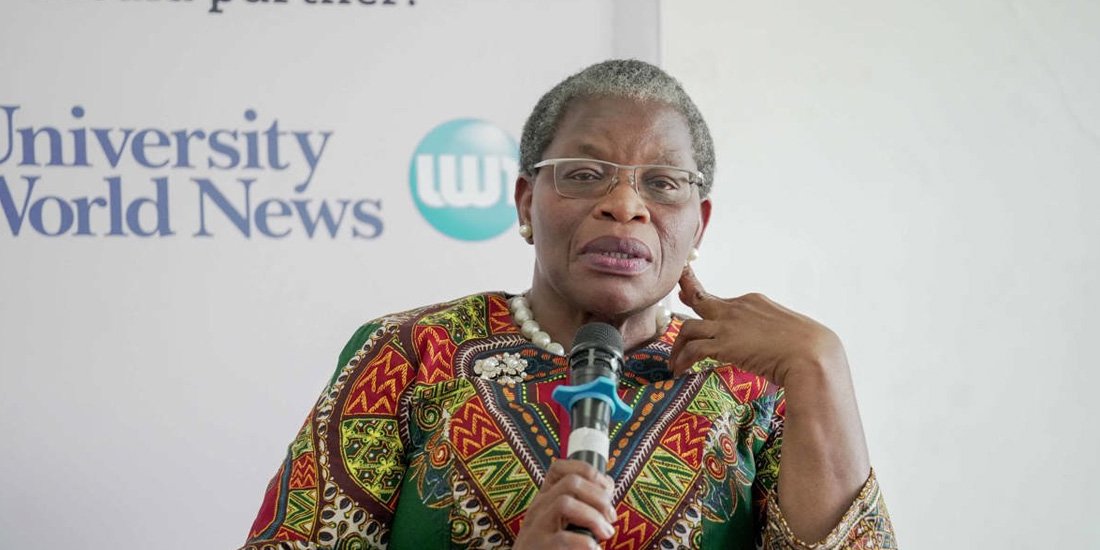
Former Minister of Education and Solid Minerals, Dr. Obiageli Ezekwesili, has called on President Bola Tinubu to terminate the £746 million ports financing agreement signed between Nigeria and the United Kingdom, citing concerns over transparency, public debt and the long-term financial implications of the deal.
Ezekwesili’s call comes 152 days after the agreement was signed during President Tinubu’s state visit to the United Kingdom in March 2026. The financing package was intended to support the rehabilitation and modernization of the Lagos Port Complex in Apapa and the Tin Can Island Port Complex, two of Nigeria’s busiest seaports.
In a statement titled “President Tinubu, Terminate the Dodgy £746 Million Ports Deal,” the former minister questioned the secrecy surrounding the agreement and demanded full disclosure of its terms.
According to her, neither the Nigerian government nor the UK authorities have made public critical details of the arrangement, including the interest rate, repayment structure and timeline for servicing the loan.
Ezekwesili argued that the lack of transparency is particularly troubling given Nigeria’s rising debt profile and increasing debt-servicing obligations.
She claimed that Nigeria’s public debt had increased from about N87 trillion in May 2023 to over N152 trillion, while debt servicing now accounts for more than 60 per cent of government revenue. She also criticized the administration’s borrowing strategy, noting that annual borrowing had approached N50 trillion, partly driven by a $21.45 billion external borrowing plan approved by the National Assembly.
The former minister further alleged that a significant portion of the financing arrangement would primarily benefit British companies.
According to her, at least £236 million of the facility was reportedly earmarked for British suppliers, while British Steel had secured a £70 million contract linked to the project.
“Nigeria borrowed the money that British companies will harvest the contracts and Nigerians will repay the debt,” she stated.
Ezekwesili also raised concerns about what she described as the currency risks embedded in the agreement.
She argued that because the facility is denominated in pounds sterling and linked to a floating dollar benchmark, repayment obligations could become increasingly burdensome for Nigeria, especially amid the continued depreciation of the naira.
Another major issue highlighted in her statement was the procurement process surrounding the port rehabilitation project.
Ezekwesili questioned reports that ITB Nigeria, a company she said is owned by businessman Gilbert Chagoury, had emerged as the primary contractor. She called for evidence that the contract was awarded through a transparent and competitive bidding process.
Drawing on her experience in Nigeria’s public procurement reforms, she urged the government to disclose the role played by the Bureau of Public Procurement (BPP) and publish the evaluation criteria used in selecting contractors.
“Credible reporting identifies ITB Nigeria, a company owned by Gilbert Chagoury who is publicly identified as a bosom friend of President Tinubu, as the primary contractor without the due process of competitive tender,” she alleged.
Ezekwesili also questioned why the government opted for sovereign borrowing instead of leveraging private-sector financing models.
She cited the Lekki Deep Sea Port as an example of how major infrastructure projects can be developed through private investment without adding to the nation’s debt burden. According to her, the Lekki port was built under a Build, Operate and Transfer (BOT) arrangement valued at approximately $1.5 billion and has since become a major cargo-handling facility.
She argued that similar concession arrangements could be adopted for the rehabilitation of Apapa and Tin Can Island ports.
“These two ports do not need sovereign debt to be rehabilitated. What they need is a governance framework that attracts private capital on Nigeria’s terms,” she said.
The former minister warned that failure to pursue alternative financing options could reinforce concerns about politically influenced transactions and weaken public confidence in government borrowing decisions.
As part of her recommendations, Ezekwesili urged President Tinubu to halt further drawdowns under the agreement and return to the National Assembly with a fresh framework based on competitive concessions and private-sector participation.
She also called for the appointment of an independent transaction adviser rather than what she described as politically connected contractors.
In addition, Ezekwesili urged civil society organizations to intensify demands for transparency by filing Freedom of Information requests with the Ministry of Finance, the Nigerian Ports Authority (NPA) and the Office of the Attorney General of the Federation. She also encouraged stakeholders to seek relevant documentation under the United Kingdom’s Freedom of Information framework.
While acknowledging the urgent need to upgrade Nigeria’s port infrastructure, she maintained that infrastructure development should not come at the expense of due process and public accountability.
“Nigeria desperately needs functional ports. The dysfunction of Apapa and Tin Can Ports has cost the country immeasurably. But legitimate aspirations cannot be condoned as an excuse for illegitimate processes,” she stated.
Ezekwesili concluded by urging Nigerians to demand greater transparency and accountability in all borrowing arrangements undertaken on behalf of the country, insisting that public scrutiny remains essential to safeguarding national interests.