
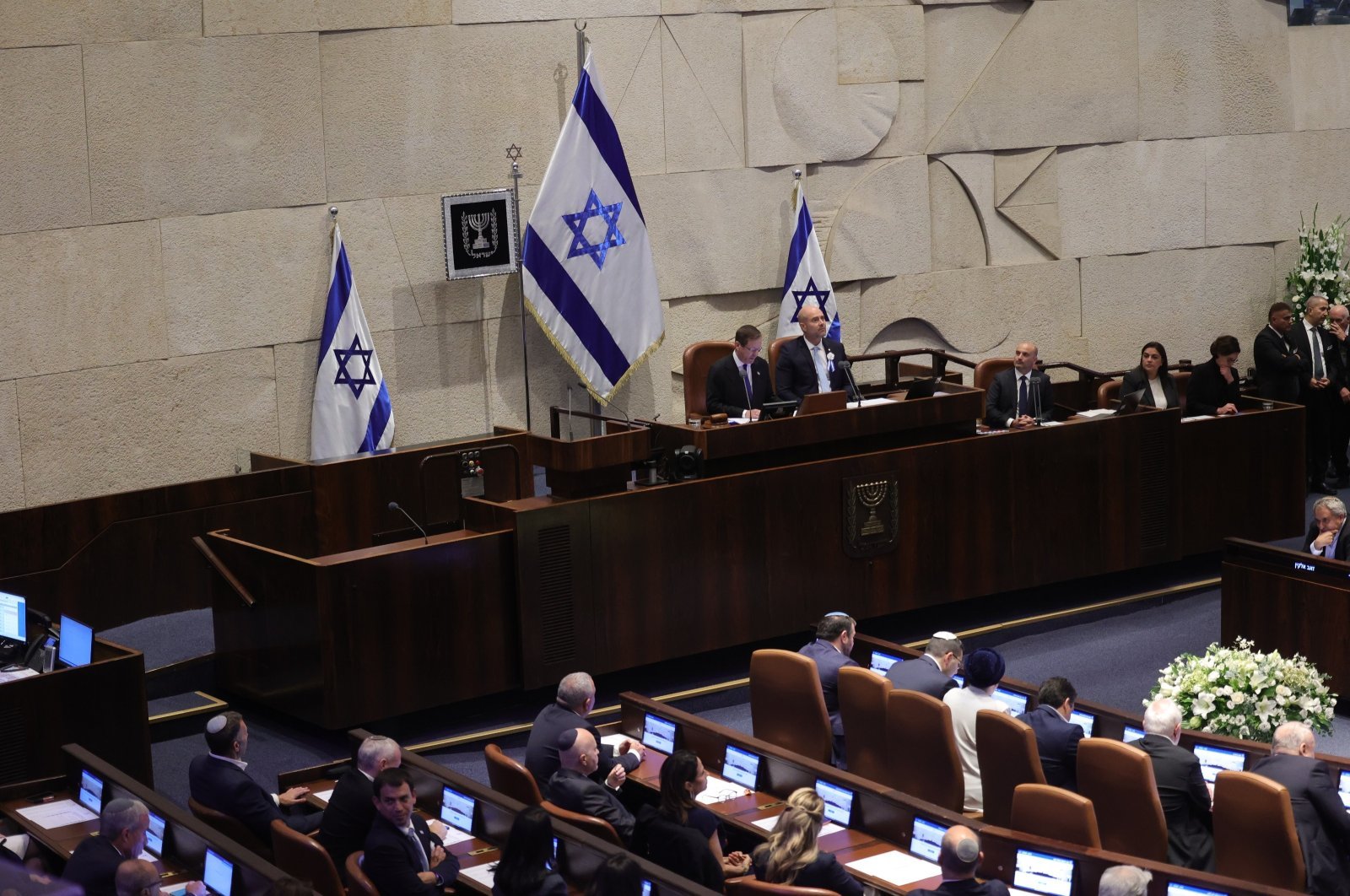
Gadi Eisenkot, the politician tasked with forming Israel’s next government, has pledged to reverse several policies introduced by outgoing Prime Minister Benjamin Netanyahu as the country’s new parliament was sworn in on Tuesday.
The pledge sets the stage for a potentially significant period of legislative activity and coalition negotiations, with Eisenkot having up to six weeks to form a government that would end Netanyahu’s tenure as Israel’s longest-serving prime minister.
Although it remains uncertain whether Eisenkot will successfully assemble a coalition, Netanyahu’s opponents now control a solid majority in the Knesset, giving them an opportunity to pursue legislative changes.
Eisenkot’s bloc introduced several bills at the start of the legislative session targeting Netanyahu and policies of his outgoing administration.
The proposed legislation includes establishing an official government-led inquiry into the October 7, 2023, Hamas-led attacks, introducing term limits for the office of prime minister and reversing changes made by Netanyahu’s government to restrict the powers of the judiciary.
However, it remains unclear how quickly the bills will progress or whether they will secure the necessary support in the coming weeks.
Speaking ahead of the swearing-in ceremony, Eisenkot, a former military chief who campaigned on a promise of straightforward leadership, said his priority was to establish a government that would represent all Israelis rather than specific political factions.
“We will act for all citizens of Israel, those who voted for us and those who did not, out of deep commitment,” he said.
Meanwhile, Netanyahu has sought to challenge the certified election results after his bloc failed to secure a parliamentary majority. He has repeatedly made unsubstantiated claims that Arab-led parties “stole” the elections.
In a speech after Tuesday’s ceremony, Netanyahu questioned the credibility of Arab politicians, who represent about 20 per cent of Israel’s population, and criticised Jewish opposition leaders who have indicated willingness to work with Arab parties to form a government.
Eisenkot has not ruled out such an arrangement, although he has outlined conditions, including acceptance of Israel’s identity as a Jewish state and a declaration that Hamas is a terrorist organisation.