
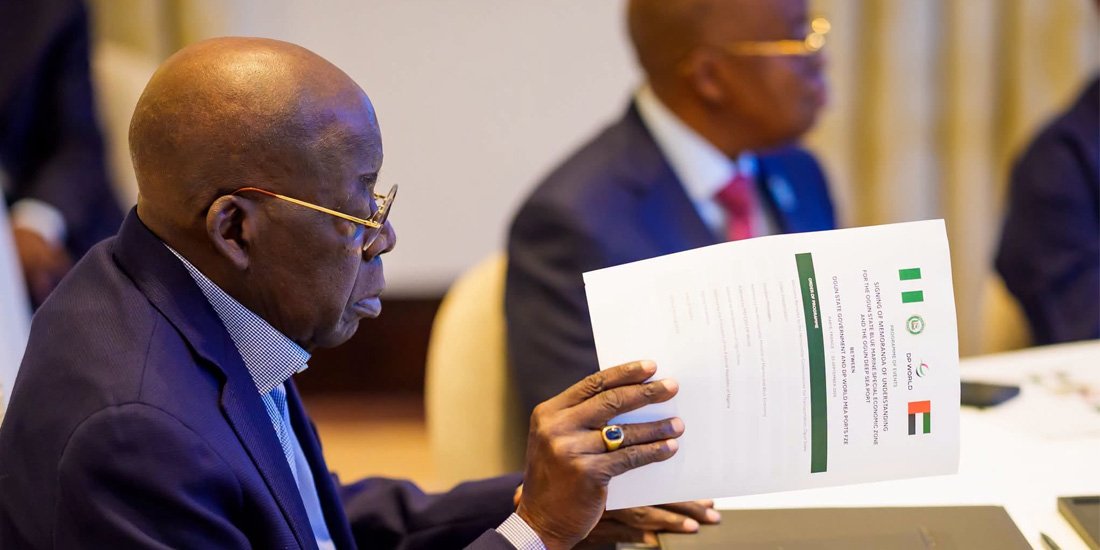
President Bola Ahmed Tinubu has received the Constitution (Sixth Alteration) Bill seeking the establishment of state police across Nigeria, marking a significant step in the country’s ongoing efforts to reform its security architecture.
The bill was formally presented to the President by his Special Advisers on Senate and House of Representatives Matters, Senator Basheer Lado and Dr. Wasiu Olanrewaju-Smart, following its approval by all 36 State Houses of Assembly.
Chief of Staff to the President, Femi Gbajabiamila, said the endorsement by the 36 state legislatures surpassed the constitutional threshold of approval by at least 24 states, representing two-thirds of the federation, required for constitutional amendments.
According to Gbajabiamila, President Tinubu will review the legislation in consultation with the Attorney-General of the Federation before giving presidential assent at a formal signing ceremony.
The development is being viewed as a milestone in Nigeria’s push toward decentralised policing amid growing calls for stronger state-level security structures to address diverse security challenges across the country.
Meanwhile, the Presidential Working Group on State Police, chaired by Gbajabiamila, has concluded extensive consultations with stakeholders nationwide as part of efforts to develop a comprehensive National Policing Bill.
The draft legislation has already been submitted to the Federal Ministry of Justice for legislative drafting validation. Upon completion of the review process, the proposed National Policing Bill and the Working Group’s report will be presented to the President for consideration.
President Tinubu also commended the National Assembly, state governors, State Houses of Assembly and Nigerians for their collective support and commitment to strengthening the nation’s security framework.
The proposed creation of state police has long been a subject of national debate, with proponents arguing that it would improve local security response and intelligence gathering, while critics have raised concerns about possible abuse by state governments. The constitutional amendment now awaits presidential assent before becoming law.