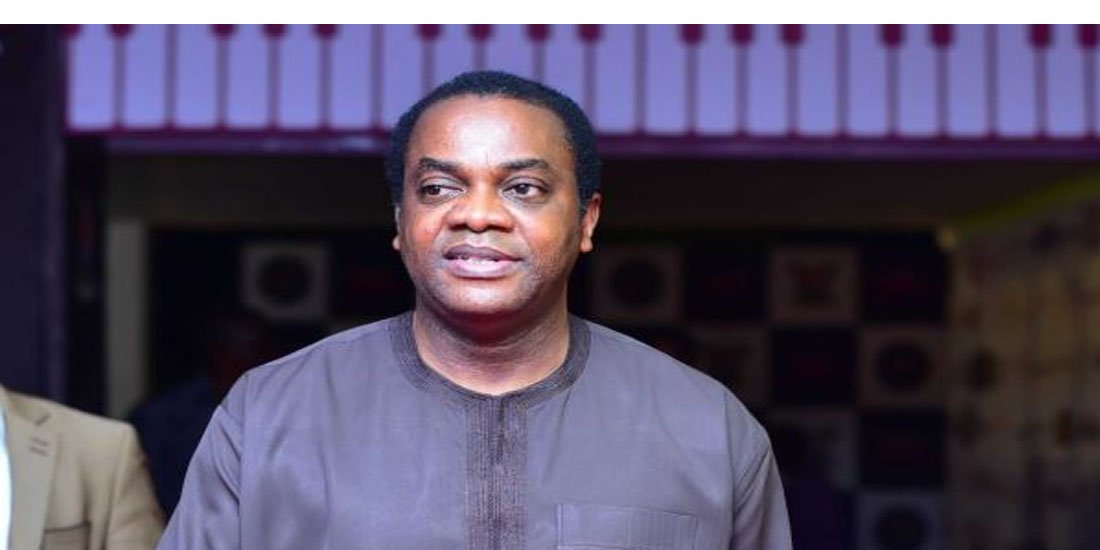
Former Cross River State governor Donald Duke has argued that Nigeria’s presidential system would benefit from two broad political blocs, warning that a divided opposition could make it easier for an incumbent to retain power.
Duke, identified in the supplied interview as the presidential candidate of the Peoples Redemption Party, said the country’s political actors often approach presidential elections as though they operate under a parliamentary system, where smaller parties may negotiate to form a government after voting.
He maintained that multiple opposition candidacies can divide support, enabling a leading candidate to win without an absolute majority of votes cast nationally. Referring to the 2023 presidential election, Duke called for a reconsideration of Nigeria’s electoral arrangements ahead of 2027.
Under Section 134 of the Constitution, a successful presidential candidate must satisfy requirements relating to the highest vote total and geographic distribution of support. The framework does not generally require more than half of the national vote. Duke argued that this arrangement deserved renewed debate, although his preference for two dominant blocs is a political proposal rather than a constitutional requirement.
He also criticised the limited ideological differences between parties, saying frequent movement by politicians between platforms reflected the absence of firmly established policy identities. Duke recalled the two-party experiment of the aborted Third Republic, while acknowledging concerns about the military government’s role in creating those parties.
Beyond elections, he said the central purpose of government should be to enable citizens to become productive in a safe and orderly society. He presented education, healthcare, infrastructure and economic opportunity as investments in people rather than isolated public programmes.
Duke urged states to build viable economies around their comparative advantages. Drawing on his administration in Cross River from 1999 to 2007, he cited tourism, agriculture and the Tinapa development as examples of attempts to expand the state’s economic base.
His intervention links electoral structure to a broader question about governance: whether political competition can produce coherent policies that improve economic opportunity and public welfare, rather than simply rotate officeholders.