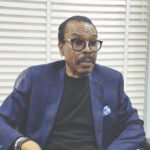
Aliko Dangote has announced plans to build Nigeria’s largest industrial and free trade zone at Olokola in Ondo State, a fully serviced complex that will generate its own electricity, supply water, and provide logistics infrastructure to manufacturers as a complete package, while the Dangote Group simultaneously signed a $600 million loan agreement with the Africa Finance Corporation to triple its Nigerian fertilizer production capacity from three million to nine million metric tons annually.
Dangote presented the Olokola project during a visit to Ondo State Governor Lucky Aiyedatiwa in Akure, describing it as a model that removed the power deficit that had constrained industrial development in Nigeria for more than three decades by building dedicated energy generation directly into the zone’s infrastructure rather than relying on the national grid. He said an east-west gas corridor would supply energy-intensive industries within the zone, that contractors were expected to mobilize within three to four months, and that full construction would commence in the final quarter of 2026. He asked the state to nominate a board representative to facilitate coordination.
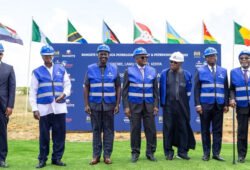
Governor Aiyedatiwa welcomed the project as a cornerstone of Ondo State’s industrial ambitions, highlighting the state’s deep seaport license and tested limestone deposits as complementary advantages for the zone. He confirmed the establishment of a technical committee and expressed readiness to move quickly on legal, land, and community frameworks.
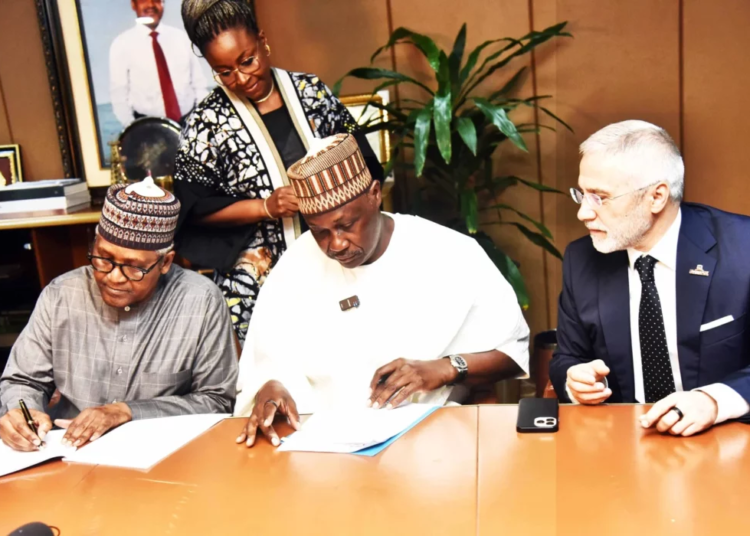
On the fertilizer expansion, AFC President Samaila Zubairu described the $600 million facility as a demonstration of the corporation’s capital recycling model, redeploying and doubling its earlier investment after Dangote Industries repaid the original loan. The loan would also fund development of a new three million ton plant in Ethiopia, extending the group’s continental footprint as part of a $7 billion total fertilizer program. Dangote said the expanded capacity was expected to generate over $4 billion annually in foreign exchange for Nigeria within three years.