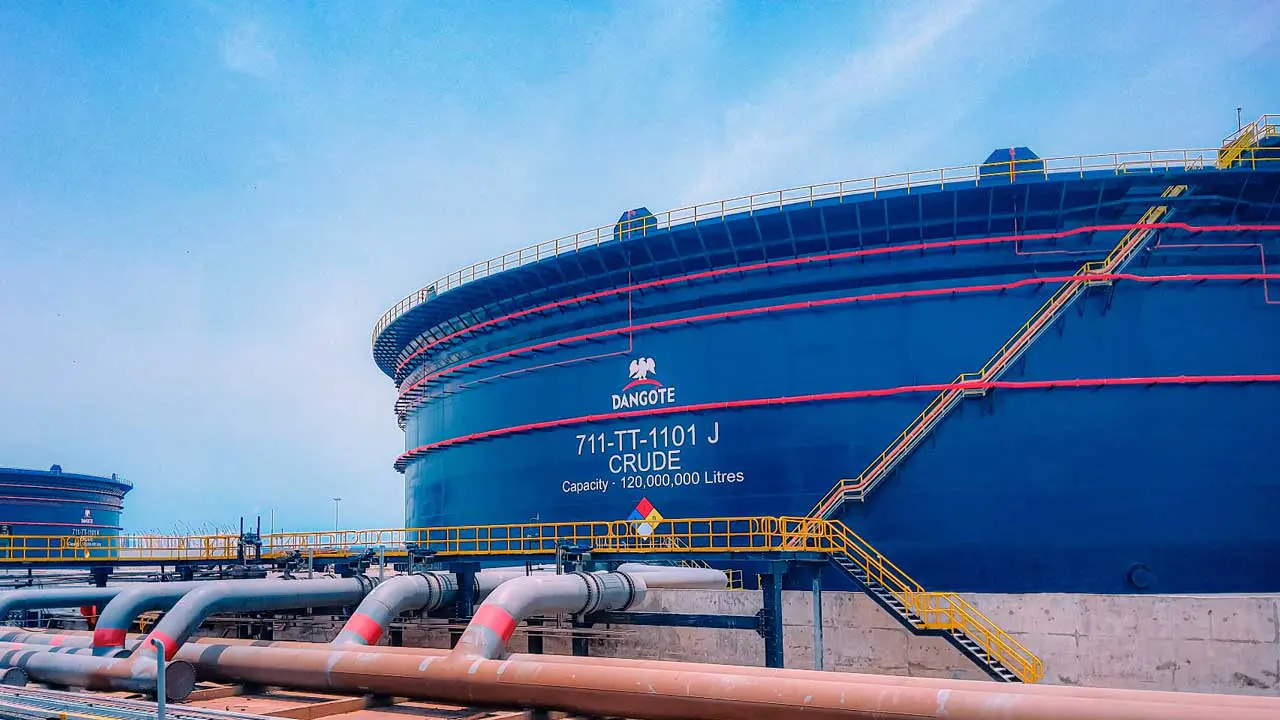
Dangote Petroleum Refinery and Petrochemicals has filed a fresh suit at the Federal High Court in Lagos seeking to nullify fuel import licences issued to petroleum marketers and the Nigerian National Petroleum Company Limited.
The case, marked FHC/L/CS/857/2026, has been assigned to Justice Chukwujekwu Aneke of the Lagos Judicial Division.
According to reports, the refinery is challenging import permits allegedly issued or renewed by the Nigerian Midstream and Downstream Petroleum Regulatory Authority on May 6, 2026.
Dangote Refinery is reportedly asking the court to set aside the licences on the grounds that they were granted in violation of an earlier court order directing parties to maintain the status quo pending determination of the matter.
The refinery based its application on provisions of the 1999 Constitution, the Federal High Court Civil Procedure Rules 2019, and the inherent jurisdiction of the court.
In the suit, the company is seeking an order nullifying all import licences issued or renewed around May 6, arguing that the regulatory actions contradicted a previous order made by the court on April 29, 2026.
The defendants in the case include the Attorney General of the Federation and other parties linked to the disputed import licences.
Dangote Refinery reportedly argued that the continued issuance of fuel import licences undermines its operations and conflicts with statutory provisions that allow imports only when local supply is insufficient to meet domestic demand.
The NMDPRA had not officially responded to the allegations as of the time of filing this report.
Petroleum marketers and import operators have, however, consistently maintained that fuel imports remain necessary to guarantee supply stability and prevent shortages in the country.
The latest legal action marks another chapter in the ongoing dispute surrounding fuel importation and downstream deregulation in Nigeria.
The development comes nearly a year after Dangote Refinery withdrew an earlier suit challenging similar import licences granted to NNPC and other importers in July 2025.
Nigeria continues to rely partly on imported petroleum products despite the commencement of operations at the $20 billion Dangote Refinery, which has a refining capacity of 650,000 barrels per day.
Industry observers say the coexistence of large-scale domestic refining and continued fuel importation has intensified debates over competition, supply obligations, and regulatory oversight within Nigeria’s downstream petroleum sector.
The matter is currently at a preliminary stage, with substantive court filings yet to be publicly released.