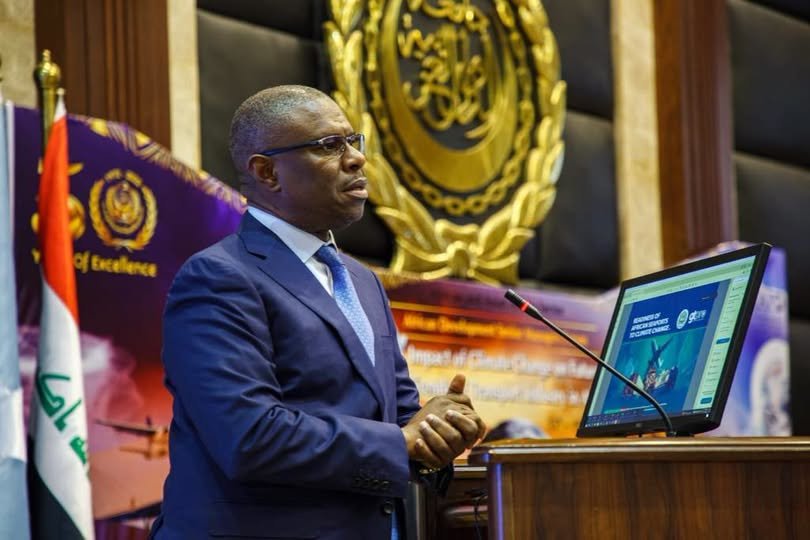
Former Director General of the Nigerian Maritime Administration and Safety Agency, Dakuku Peterside, has urged shipping companies and maritime regulators to make environmental sustainability a central part of their commercial strategies.
Peterside said the transition to green maritime operations was no longer merely an environmental responsibility but an important requirement for competitiveness, profitability and access to investment.
He delivered the keynote address during a webinar organized by Naturehedge in collaboration with the West Africa Green Economic Development Institute, Gregory University, SSA Hub and the Sustainable Energy Practitioners Association of Nigeria.
Speaking on the theme, Green Maritime: Strategy and Operations Beyond Optics, Peterside said the international shipping industry was undergoing major changes because of stronger environmental regulations and increasing investor demand for sustainable operations.
He described green maritime as the use of practices, policies and technologies that reduce environmental damage while improving efficiency and long term business performance.
Peterside said companies that combine decarbonization, digitalization, innovation and operational excellence would be better positioned to compete internationally.
According to him, sustainability should not be treated as a public relations exercise or basic regulatory requirement.
He said tighter carbon intensity requirements introduced by the International Maritime Organization and the expansion of the European Union Emissions Trading System to shipping had made compliance unavoidable.
Peterside recommended voyage optimization, timely port arrivals, alternative fuels, digital technologies and continuous workforce training.
Potential fuel alternatives include methanol, ammonia and liquefied natural gas.
He said regulatory compliance represented only the minimum standard, while stronger commercial advantage would come from integrating environmental considerations into operations, data management and financial decisions.
The webinar attracted shipowners, operators, port authorities, regulators, financiers and representatives of the energy sector.
President of the Governing Council of REEEAA and Chairman of the Board of Trustees of SEPAN, Magnus Onuoha, announced that the webinar would be followed by a major African workshop in Accra, Ghana.
Managing Director of Damen Shipyards South Africa, Hermione Manuel, highlighted hybrid vessels as examples of practical innovation combining sustainability and commercial value.