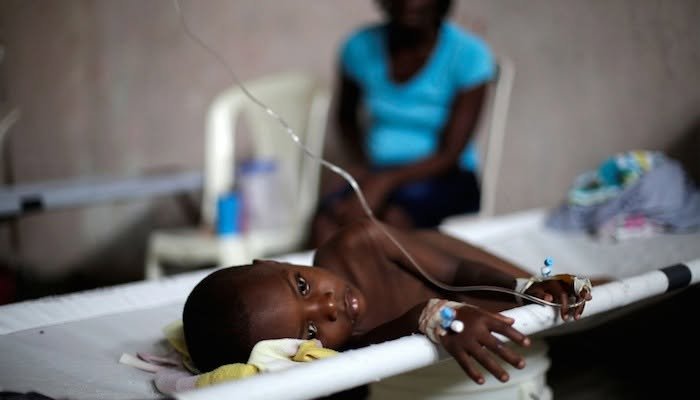
A severe cholera outbreak has pushed Borno State’s healthcare system to the edge of its capacity, killing 74 people and generating nearly 8,000 suspected cases across 14 local government areas and 50 wards in just five weeks, with daily patient numbers still rising as of early June and responders scrambling to expand treatment infrastructure fast enough to keep pace with demand.
The figures, confirmed as of June 7, told a story of a public health emergency that had escalated faster than normal emergency response timelines could comfortably absorb. The 7,850 suspected cases recorded in five weeks represented an average of more than 220 new patients every day, a rate that overwhelmed existing treatment capacity and forced Médecins Sans Frontières, working alongside the Borno State Ministry of Health, to make repeated emergency expansions to the Cholera Treatment Centre it had established in the Ngarannam area of Maiduguri shortly after the outbreak emerged.
That facility grew from an initial 121 beds to 271 as patient flows intensified. A separate 20-bed treatment unit was simultaneously opened in the Dalaram district to divert some of the pressure from the main centre. Across both facilities and associated treatment points, MSF had treated more than 7,400 patients by June 7, with a daily average of 230 admissions and a single-day peak of over 500 recorded on June 5, a figure that illustrated both the outbreak’s scale and the extraordinary demand being placed on frontline health workers operating in difficult conditions.
MSF Medical Coordinator Bienfait Tombola said the sustained rise in case numbers was evidence that transmission had not been brought under control and that significant additional work was needed both to prevent new infections and to ensure that patients reached care early enough for treatment to be effective. Many who arrived at the treatment facilities, he noted, had already been ill for some time and had travelled considerable distances to find help, arriving in critical condition that required intensive intervention.
Beyond clinical treatment, response teams were pursuing a parallel set of prevention and containment activities including training healthcare workers in neighboring facilities, establishing oral rehydration points in community settings, strengthening disease surveillance systems to detect new clusters earlier, and running public health awareness campaigns to ensure communities understood the symptoms and knew where to seek help.
At the source of the outbreak, chlorination programs and sanitation interventions were underway to reduce contamination of water supplies, which public health experts identified as the primary transmission pathway in a state where years of conflict, displacement, and institutional strain had left water and sanitation infrastructure chronically degraded.
The pattern was a familiar one in Borno State, where over a decade of insurgency had displaced millions of people, disrupted agricultural and economic activity, and stretched public services beyond their sustainable capacity. Communities that lacked reliable access to clean water, functional sanitation facilities, and nearby healthcare services were always the most vulnerable to outbreaks of waterborne disease, and the cholera surge reflected the accumulated consequences of that vulnerability.
Health officials said a vaccination campaign was in preparation as a further layer of protection, though they and public health experts were consistent in noting that vaccines and clinical treatment addressed the symptoms of a deeper infrastructure problem that only sustained investment in water, sanitation, and healthcare could permanently resolve.