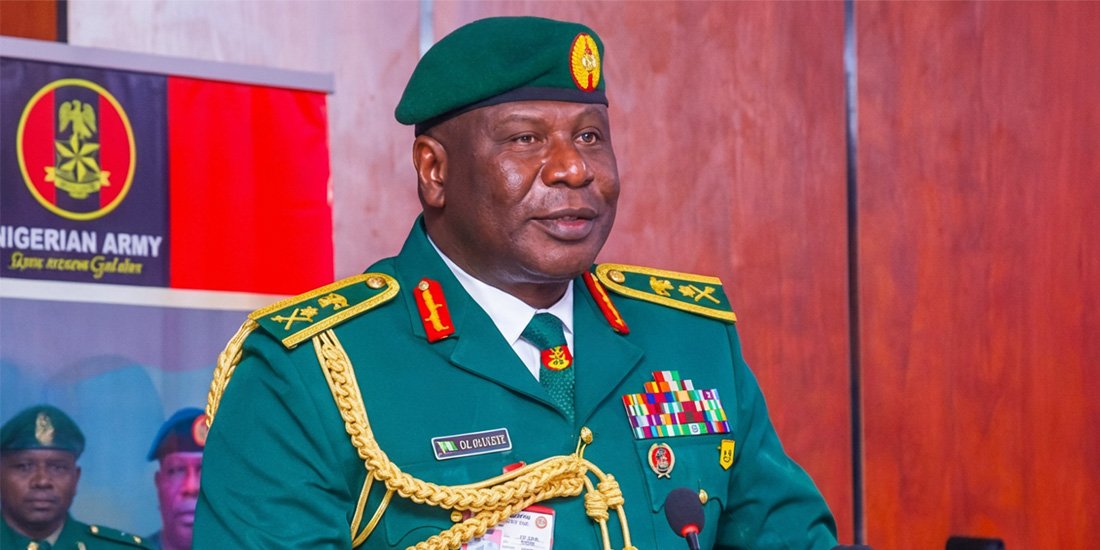
The Chief of Defence Staff (CDS), General Olufemi Oluyede, has raised concerns over the growing use of artificial intelligence-generated deepfakes to spread misinformation, discredit military operations, and threaten Nigeria’s national security.
Speaking at the Defence Correspondents Association of Nigeria (DECAN) Conference 2026, Oluyede warned that manipulated videos, altered images, and cloned voices are increasingly being deployed as tools of psychological warfare capable of misleading the public, undermining military credibility, and creating panic within communities.
Represented by the Director of Defence Information, Maj.-Gen. Samaila Uba, the CDS said modern conflicts are no longer confined to traditional battlefields, noting that the information space has become a critical theatre of warfare.
According to him, a single AI-generated video has the potential to compromise military operations, endanger troops, erode public confidence in the Armed Forces, and reverse hard-earned operational gains.
Addressing the conference theme, “Beyond Kinetic Warfare: Harnessing Technology and Intelligence-Led Operations for Nigeria’s National Security,” Oluyede said contemporary security challenges require a combination of real-time intelligence, technological advancement, cyber resilience, and effective information management.
He disclosed that the Armed Forces of Nigeria has intensified investments in non-kinetic capabilities, including space-based surveillance systems, geospatial intelligence, artificial intelligence-driven decision support tools, and joint intelligence fusion mechanisms aimed at improving operational effectiveness.
The CDS revealed that ongoing initiatives include the expansion of modular earth observation outposts in operational theatres, the establishment of a Defence Space School to enhance human capital development, and the integration of AI-powered surveillance technologies into military operations.
However, he cautioned that the same technological innovations being leveraged to strengthen national security could also be exploited by malicious actors seeking to spread false narratives and weaken military efforts.
Oluyede urged defence correspondents to verify sensitive operational information with Defence Headquarters before publication, emphasizing that the quest for speed in modern journalism should never supersede accuracy and professionalism.
He also called on members of DECAN to collaborate with the military in identifying and exposing AI-generated misinformation, educating citizens on how to detect synthetic media, and rapidly debunking fake content falsely linked to the Armed Forces.
The CDS challenged journalists to adopt intelligence-led reporting practices rather than relying on sensational headlines, arguing that informed and technology-driven journalism can help strengthen civil-military relations, enhance public trust, and counter extremist propaganda.
Describing the media as a vital stakeholder in national security, Oluyede stressed that the Armed Forces cannot effectively fulfill their constitutional responsibilities without public support and responsible reportage.
He reaffirmed the commitment of Defence Headquarters to maintaining an open-door policy that encourages timely and accurate information sharing with journalists and media organizations.
The defence chief further commended DECAN for its professionalism and sustained partnership in defence reporting, expressing optimism that stronger collaboration between the military and the media would contribute significantly to national security objectives.
He urged participants at the conference to develop practical strategies for addressing emerging security threats and promoting responsible reporting in an era increasingly shaped by rapidly evolving technologies.