Nigeria’s benchmark crude, Brent, jumped above $80 a barrel after US President Donald Trump announced the reinstatement of a naval blockade on Iran and proposed a 20 percent charge on cargo transiting the Strait of Hormuz, a move that stoked fears of prolonged disruption to global oil supply amid renewed military clashes between Washington and Tehran.
Global oil prices surged more than 9 percent following the announcement, with Brent rising 9.5 percent to $83.23 a barrel and West Texas Intermediate climbing as much as 9.3 percent to $78.11. Trump said the United States would ensure the Strait of Hormuz remains open with or without Iran, despite Tehran’s declared closure of the waterway over what it called an unauthorised transit, and that Washington would immediately begin collecting a 20 percent reimbursement on cargo passing through the strait, arguing nations benefiting from safe navigation should help bear the cost of maintaining security. Speaking earlier on Fox News, Trump said the US would become the guardian of the strait, insisting countries relying on the route for oil and gas supplies should compensate Washington for protecting maritime traffic. Iran rejected the proposal outright, with the Revolutionary Guards warning that normal shipping through the strait can only resume once the United States ends its military operations there, cautioning that continued US intervention could trigger even greater disruption to global oil and gas markets.
The confrontation has already affected maritime traffic, with shipping data showing tanker movements through the strait falling to their lowest level in two months as several vessels switched off tracking systems to minimise security risk, while commercial shipping advisory groups reported reduced traffic following recent attacks on vessels. The Strait of Hormuz normally carries about a fifth of global oil and liquefied natural gas supply, making it the world’s most important energy chokepoint, meaning any prolonged disruption could tighten global crude supply, fuel inflation and keep energy prices elevated; traders are closely watching tanker traffic for signs of further disruption to Gulf exports, and the latest escalation has cast doubt on last month’s interim US Iran agreement aimed at reopening the strait and creating a 60 day window for further negotiation, as both sides continue exchanging attacks across the region.
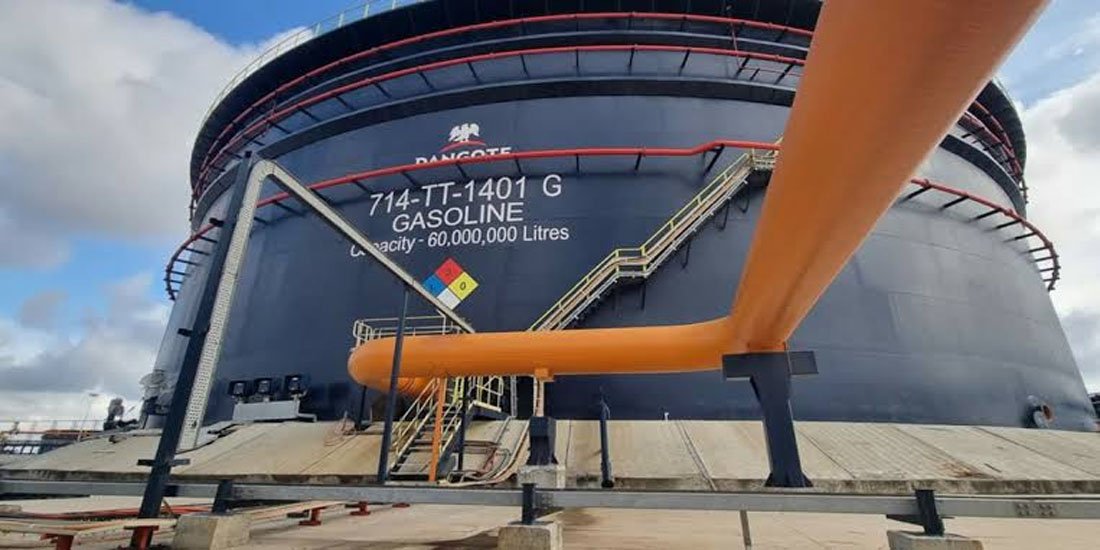
Separately, the Dangote Petroleum Refinery has shifted to dollar denominated sales of refined petroleum products, setting the ex depot price of petrol at $0.779 per litre, according to a source who said the refinery notified marketers and customers that all previously issued naira denominated proforma invoices and deal recaps for gantry and coastal transactions are now invalid following the switch. Payments must now be made in US dollars effective July 13, 2026, with diesel priced at $1.087 per litre, aviation fuel at $0.942 per litre and coastal petrol deliveries fixed at $1,044.62 per metric tonne; the change does not apply to liquefied petroleum gas transactions. The shift reverses the naira based product sales the refinery adopted under the federal government’s naira for crude initiative, launched in October 2024, with the source attributing the reversal to a growing currency mismatch, since the refinery increasingly receives crude under dollar denominated arrangements while continuing to sell much of its refined product in naira, exposing it to foreign exchange risk it now wants to eliminate by aligning the currency of its product sales with that of its crude purchases amid persistent exchange rate volatility. The change carries significant implications for petroleum marketers and domestic fuel pricing, since the naira equivalent of the refinery’s dollar benchmark will now depend on prevailing exchange rates, logistics costs and distribution expenses, and raises fresh questions about the future of the federal government’s naira for crude policy, originally introduced to support local refining, ease foreign exchange demand and stabilise domestic fuel prices.