Vice President Kashim Shettima has called on the newly inaugurated leadership of the Economic Community of West African States (ECOWAS) Commission to prioritise regional unity and economic integration as a pathway to sustainable development across West Africa.
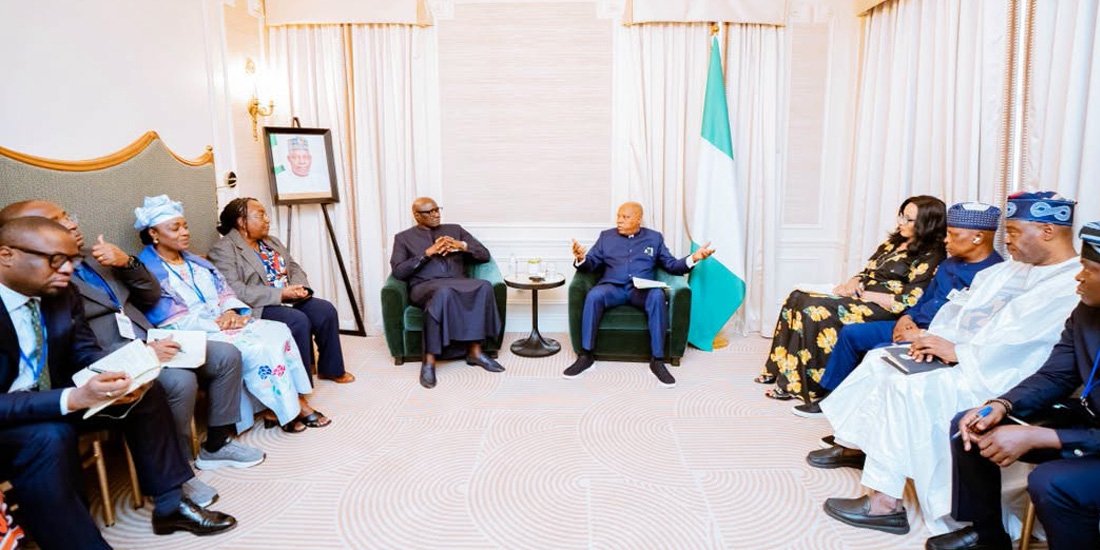
Shettima made the call during a meeting with a delegation of the ECOWAS Commission led by its newly elected President, General Birame Diop (Rtd.), on the sidelines of the 81st Session of the United Nations General Assembly (UNGA) in New York.
The Vice President said the commission’s leadership must go beyond administrative responsibilities by fostering stronger ties among member states and promoting policies that directly improve the livelihoods of citizens across the sub-region.
He stressed the importance of building and sustaining relationships among West African nations while positioning ECOWAS to effectively engage with emerging regional blocs, including the Alliance of Sahel States (AES).
According to Shettima, ECOWAS should remain at the forefront of efforts to strengthen cooperation, friendship, and integration among the peoples of the region.
The Vice President also urged the commission to encourage robust private-sector participation in the implementation of the Lagos-Abidjan Highway project, describing it as a critical initiative for regional economic growth and connectivity.
Congratulating General Diop on his emergence as President of the ECOWAS Commission, Shettima noted that he assumed office at a challenging period that requires greater collaboration, cohesion, and leadership within the region.
He reassured the new commission leadership of Nigeria’s continued support, stating that President Bola Ahmed Tinubu remained committed to advancing the objectives of ECOWAS and promoting regional development.
“Nigeria will continue to provide an enabling environment for ECOWAS to succeed and contribute meaningfully to the vision of its founding fathers,” the Vice President said.
Earlier, General Diop commended Nigeria for its longstanding role in the establishment, growth, and sustenance of ECOWAS, as well as its contributions to regional peace, stability, and economic development.
He acknowledged the various security and developmental challenges confronting the sub-region and called for Nigeria’s continued leadership and intervention in addressing them.
Describing ECOWAS as an essential instrument for regional stability and prosperity, Diop urged member states to work closely with Nigeria in pursuing inclusive growth and a more secure future for West Africa.