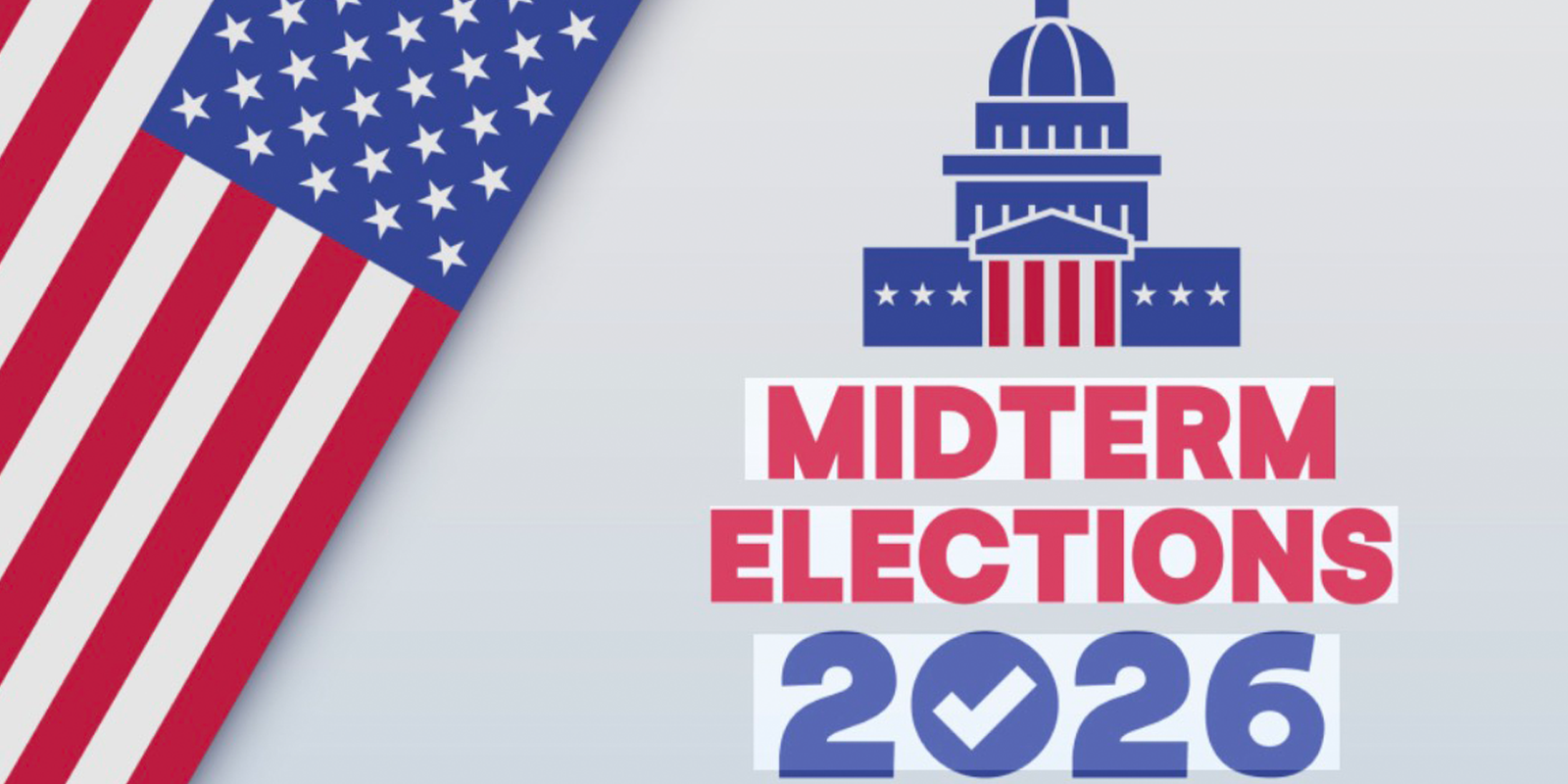
On Tuesday, November 3, 2026, voters go to the polls in midterm elections that will determine the composition of Congress for the remaining two years of Trump’s second term. Trump is not on the ballot, but his record and the public response to his policies sit at the centre of the debate. The outcome will shape the legislative environment in Washington, the extent of congressional oversight of the White House and the federal government’s ability to pursue its priorities through 2028.
All 435 House seats and 35 of the 100 Senate seats are up for election, and voters in 36 states will elect governors. According to Reuters, Republicans hold a 218 to 214 advantage in the House, with three vacancies, and a 53 to 47 majority in the Senate, including independents who caucus with Democrats. Democrats need a net gain of four seats in each chamber to take control. A Democratic House would gain committee control and greater power to investigate the administration. Control of the Senate would affect presidential appointments, judicial confirmations and legislation.
Economic conditions are a major issue. Voters are weighing the cost of groceries, housing, healthcare and fuel against their personal finances. Republicans defend the administration’s approach to taxation, trade and growth, while Democrats argue that households still face substantial pressure. Reuters identifies affordability, alongside immigration and views of Trump’s presidency, as among the defining issues of the election.
Immigration is also deeply divisive. Republicans emphasize border security and immigration enforcement, while Democrats raise concerns about enforcement methods, due process, family separation and the treatment of immigrant communities. For immigrants, including Nigerians and other Africans in the United States, policy changes can affect family reunification, legal status, employment and travel. The election will not change immigration law immediately, but a new Congress would influence legislation, funding and oversight of enforcement agencies.
Trump dominates the campaign despite not being a candidate. His executive actions, trade and immigration decisions and foreign policy are central points of disagreement, and the military confrontation with Iran, with its economic and international costs, has featured prominently in the final stages of the campaign, according to Reuters. Midterms have often produced losses for the president’s party, but individual races depend on candidates, local issues and turnout. Whatever happens on Tuesday, Trump remains in office; what changes is the environment in which he governs.
Senate races in Texas, Ohio and Michigan have drawn heavy advertising spending, and competitive House districts and state races will also be closely watched. State contests will influence education, healthcare, abortion laws, taxation, public safety and electoral administration, as well as congressional redistricting.
Election administration is also under scrutiny. On Monday, November 2, the Supreme Court rejected an attempt by the Trump administration to have California set aside thousands of mail ballots tied to voters whose citizenship had been challenged. The administration had questioned about 20,000 voter records, while California officials argued the information contained errors and that separating the ballots risked disenfranchising eligible voters. The court declined to intervene before the election. Close contests may remain unresolved on election night because of outstanding ballots, recount requirements or litigation.
The possible outcomes differ. Republican control of both chambers would give the administration allied majorities, though narrow margins could still complicate legislation. A divided Congress would bring more clashes, investigations and budget negotiations. Democratic control of both chambers would expand their oversight and agenda powers, but Trump would keep his veto, and Senate rules would still require broader agreement to pass laws. Reuters notes that federal spending, the debt ceiling and the risk of shutdowns will be pressing issues whichever party controls Congress.
For Nigeria and other African countries, a change in congressional control would not automatically change US policy. Congress shapes foreign aid, trade, security partnerships and immigration law, but those decisions depend on legislation, executive authority and budget negotiations. For Nigerians in the United States, the election is also a chance for eligible citizens to take part in decisions affecting their communities.
The results will also be read as signals for the 2028 presidential race, including shifts among younger voters, independents and suburban, urban and rural communities. A midterm is not a presidential election, however, and its results cannot simply be projected onto 2028.
The November 3 midterms are a test of American institutions at a time of sharp disagreement over economic policy, immigration, foreign affairs and presidential power. When the ballots are counted, the country will have a clearer picture of the political balance that will govern Washington for the rest of Trump’s term.