The Federal Government says more than one million out-of-school children have returned to classrooms within the last 20 months as part of efforts to expand access to education.
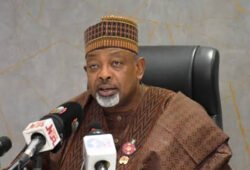
Education Minister Tunji Alausa disclosed the figure in Abuja during a meeting with newly appointed UNESCO Country Representative to Nigeria Isaiah Barreto Da Rosa.
Alausa also said nearly 6.7 million girls had benefited from government interventions designed to improve school access and retention.
The figures were presented by the minister and were not independently audited in the supplied material.
He said the government intended to sustain investment in girl-child education while also increasing attention to boys who were falling out of the education system in some parts of the country.
Alausa listed technical and vocational education, science and technology, reintegration of out-of-school children, data and digitalization, girl-child education and quality assurance among the ministry’s priority areas.
The minister said better data was increasingly being used to identify where interventions were needed and to measure results.
He also welcomed UNESCO’s support for the Accelerated Teacher Professional Program, which targets the training of one million in-service teachers.
Alausa said UNESCO had also supported technical and vocational education, digital transformation, education for peace and media-information literacy.
Da Rosa said UNESCO was prepared to deepen technical cooperation with Nigeria.
He said UNESCO-supported programs had trained more than 28,000 teachers across different states and reached more than 1.7 million students.
The representative also commended efforts to improve education data, saying reliable information was essential to effective planning.
The Federal Government said its objective was to combine domestic resources with international technical support to expand access, improve learning quality and equip students with skills relevant to a changing economy.