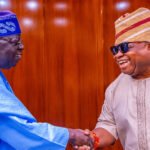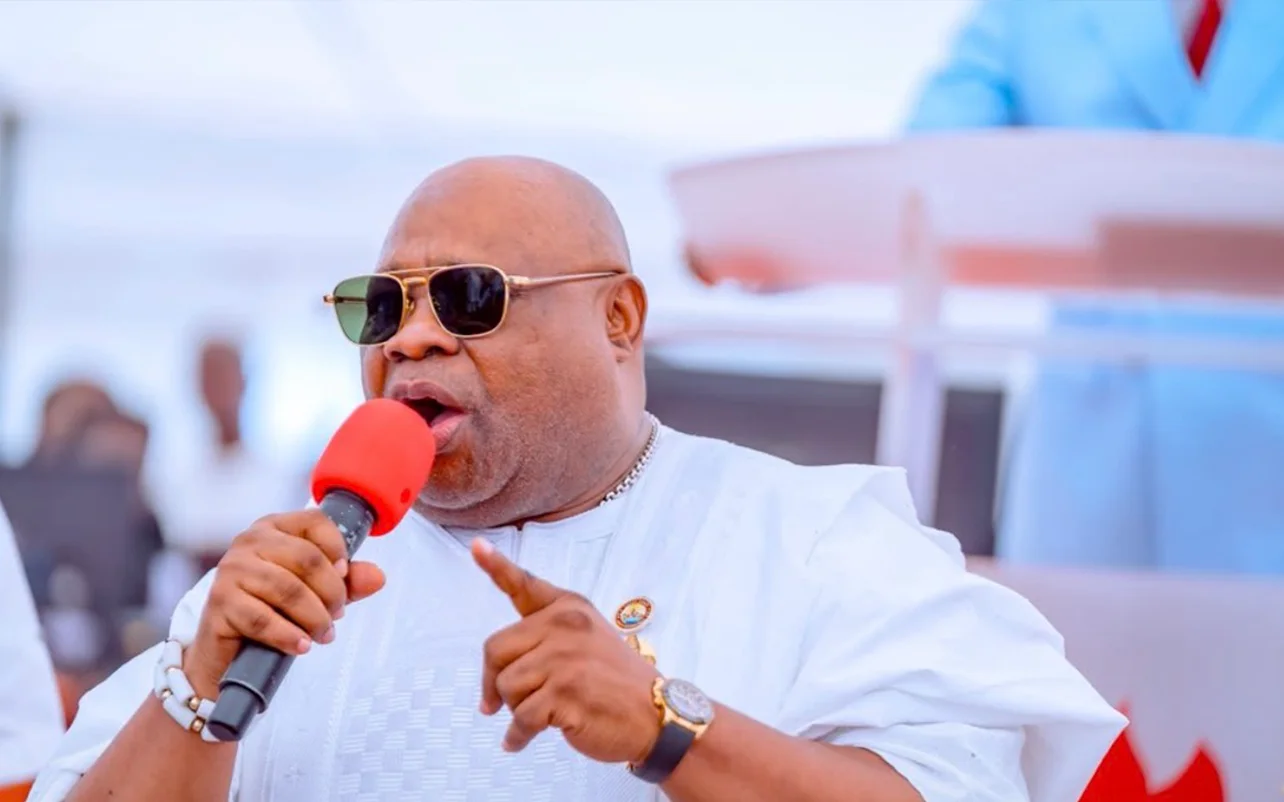
Accord candidate defeats APC’s Bola Oyebamiji by 66,252 votes to secure second term
Governor Ademola Adeleke has won the 2026 Osun State governorship election, securing a second term after defeating his closest challenger, Bola Munirudeen Oyebamiji of the All Progressives Congress.
Adeleke, who contested on the platform of the Accord Party, polled 511,067 votes, while his closest opponent Oyebamiji received 444,815 votes.
The incumbent governor won the closely contested election by a margin of 66,252 votes, reaffirming his political strength across the state and earning another mandate from the Osun electorate.
The victory represents a major political achievement for Adeleke, who successfully transferred his support base from the Peoples Democratic Party to the Accord Party ahead of the election.
His win demonstrates that a substantial number of voters remained loyal to his candidacy despite the change of political platform. It also suggests that the electorate assessed him largely on his personality, performance and record in office rather than solely on the strength of his former party.
The election was held across Osun State’s 30 local government areas and 3,763 polling units, with more than 2.3 million registered voters eligible to participate.
Following the completion of voting, counting and collation, Adeleke emerged with the highest number of votes and satisfied the constitutional requirements for election as governor.
The contest had been widely expected to be close because of the political strength of both candidates. Adeleke entered the race as the incumbent, while Oyebamiji enjoyed the extensive structure of the APC and the backing of prominent party leaders at the state and national levels.
Adeleke campaigned on the record of his first term, presenting the election as a choice between continuity and a return to the previous APC administration.
His campaign highlighted infrastructure development, workers’ welfare, healthcare, education and social intervention programmes as evidence that his administration deserved another term.
Oyebamiji, a former Managing Director of the National Inland Waterways Authority and former Osun State Commissioner for Finance, offered an alternative economic and administrative direction. His campaign relied on his experience in banking, public finance and government.
Despite the APC’s strong campaign and extensive mobilisation, Adeleke maintained a decisive advantage, finishing more than 66,000 votes ahead of his challenger.
The outcome gives the governor another four years to consolidate his programmes and address outstanding challenges confronting the state.
It also transforms Accord from a relatively smaller political platform into the governing party in Osun State, giving it increased visibility within Nigeria’s political landscape.
For the APC, the result represents a setback in its attempt to reclaim the state four years after losing power. Oyebamiji’s 444,815 votes nevertheless show that the party retains a substantial following and remains a major political force in Osun.
Adeleke’s re election is particularly significant because it confirms that his political support has survived one of the most consequential party realignments in the state’s recent history.
Having won the 2022 election under the PDP, Adeleke approached the 2026 contest under Accord with questions surrounding whether his supporters would follow him to the new platform.
The final result has answered that question. His victory indicates that his grassroots structure, incumbency advantage and personal political appeal were strong enough to overcome the APC’s national influence and established organisation.
The renewed mandate also brings greater responsibility. Expectations will be higher during Adeleke’s second term, particularly in infrastructure, employment creation, public finance, education, healthcare, agriculture and grassroots development.
The governor will be expected to justify the confidence expressed by the 511,067 voters who supported him while governing fairly and inclusively for residents who voted for other candidates.
With the election concluded, attention will now move from political campaigns to governance. Adeleke’s immediate task will be to promote reconciliation, reduce post-election tension and reunite the state after months of intense political competition.
His supporters may celebrate the victory, but the more enduring test will be how effectively the renewed mandate is converted into stronger institutions, sustainable development and improved living conditions for the people of Osun State.
The electorate has delivered its verdict. Ademola Adeleke will continue as governor, carrying the responsibility of leading Osun through another four-year term.