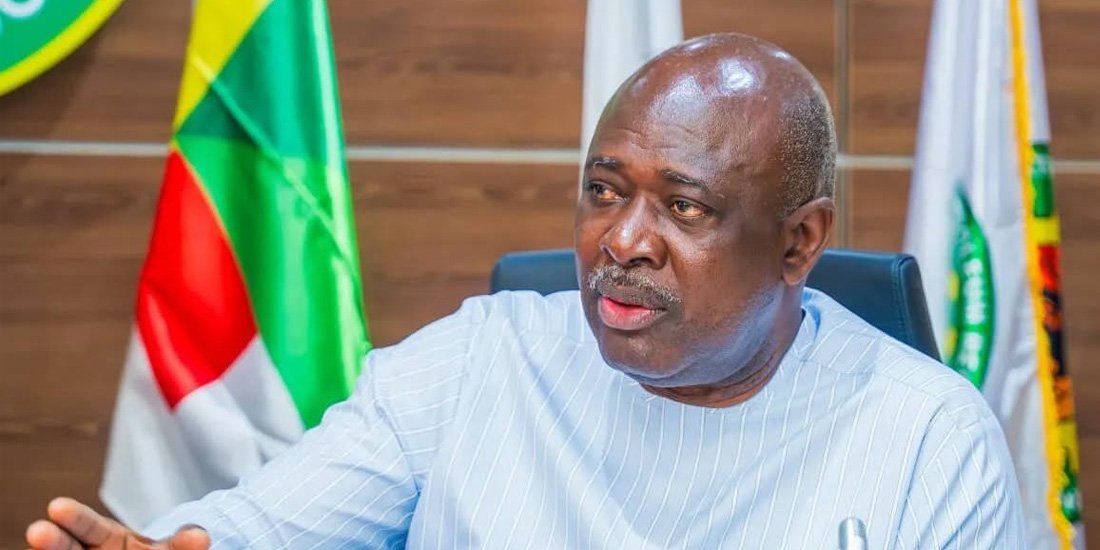
Minister of State for Petroleum Resources, Heineken Lokpobiri, has rejected proposals by opposition presidential candidates to restore petrol subsidy, arguing that Nigeria can no longer sustain the financial burden associated with the policy.
Lokpobiri spoke during a meeting with journalists in Yenagoa, Bayelsa State, against the backdrop of campaign promises by presidential candidates Atiku Abubakar and Peter Obi to reconsider the subsidy policy if elected in 2027.
Atiku, presidential candidate of the African Democratic Congress, had said he would restore petrol subsidy, while Peter Obi, presidential candidate of the Nigeria Democratic Congress, has also indicated that subsidy could return after corruption within the system had been addressed.
Lokpobiri questioned how such a policy would be financed.
“Where would the money come from?” he asked, arguing that the resources would ultimately have to come largely from the petroleum sector.
The minister said the previous subsidy arrangement consumed resources that could no longer reasonably be committed to keeping petrol prices below market levels.
He argued that President Bola Tinubu’s decision to remove the subsidy was necessary to prevent deeper financial problems.
Lokpobiri cited previous government estimates indicating that the country was projected to spend about N18.4 billion daily on petrol subsidy when Tinubu assumed office.
He also linked some of the financial difficulties previously experienced by the national oil company to the subsidy regime.
According to him, the former Nigerian National Petroleum Corporation was heavily involved in importing refined petroleum products while struggling to meet financial obligations associated with its participation in joint petroleum operations.
He said the financial position had changed following reforms and the transition to NNPC Limited.
Turning to crude oil production, Lokpobiri said Nigeria possessed the potential to produce between 2.5 million and three million barrels daily but continued to face major infrastructure constraints.
He identified aging crude oil pipelines as one of the most significant challenges confronting increased production.
According to the minister, many of the pipelines have been operating for decades and require replacement.
He said thousands of wells that are currently not producing could potentially return to production through appropriate reentry programmes, but warned that raising production without adequate evacuation infrastructure could create further difficulties.
Lokpobiri disclosed that NNPC was working on a comprehensive pipeline replacement programme through a partnership with private investors.
He said completion of the programme would significantly strengthen Nigeria’s ability to evacuate crude oil and increase production.
The subsidy debate is expected to remain one of the major economic issues ahead of the 2027 presidential election, with the governing party defending its removal while leading opposition candidates increasingly question the social consequences of the policy.