The African Democratic Congress Presidential Campaign Council has rejected projections suggesting that President Bola Tinubu could secure another term in 2027, insisting that political forecasts cannot substitute for the decision of Nigerian voters.
Director of Strategic Communication for the ADC Presidential Campaign Council, Phrank Shaibu, challenged the projection while responding to an analysis published by The Economist on October 1 examining Tinubu’s prospects in the next presidential election.
The publication identified incumbency, the political machinery available to the governing party, opposition fragmentation, religion and voter participation as factors that could influence the outcome.
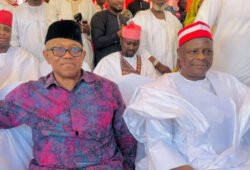
It also pointed to the decision of ADC presidential candidate Atiku Abubakar and NDC presidential candidate Peter Obi to contest on separate political platforms.
Shaibu acknowledged that such factors could influence elections but argued that none should be interpreted as evidence that Nigerians had already decided to retain the incumbent administration.
“A forecast is not a verdict,” he said.
According to Shaibu, the economic circumstances confronting millions of Nigerians would be a major factor in determining voting behavior.
He argued that citizens experience economic conditions through the prices of food, transportation, electricity, education and healthcare as well as the cost of maintaining businesses and households.
He cited inflation of 15.39 per cent in August and food inflation of 19.57 per cent, arguing that slower inflation does not necessarily mean that prices have returned to levels affordable to ordinary households.
Shaibu said Nigerians would ultimately judge economic performance according to what their incomes could purchase and whether families could maintain acceptable living standards.
The ADC campaign spokesman also challenged suggestions that low voter turnout could favour Tinubu.
He argued that the low participation recorded during the 2023 presidential election could have resulted from several factors, including insecurity, political apathy, distrust of the electoral system and logistical difficulties.
According to him, failure to participate in an election should not automatically be interpreted as support for the incumbent.
Shaibu maintained that Tinubu won the 2023 presidential election but did not receive the votes of a majority of registered Nigerian voters.
He said the 2027 contest would ultimately be determined at the ballot box rather than through projections made ahead of the election.
The ADC campaign council therefore insisted that Nigerians, rather than political calculations or international forecasts, would determine who occupies the presidency after the 2027 election.