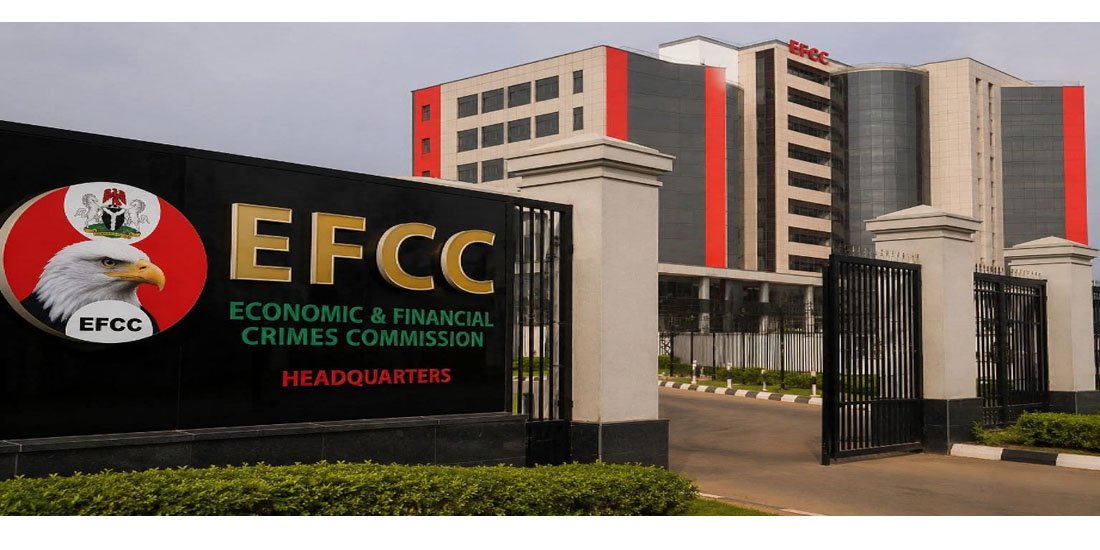
The Economic and Financial Crimes Commission has constituted a special team to examine transactions and assets linked to the long-running Mambilla Hydroelectric Power Project dispute following issues raised in recent International Chamber of Commerce arbitration proceedings.
According to information attributed to an EFCC source familiar with the review, the team is being supervised by the commission’s chairman, Ola Olukoyede, and is examining financial transactions, relationships among individuals named in the proceedings and properties that may be connected to the payments.
The investigation is expected to determine whether there are grounds for further questioning, criminal investigation or asset-recovery proceedings.
Individuals whose names appeared in the arbitration record and who may be contacted by investigators include former Vice President Atiku Abubakar; his former wife, Jennifer Douglas; former Attorney General of the Federation Abubakar Malami; former Minister of Power and Steel Olu Agunloye; former National Security Adviser Sambo Dasuki; his son, Abubakar Dasuki; former Solicitor General of the Federation Abdullahi Yola; and former Permanent Secretary in the Ministry of Power Dere Awosika.
Their inclusion in the arbitration record does not, by itself, establish criminal liability, and any EFCC action would require an independent assessment of evidence under Nigerian law.
The renewed scrutiny follows the tribunal’s rejection of claims brought against Nigeria by Sunrise Power and Transmission Company Limited and its promoter, Leno Adesanya, over the proposed 3,960-megawatt Mambilla project in Taraba State.
One transaction highlighted in the arbitration proceedings was a $500,000 payment made by Adesanya in January 2003 from the Swiss account of China Castle Investments Limited to a United States account belonging to Jennifer Douglas, who was then married to Atiku Abubakar.
The payment preceded the purported award of a Build-Operate-Transfer contract for the project by then Minister of Power and Steel Olu Agunloye.
The tribunal examined the timing of the payment and the explanations offered for it.
It described the circumstances as raising significant red flags, particularly in relation to questions about political influence and Sunrise’s efforts to secure the project.
Atiku has denied wrongdoing and has maintained that he was not responsible for awarding the Mambilla contract.
Another transaction expected to receive scrutiny is a $1.74 million payment made by Adesanya to Abubakar Dasuki in December 2014.
The tribunal questioned the explanation that the money represented a loan, noting the absence of a formal loan agreement and other documentation supporting the transaction.
It described the circumstances as raising considerable red flags.
Former Attorney General Abubakar Malami also featured in the arbitration record over events surrounding the 2020 settlement agreement between Nigeria and Sunrise.
Nigeria had alleged in the proceedings that Malami acted against the country’s interest in aspects of the settlement.
Those allegations remain allegations unless established through a competent legal process.
Agunloye, who was minister when Sunrise was purportedly awarded the original contract in 2003, also featured in the arbitration record over a payment of about N5.2 million made to him in 2019 through an intermediary.
He is separately facing criminal proceedings in Nigeria over the Mambilla project and has pleaded not guilty.
The ICC proceedings also referred to former Solicitor General Abdullahi Yola and former Power Ministry Permanent Secretary Dere Awosika in connection with separate payments.
According to the arbitration material cited in the report, Yola was linked to a payment of about $50,000 made through Lutin Investment in 2015.
Awosika was mentioned in relation to three payments totaling about $135,000 made by Lutin Investments to a company associated with her son.
The EFCC source said investigators were looking beyond the individual transfers to trace the movement of funds and any assets potentially linked to the transactions.
The commission is expected to determine its next steps after reviewing the available material and establishing whether the evidence meets the threshold required for questioning, prosecution or forfeiture proceedings.