The Independent National Electoral Commission (INEC) has urged political parties to move beyond rhetoric and adopt concrete, measurable measures to increase women’s participation and representation in Nigeria’s political process ahead of the 2027 General Elections.
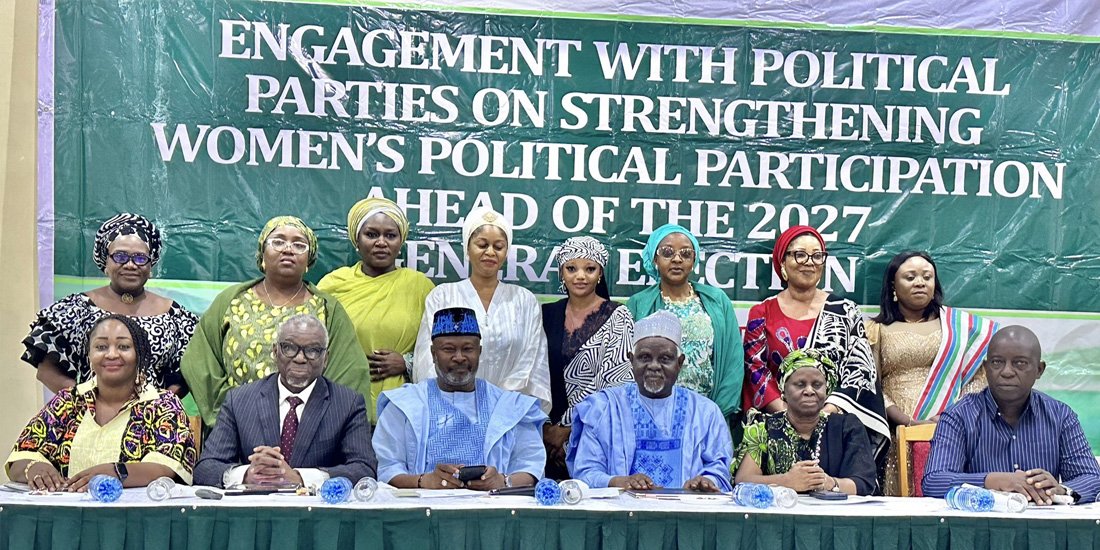
The Commission made the call during a high-level engagement with political parties on strengthening women’s political participation, held in Abuja. The meeting brought together political party leaders, development partners, women’s organisations, civil society groups and other electoral stakeholders to develop practical strategies for improving women’s representation in elective offices.
In a welcome address delivered on behalf of the Secretary to the Commission, Dr Rose Anthony-Orianran, by the Director of the Gender and Inclusivity Department, Mrs Lakunuya Dorothy Bello, participants were reminded that despite women’s strong participation as voters, their representation as candidates and elected officials remains significantly low.
Bello disclosed that only 1,556 of the 15,331 candidates who contested the 2023 General Election were women, representing 10.2 per cent of the total number of candidates.
She further noted that only three women were elected to the Senate and 16 to the House of Representatives in the 2023 elections, stressing that meaningful political inclusion would require collective action from political parties, electoral stakeholders and development partners.
She urged participants to use the engagement to identify practical measures capable of removing barriers to women’s political participation and strengthening collaboration ahead of the 2027 elections.
Declaring the engagement open on behalf of the INEC Chairman, Prof. Joash Amupitan, SAN, National Commissioner Prof. (Mrs.) Rhoda Habor Gumus conveyed the Chairman’s apology for his absence due to another national assignment.
Gumus reaffirmed the Commission’s commitment to promoting an inclusive democratic process, noting that women accounted for 47.5 per cent of registered voters in the 2023 General Election.
She also pointed out that women constituted the majority of registrants during the final phase of the recently concluded Continuous Voter Registration exercise, but stressed that their impressive participation as voters had not translated into comparable electoral success.
According to her, women remain grossly underrepresented in elective offices despite their numerical strength within the electorate.
She therefore challenged political parties to deliberately provide female candidates with equal access to party structures, campaign financing, media visibility, logistics, mentoring, security, fundraising networks and grassroots mobilisation.
Gumus stressed that achieving greater representation of women in Nigeria’s political leadership requires deliberate action rather than repeated commitments, urging political parties and other stakeholders to turn discussions on inclusion into measurable outcomes ahead of the 2027 General Elections.