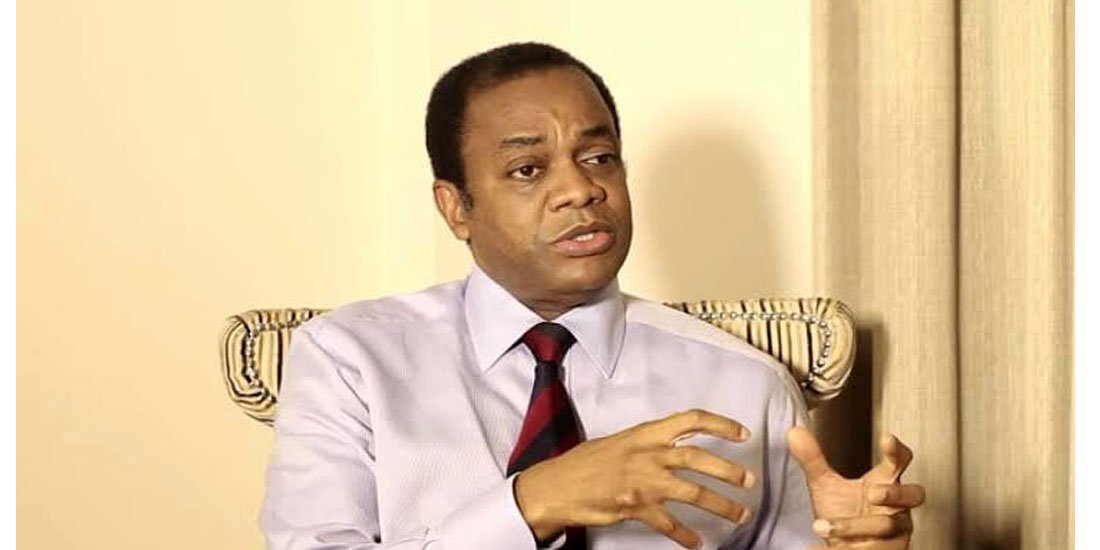
Former Cross River State Governor Donald Duke has argued that Nigerians were better off under military rule than they have been during the current democratic era, saying civilian government has become more expensive without delivering sufficient improvements in citizens’ welfare.
Duke, the presidential candidate of the Peoples Redemption Party, said the performance of democracy should be judged by living standards, education, healthcare, infrastructure and the quality of public services.
He argued that many of the problems Nigeria faced before the return to civilian rule in 1999, including unemployment, weak electricity supply and infrastructure gaps, remained unresolved or had worsened.
His assessment represents a political opinion and does not establish that military government produced better overall outcomes across all measures of governance, rights or development.
Duke also criticized what he described as a weak and self-interested opposition and said public confidence in elections had deteriorated because many voters believed their ballots did not count.
He argued that disputed electoral processes weakened accountability by allowing politicians to feel less dependent on the electorate.
The former governor also criticized the National Assembly and judiciary, saying the constitutional system of checks and balances had become ineffective.
He cited the rapid legislative approval of the return to Nigeria’s former national anthem as an example of what he considered insufficient scrutiny of executive initiatives.
Duke blamed much of Nigeria’s governance problem on the political elite, saying leadership had been surrendered to people who treated politics as a permanent occupation rather than public service.
He warned that widening inequality could eventually threaten social stability if large numbers of citizens continued to face hardship while wealth remained concentrated among a smaller group.
Despite his criticism, Duke said Nigeria had the natural and human resources required to solve its problems if leadership became more disciplined and policy-focused.
His remarks are likely to feed the wider 2027 debate over democratic performance, institutional reform and the quality of political leadership.