The Federal Government is considering legal options to end the concession arrangement covering reconstruction of the Benin-Asaba Road if the concessionaire fails to deliver relief to road users.
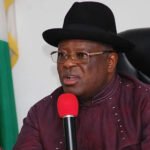
Works Minister David Umahi said government was examining the possibility of invoking overriding public interest provisions, including what he described as the law of necessity, because of the prolonged deterioration of the strategic highway.
Umahi spoke during an inspection of Phase 2B of the Second Niger Bridge project around the Nkwerre-Ezunaka section of the Onitsha-Enugu Expressway.
He said the current administration inherited the Benin-Asaba concession from the government of former President Muhammadu Buhari and was required to respect contractual and legal processes.
The highway was among federal roads concessioned under the pilot phase of the Highway Development and Management Initiative.
Umahi said the Ministry of Works had already notified the concessionaire of what government considered defaults in project delivery.
According to the minister, government had assembled several contractors that were prepared to undertake emergency intervention without imposing costs on the concessionaire.
He said the concessionaire rejected that arrangement and insisted it would execute the rehabilitation itself.
Umahi said the ministry was therefore monitoring performance closely and would consider stronger legal action if the suffering of motorists continued.
The Benin-Asaba Road is a major transport link connecting the South-West, South-South and South-East and has become a source of public frustration because of difficult driving conditions and long delays.
The minister rejected claims that deterioration of the corridor demonstrated deliberate neglect of the South-East.
He pointed to federal interventions on the Lagos-Ibadan corridor, routes toward Ore and other roads connecting the region.
Umahi said President Bola Tinubu had also approved concrete pavement on a difficult 48-kilometers section because of recurring failures associated with the terrain.
One carriageway had been completed, he said, while work continued on the second.
The minister also linked the administration’s road programme to Tinubu’s 2027 reelection campaign, arguing that infrastructure investment was increasing political support for the President.
That political assessment represents Umahi’s view and is separate from the contractual question now facing the Benin-Asaba concession.
The central issue for the government is whether the existing concession can deliver timely reconstruction or whether public interest considerations justify a legal restructuring or termination of the agreement.